The 40 Year Question: Can Steven Spielberg's Color Purple Be Called A Black Film?

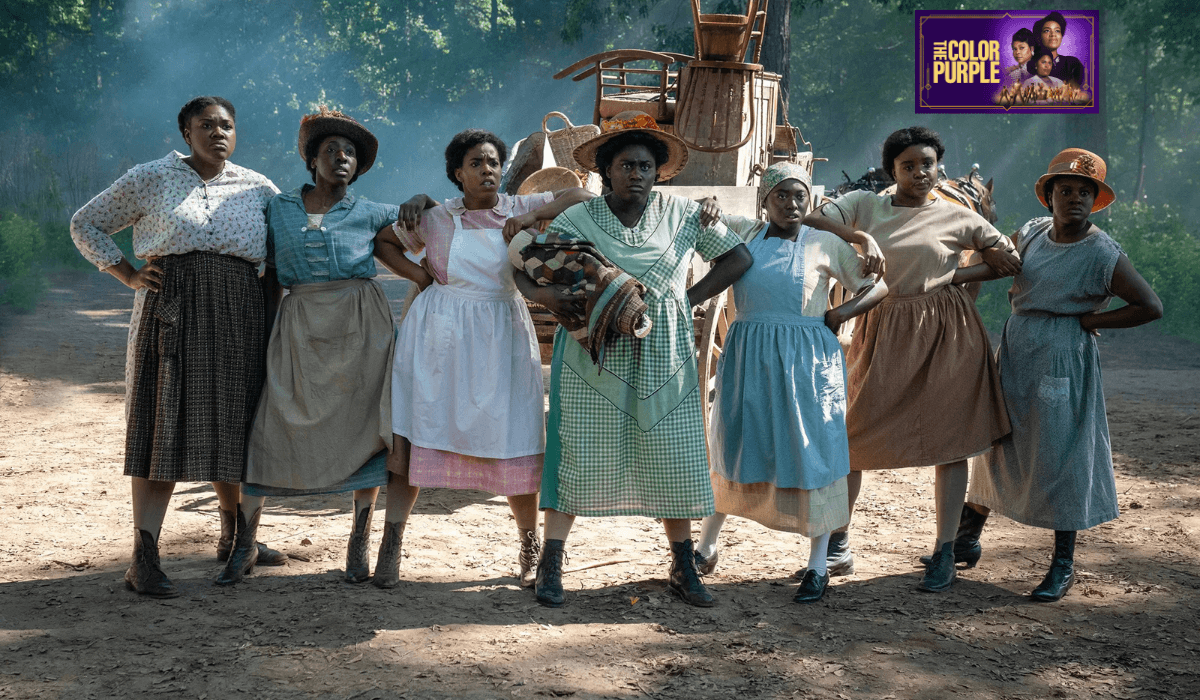
Four decades after its theatrical debut, Steven Spielberg's adaptation of "The Color Purple" remains one of cinema's most contested cultural artifacts. The 1985 film, which premiered on December 18 of that year, transformed Alice Walker's Pulitzer Prize winning novel into a visual spectacle that earned 11 Academy Award nominations yet won none. More significantly, it ignited debates about authenticity, ownership, and who gets to tell Black stories in Hollywood.
The question persists today with renewed urgency. As the film celebrates its 40th anniversary, two fundamental perspectives continue to clash. Can a film featuring an entirely Black cast, based on a Black woman's novel about Black life, yet directed and written by white men, truly be considered a Black film? The answer reveals as much about power dynamics in entertainment as it does about art itself.
The Case Against: Power Behind the Camera Matters Most
The argument that "The Color Purple" fails to qualify as a Black film rests on a straightforward principle. A movie requires more than Black faces on screen to earn that designation. The individuals controlling the creative vision, the people making final decisions about what audiences see, must themselves be Black for the work to authentically represent Black cinema.
Steven Spielberg directed the film. While Jewish and certainly part of a minority community with its own history of marginalization, Spielberg is white. This distinction carries weight. The screenplay came from Menno Meyjes, a Dutch writer who had no personal connection to the American South or Black experience. Of the film's four producers, only Quincy Jones was Black.
This power imbalance manifested in concrete ways throughout production. Spielberg admitted he deliberately softened the lesbian relationship between Celie and Shug Avery, central to Walker's novel, because he worried explicit representation would hurt box office returns and push the film beyond a PG-13 rating. In the book, the intimacy between these women is profound and clearly romantic. The film reduces it to a single brief kiss that many viewers interpreted as simple friendship.
That single decision exemplifies why directorial control matters. Spielberg possessed the authority to fundamentally alter Walker's vision based on commercial calculations. He chose mainstream palatability over authentic representation. A Black director, particularly a Black queer director, might have fought harder to preserve that essential element of Celie's journey toward self-discovery and healing.
The erasure connects to broader patterns. Hollywood has long been comfortable with Black stories filtered through white perspectives. "The Help," "Driving Miss Daisy," and "The Blind Side" all feature compelling performances by Black actors telling Black stories. Yet white filmmakers shaped how those narratives reached audiences. The pattern reinforces whose stories get told, how they're told, and who profits from the telling.
Critics at the time recognized this problem immediately. Legendary writer James Baldwin accused Spielberg of distorting Walker's literary vision. Black feminist Michele Wallace argued the film drowned Walker's feminist message in sentimental melodrama reminiscent of Disney films. The NAACP condemned stereotypical portrayals of Black men, noting that every male character appears either abusive or incompetent.
Filmmaker Spike Lee took particular issue, suggesting Hollywood only greenlit the project because it depicted Black men as one-dimensional animals. His criticism highlights how white gatekeepers often approve Black stories that confirm rather than challenge existing prejudices. When Black directors create complex, multifaceted portrayals of Black masculinity, they face greater difficulty securing funding and distribution.
These aren't abstract concerns. They speak to fundamental questions about cultural ownership and representation. If white filmmakers can simply hire Black actors and claim to have made Black cinema, what space remains for authentic Black voices? What happens to stories that don't fit comfortable narratives acceptable to white audiences?
Forty years later, this debate has only intensified. The 2023 musical adaptation of "The Color Purple" was directed by Blitz Bazawule, a Black filmmaker. That version earned praise for cultural authenticity Spielberg's adaptation lacked. The contrast demonstrates what changes when Black creators control their own narratives.
The Case For: Black Influence Permeates Every Frame
The opposing argument insists "The Color Purple" absolutely qualifies as Black cinema because Black influence saturates the entire production. To understand this perspective requires looking beyond simplistic categories of who held which title.
Alice Walker herself approved Spielberg as director. This wasn't a passive acceptance. Walker was actively involved throughout production as a creative consultant. She had approval rights over the script, coached actors on line delivery, participated in casting decisions, and ensured that half the production team consisted of African Americans, women, or people of color.
When she saw moments that felt wrong, she spoke up. Walker noted in her memoir how Whoopi Goldberg stood toe to toe with Spielberg, insisting Celie would age differently than he envisioned, that Black women's aging involves posture and gait rather than wrinkles and white wigs.
The cast pushed back consistently. These weren't passive performers simply following directions. They brought their understanding of Black life, Black speech patterns, Black emotional expression to every scene. When something felt inauthentic, they said so. That creative tension, that negotiation between director and performers, shaped the final product in ways that transcend simple authorship.
Quincy Jones's role deserves particular emphasis. He didn't just produce and score the film. Jones handpicked Spielberg for the director position after they collaborated on the E.T. storybook album. He personally selected Whoopi Goldberg and insisted on casting Oprah Winfrey despite her lack of acting experience. Jones used his industry power to ensure Black performers got opportunities that might otherwise have gone to established stars.
Walker herself addressed the director's race directly in her memoir. She wrote that Spielberg is white and a man, but he is more than that, just as she is more than Black and a woman. Her philosophy suggests art transcends simple identity categories when created with genuine understanding and respect. She wanted her story reaching audiences who might never read the novel. Spielberg's name recognition accomplished that goal.
Consider the film's most memorable moments. Sofia's declaration, "You told Harpo to beat me," became cultural shorthand. The Celie finger, that wordless gesture of defiance and self-assertion, entered the lexicon of Black expression. Shug's musical numbers, the church scenes, the emotional reunion at the film's conclusion, these moments resonate because they feel authentic to Black experience despite coming from a white director.
The dialogue often comes straight from Walker's novel, delivered by Black actors who understood exactly what those words meant. Margaret Avery, Danny Glover, Adolph Caesar, and others brought theatrical training and deep cultural knowledge to their roles. Their performances don't just follow Spielberg's direction. They interpret and embody Walker's characters through lived experience Spielberg himself lacked.
Whoopi Goldberg has consistently defended Spielberg's participation. In 2022, she argued that if Black directors wanted to make the film, they had the opportunity. She believed it was simply a story Spielberg was meant to tell. Her perspective matters because she lived through production, experienced Spielberg's direction firsthand, and remains proud of the result.
The film's impact on Black audiences provides perhaps the strongest evidence for its status as Black cinema. For 40 years, Black viewers have embraced this film as their own. They quote the dialogue, reference the scenes, and see themselves reflected in the story. That reception wasn't manufactured or forced. It emerged organically because something essential in the film speaks to Black experience.
The Broader Context: Who Tells Black Stories in Hollywood
This debate cannot be separated from the industry's long history of marginalizing Black filmmakers. In 1985, major studios rarely entrusted significant budgets to Black directors. Spike Lee was just beginning his career. John Singleton wouldn't direct "Boyz n the Hood" for another six years. The infrastructure supporting Black independent cinema barely existed.
Within that context, Walker faced a choice. She could refuse film adaptation entirely, maintaining complete artistic control but limiting her story's reach. Or she could work within a flawed system, leveraging Spielberg's clout to ensure the story reached millions. She chose pragmatism over purity.
That choice reflects real world constraints Black artists constantly navigate. Ideally, Black stories would always be told by Black filmmakers with complete creative control. Reality rarely offers ideal conditions. Sometimes the choice becomes whether to participate in imperfect representation or accept no representation at all.
The NAACP's criticism about stereotyping Black men deserves serious consideration. The novel faced similar accusations, with author Ishmael Reed calling it a near-criminal assault on Black family life. These concerns reflect genuine pain about how Black masculinity gets portrayed in mainstream media. When negative depictions dominate, even accurate portrayals of abuse can feel like betrayal.
Yet Walker was telling Celie's specific story, not attempting a comprehensive representation of all Black men. The criticism sometimes conflates individual narrative with collective responsibility. One woman's testimony about her experience with abuse doesn't constitute an indictment of an entire gender or race.
Spielberg himself acknowledged his limitations. He initially hesitated to accept the job, telling Quincy Jones that a Black director should helm the project. Jones's response has become famous. "Did you have to be an alien to direct E.T.?" The quip suggests empathy and craft matter more than identity. Yet that position ignores how lived experience informs storytelling in ways impossible to replicate through research alone.
The lesbian relationship controversy illustrates this perfectly. Spielberg called himself "shy" about depicting the sexual relationship between Celie and Shug. That shyness, that discomfort, fundamentally altered Walker's vision. He softened something that should not have been soft, made ambiguous what Walker wrote as clear. A queer Black director would likely have understood how essential that relationship was to Celie's liberation.
How Audiences Experience and Reclaim the Film
Academic analysis of "The Color Purple" reveals fascinating patterns in how different viewers engage with the same material. Black feminist scholars note that Black audiences actively edit the film in their minds, extracting what resonates while dismissing what feels inauthentic.
The performances, the "Black moments" as some critics call them, become what audiences remember and circulate. Nobody quotes Spielberg's directorial choices. They quote Sofia's speeches, Celie's transformation, Shug's wisdom. The Blackness people appreciate comes from the performances, from aspects of Walker's novel that survived translation to screen.
This selective embrace suggests viewers recognize the film's complicated authorship. They claim ownership of specific elements while implicitly rejecting others. The movie becomes a site of negotiation between imposed vision and audience interpretation.
Taraji P. Henson, who plays Shug in the 2023 musical adaptation, offered pointed criticism of Spielberg's version. She explained it "missed culturally" by dwelling on trauma rather than celebrating how Black people respond to hardship through joy, music, dance, and community. Her observation identifies something crucial. Spielberg understood the pain but perhaps not the resilience, the suffering but not the celebration that coexists with it.
The 2023 version, directed by Black filmmaker Blitz Bazawule, demonstrates what changes when Black creators control the narrative. Early reviews praised its cultural authenticity, noting how it avoids the mistakes of Spielberg's adaptation. The comparison isn't meant to diminish the original's achievements but to illustrate how much perspective matters.
Where Does This Leave Us?
After examining both positions thoroughly, the honest answer remains complicated. "The Color Purple" exists in a liminal space, neither entirely Black cinema nor simply a white director's interpretation of Black life. It embodies the contradictions and compromises that defined mainstream Hollywood's relationship with Black stories in 1985.
The film possesses genuine Black influence. Walker's involvement, Jones's production role, and the cast's creative pushback all shaped the final product in essential ways. Black audiences embraced and claimed the film for good reason. It speaks to authentic experiences despite its flawed origins.
Yet calling it simply a Black film ignores how white gatekeepers controlled its creation. Spielberg made final decisions. He chose what stayed and what got cut, what got emphasized and what got softened. That power cannot be dismissed as irrelevant simply because he exercised it with good intentions.
Perhaps the most honest description is that "The Color Purple" represents a specific moment in Hollywood history. It shows what became possible when a major studio committed significant resources to a Black story, even while maintaining white creative control. The film's successes and failures both illuminate what was gained and what was lost in that compromise.
Personally, I find myself frustrated by the necessity of this debate. The question shouldn't be whether this particular film qualifies as Black cinema. The question should be why, in 1985, no Black director with Spielberg's resources and industry access existed to tell this story. Why did Walker have to choose between Spielberg or likely no adaptation at all?
The situation has improved but remains far from equitable. Black filmmakers still face disproportionate difficulty securing funding, distribution, and marketing support. When they do get opportunities, their work often gets categorized as "niche" rather than universal. White directors face no such limitations when telling any story, including Black stories.
"The Color Purple" matters not despite its contradictions but because of them. It reveals how representation functions in an industry built on exclusion. It demonstrates that good intentions don't eliminate the importance of who holds power. It shows how Black artists can claim and transform even flawed representation into something meaningful.
The film survives because Walker's story possesses power that transcends any single adaptation. Because Goldberg, Winfrey, Glover, and others delivered performances that resonate across decades. Because Black audiences recognized something true in Celie's journey even when filtered through Spielberg's lens.
Ultimately, whether we call "The Color Purple" a Black film matters less than what the debate reveals about representation, power, and whose stories get told in mainstream American cinema. The conversation itself, now 40 years old, demonstrates how far we've come and how far we still need to go.
Looking Forward: What Has Changed?
The 2023 musical adaptation offers instructive contrast. With Blitz Bazawule directing, the production featured Black creative control while still benefiting from Spielberg and Winfrey's producing roles. This collaboration model suggests one possible path forward, where established white filmmakers use their influence to support rather than supplant Black artists.
The newer version hasn't erased the 1985 film from cultural memory. Both exist, each reflecting the possibilities and limitations of their moment. Future generations will judge both versions through their own lens, perhaps with perspectives we cannot yet imagine.
What seems clear is that authentic representation requires more than good intentions. It requires structural change in who controls resources, who makes decisions, and whose perspectives get centered. "The Color Purple" debate endures because these fundamental questions remain unresolved.
The film turns 40 as a beloved artifact and a contested legacy. That duality feels appropriate. Great art often contains contradictions. The most meaningful cultural objects resist simple categorization. "The Color Purple" succeeds and fails simultaneously, depending on which lens you use to examine it.
Perhaps that's the most honest conclusion. Not that it definitively is or isn't Black cinema, but that it occupies complicated territory between those poles. It represents what was possible in 1985, with all the promise and compromise that entailed. Whether that's enough depends on what questions you ask and what standards you apply.
What remains non-negotiable is that conversations about representation, about who tells which stories and how, must continue. "The Color Purple" has given us 40 years of productive debate. That ongoing discussion might be its most valuable contribution to cinema and culture.