The White Ghost Returns: Rare Iberian Lynx Photographed Again Two Months After Viral Discovery

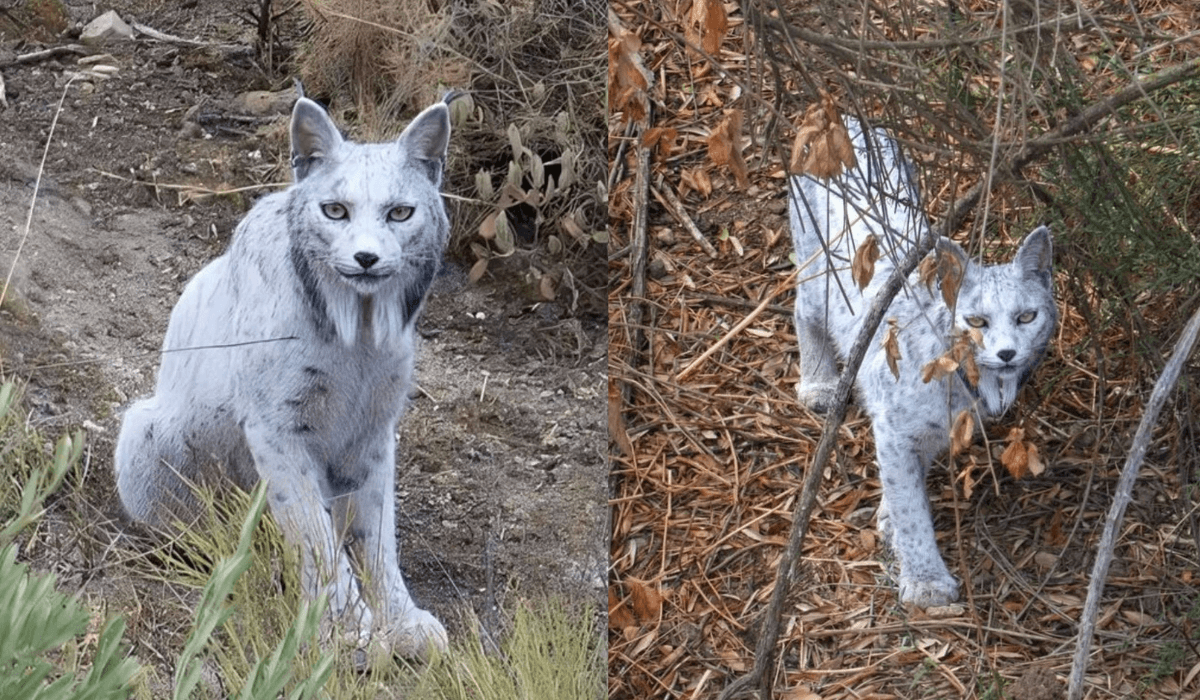
The ghostly white Iberian lynx that captivated the internet in October has been photographed once again, proving the rare feline continues thriving in Spain's mountainous terrain. New images surfacing on Christmas Eve 2025 show the leucistic lynx, known to researchers as Satureja, still roaming the forests near Jaén with her distinctive snow white coat gleaming against the Mediterranean landscape.
The latest sighting reinforces what conservation scientists have been monitoring privately for years. This remarkable animal, born with normal brown and black coloring in 2021, gradually transformed into what photographer Ángel Hidalgo calls "the white ghost of the Mediterranean forest." Her continued survival and successful hunting despite standing out dramatically from her surroundings offers hope and raises fascinating questions about adaptation, genetics, and the resilience of one of Europe's rarest wildcats.
From Viral Sensation to Ongoing Mystery
Hidalgo first captured Satureja on camera in late October 2025 after months of patient tracking through Jaén's mountain ranges in southern Spain. His initial footage and photographs went explosively viral, racking up millions of views as people around the world marveled at what many believed was the first white Iberian lynx ever documented.
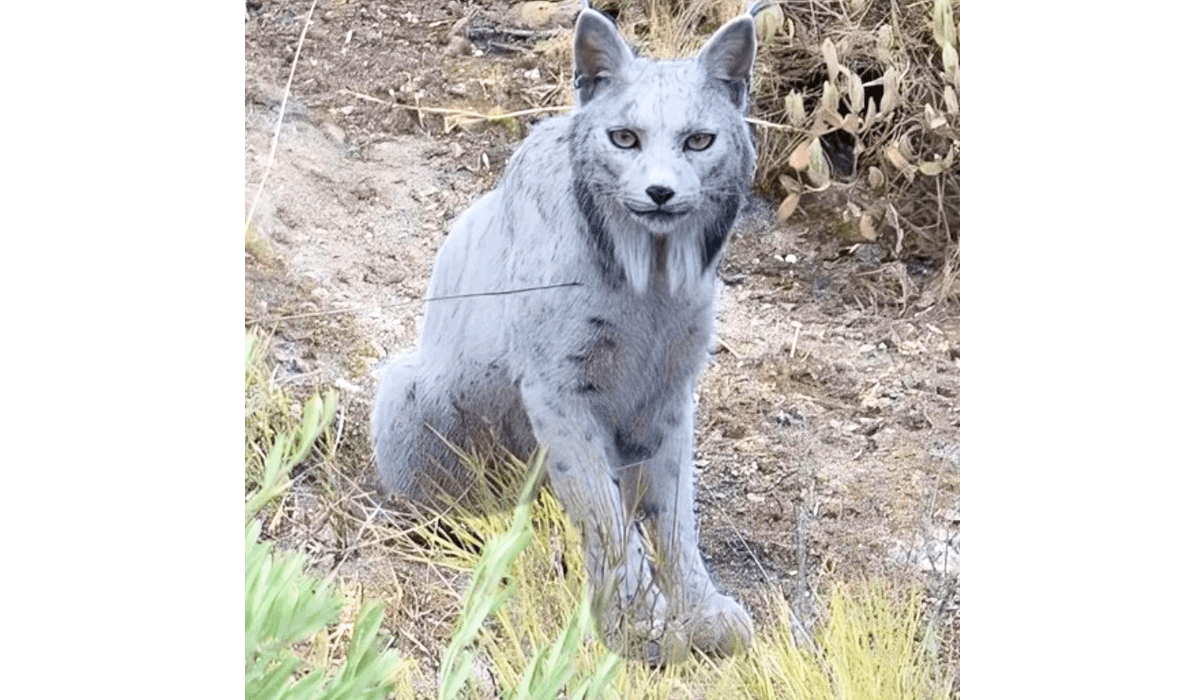
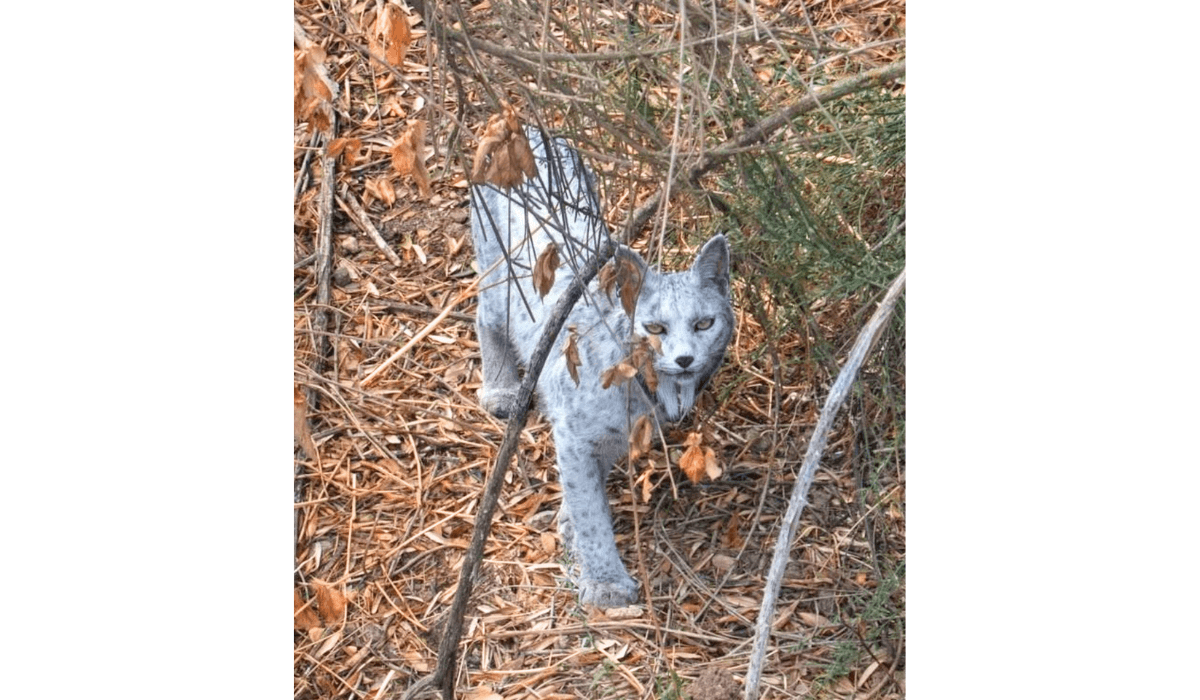
The images were stunning. Satureja appeared almost luminous, her pale coat creating an otherworldly contrast with the earthy browns and greens of the forest. Dark ear tufts, the lynx's signature facial ruff, and penetrating eyes remained unchanged, but everything else had lost its typical pigmentation. She looked like something from mythology rather than modern wildlife photography.
Media outlets worldwide covered the story, often framing it as a completely unprecedented discovery. The reality was more nuanced. While Hidalgo's photographs were indeed the first public documentation of a white Iberian lynx, conservation researchers had been quietly monitoring Satureja for some time. They knew about her unusual coloration and had been studying her from a distance, trying to understand what caused the transformation.
Now, two months later, the fact that Satureja has been photographed again confirms she's not just surviving but apparently thriving. For a predator whose success depends partly on stealth and camouflage, her bright white coat should be a severe disadvantage. Yet she continues hunting successfully, has raised multiple litters of cubs, and maintains a stable territory in the wild.
Understanding Leucism and What Makes Satureja Different
Initial reports suggested Satureja had leucism, a genetic condition causing partial loss of pigmentation in fur, feathers, or scales. Unlike albinism, which affects eyes and skin and often comes with vision problems and photosensitivity, leucism typically allows animals to develop normally with standard eye color and healthy physiology.
However, experts now suspect Satureja's case may not fit the standard leucism profile. Javier Salcedo, coordinator of the EU funded LIFE Lynx-Connect project, has indicated her situation appears more complex. The key detail that challenges the leucism diagnosis is that Satureja was born with completely normal coloring. Her transformation happened gradually over time rather than being present from birth, as leucism typically would be.
This developmental pattern suggests environmental factors rather than purely genetic ones. Researchers are investigating whether Satureja might have developed what Salcedo describes as some kind of hypersensitivity. Perhaps exposure to certain environmental conditions triggered a physiological response that affected her pigmentation. Temperature fluctuations, dietary changes, stress, or even localized pollution could theoretically play a role.
The mystery deepens when you consider that another female lynx in the same region underwent a similar transformation years earlier. That animal's coat turned white, then remarkably reverted back to normal brown coloring over time. This precedent suggests whatever is affecting these lynxes might be reversible and linked to specific environmental conditions in that particular area of Jaén.
Andalusian regional officials have announced plans to temporarily capture Satureja for biological sampling. They hope blood tests, tissue samples, and comprehensive health evaluations will provide concrete answers about what's happening physiologically. These tests could reveal hormonal imbalances, nutritional deficiencies, exposure to environmental toxins, or entirely novel biological mechanisms not yet understood in wild felids.
The Photographer's Obsessive Quest
Ángel Hidalgo is a 29 year old construction materials factory worker who spends every spare moment pursuing his passion for nature photography. He's not a professional wildlife photographer with expensive equipment and unlimited time. He's an amateur driven by genuine love for the natural world and the thrill of documenting something extraordinary.
His journey to photograph Satureja began mundanely enough. Hidalgo routinely sets camera traps throughout Andalusia's forests, placing motion activated cameras in promising locations and checking them periodically. These trail cameras are invaluable tools for wildlife photographers, allowing them to document animals without being present and without disturbing natural behaviors.
When Hidalgo reviewed footage from one camera trap in early October, he saw something that made him question his equipment. A brief clip showed what appeared to be a white shape moving through the frame with the unmistakable gait and proportions of an Iberian lynx. But lynxes are brown with black spots. This animal looked like someone had applied a photographic filter, draining away all the expected colors.
His first assumption was camera malfunction or some bizarre lighting effect. But repeated viewing confirmed the footage was genuine. Somewhere in those mountains, a white lynx was moving through the forest. From that moment, Hidalgo became obsessed with finding her.
What followed were weeks of failed attempts. He returned to the area repeatedly, hiking through rough terrain at dawn and dusk when lynxes are most active. He placed additional cameras, studied tracks, spoke with local farmers who might have seen something unusual. Many times he nearly gave up, exhausted and discouraged by the endless unsuccessful searches.
Then came a rainy morning after a night of heavy storms. Hidalgo was walking a familiar route, his enthusiasm dampened by weeks of disappointment. Suddenly, in the distance, he spotted a white shape that seemed to radiate its own light even in the dim, overcast conditions. He couldn't believe what he was seeing.
Satureja stood perhaps 50 meters away, completely unaware of his presence. Her snow white coat was damp from rain, making her appear even more luminous. Those penetrating amber eyes scanned the forest with predatory alertness. Black ear tufts stood erect, monitoring for sounds. For several breathless minutes, Hidalgo photographed her as she moved through the underbrush, eventually disappearing into denser vegetation.
The encounter left him shaken with emotion. He later described feeling stunned, privileged, and deeply moved by the experience. Meeting this feline, he said, made him think profoundly about the importance of nature conservation and humanity's responsibility to protect these irreplaceable ecosystems.
Why This Lynx Matters Beyond Its Unusual Color
Satureja's white coat makes for captivating photographs and viral social media content. But her significance extends far beyond aesthetic novelty. She represents the remarkable comeback of a species that was literally on the brink of extinction just two decades ago.
The Iberian lynx is endemic to the Iberian Peninsula, found naturally nowhere else on Earth. It's one of only four lynx species worldwide, alongside the Eurasian lynx, Canada lynx, and bobcat. Adults weigh just 20 to 30 pounds, making them relatively small for wildcats, but they're incredibly efficient predators perfectly adapted to Mediterranean scrubland habitats.
Their diet consists overwhelmingly of European rabbits, which account for at least 75 percent of what they eat. This dietary specialization made them extremely vulnerable when rabbit populations crashed due to myxomatosis in the 1950s and later rabbit hemorrhagic disease. As their primary prey vanished, lynx numbers plummeted catastrophically.
By 2002, fewer than 100 Iberian lynxes survived in the wild, restricted to two tiny, isolated populations in Andalusia. Extinction seemed inevitable. Wildlife experts considered the Iberian lynx one of the world's most endangered cat species, possibly weeks or months away from disappearing forever.
What happened next represents one of conservation's greatest success stories. Spanish and Portuguese authorities, working with the European Union and international conservation organizations, launched comprehensive recovery programs. They established captive breeding facilities, carefully managing genetic diversity.
They restored and connected fragmented habitats, creating wildlife corridors allowing lynxes to move between populations. They worked with landowners to protect critical territories. They even undertook massive efforts to rebuild rabbit populations, the foundation of the entire ecosystem.
The results have been extraordinary. From fewer than 100 individuals in 2002, the population grew to approximately 404 by 2014, then 855 by 2019. The latest census in 2024 counted an astonishing 2,401 Iberian lynxes, with 2,047 in Spain and 354 in Portugal. The species has been reintroduced to areas where it hadn't been seen for decades, including regions of Extremadura, Castilla La Mancha, and even parts of northern Spain.
In June 2024, the International Union for Conservation of Nature reclassified the Iberian lynx from Endangered to Vulnerable. While still threatened, this represents a monumental shift. The species went from the edge of extinction to a sustainable, growing population in just over two decades.
Satureja exists because of this conservation effort. She was born wild in 2021, part of a thriving population that wouldn't exist without human intervention. Her ability to survive and reproduce despite her unusual coloration demonstrates the population's genetic health and resilience. The fact that researchers can closely monitor her movements and condition shows how sophisticated conservation programs have become.
The Challenge of Fame for a Wild Animal
Hidalgo's October photographs of Satureja went massively viral, accumulating millions of views across social media platforms. Major news outlets from dozens of countries covered the story. The white lynx became an international sensation, with people from Tokyo to Toronto suddenly aware of and fascinated by an obscure Spanish wildcat.
This attention brings both benefits and serious risks. On the positive side, viral wildlife stories generate public interest in conservation. They make abstract ecological concepts tangible and emotionally resonant. When people see Satureja's photographs, they don't just appreciate a beautiful animal. They become invested in her survival and the broader effort to protect Iberian lynxes and their habitat.
The attention also brings potential funding and political support for conservation programs. Spanish officials can point to global interest when justifying budget allocations for wildlife protection. Tourism organizations see opportunities to promote ecotourism in regions where lynxes live. All of this theoretically benefits the species.
However, fame also creates dangers for wild animals. The most immediate risk is that people will try to find Satureja themselves. Wildlife tourists, hoping to photograph the famous white lynx, might flood the Jaén mountains. Well meaning nature lovers could inadvertently disturb her hunting, stress her unnecessarily, or even put her at risk from less scrupulous visitors.
More seriously, Satureja's location could attract poachers or trophy collectors. While the Iberian lynx is strictly protected by Spanish and EU law, illegal hunting remains a threat. A white lynx would be an extremely rare trophy, potentially valuable enough to tempt criminals. This is precisely why Hidalgo has steadfastly refused to reveal the specific location where he photographed her.
His decision to keep the site secret, mentioning only that it's somewhere in the Jaén mountain ranges, has been controversial. Some critics argue that scientists and conservationists need to know where Satureja can be found for monitoring purposes. Others suggest ecotourism operators should be able to offer guided, responsible viewing opportunities.
Hidalgo has remained firm. The exact location stays secret, shared only with official conservation authorities who already know and monitor Satureja. He believes her safety outweighs any potential benefits of disclosure. Given that another photographer has now captured additional images, it appears Satureja's location isn't completely hidden, but it remains sufficiently obscure that she's not being overwhelmed by human attention.
What the Latest Photographs Reveal
The new images emerging in late December show Satureja in what appears to be excellent health. Her coat remains white, suggesting whatever caused the color change is either permanent or at least long lasting. She moves confidently through her territory, displaying none of the hesitation or difficulty you might expect from an animal whose camouflage has been compromised.
Wildlife experts have noted that Satureja's success challenges assumptions about how crucial camouflage is for predators. Yes, her white coat makes her more visible to prey. But it also hasn't prevented her from hunting effectively enough to survive and raise offspring. Perhaps the dense Mediterranean scrubland provides enough cover that her coloration matters less than we'd assume. Or perhaps rabbits, her primary prey, don't perceive white as a danger signal the way they might respond to the typical lynx coloration.
Some researchers speculate that Satureja may have adapted her hunting techniques to compensate for her visibility. She might hunt more at dawn and dusk when low light reduces the contrast of her white coat. She might rely more heavily on ambush tactics from dense cover rather than stalking in the open. These behavioral adaptations would demonstrate remarkable intelligence and flexibility.
The photographs also show that Satureja appears comfortable in her environment. She's not exhibiting signs of stress or fear. For a wild animal that's been photographed multiple times and presumably knows humans are occasionally present in her territory, this comfort suggests she's not being overwhelmed by attention despite the viral fame.
The Broader Context: Climate Change and Wildlife
While Satureja's white coat makes for compelling content, it may also serve as a warning signal about environmental changes affecting wildlife in ways we're only beginning to understand. The fact that at least two female lynxes in the same region have experienced similar color transformations suggests a localized environmental factor rather than random genetic mutation.
Climate change is altering ecosystems throughout Europe, including Mediterranean habitats where Iberian lynxes live. Temperature patterns are shifting, rainfall is becoming less predictable, and seasonal cycles that evolved over millennia are being disrupted. These changes affect everything from vegetation growth to prey animal populations to the physiological stress experienced by predators.
Scientists investigating Satureja's condition are considering whether environmental stressors related to climate change might be triggering her unusual pigmentation. Rising temperatures could be causing hormonal changes. Altered precipitation patterns might be affecting the nutritional content of the rabbits she eats, leading to deficiencies that manifest as color changes. Increased exposure to UV radiation due to thinning atmospheric conditions could be damaging pigment producing cells in her skin.
The previous case of a lynx whose white coat reverted to normal brown suggests the condition is reversible, further supporting an environmental rather than genetic cause. If researchers can identify what triggered both lynxes' transformations, it might reveal broader patterns affecting wildlife populations throughout southern Spain.
This matters because the Iberian lynx could be serving as an indicator species. Changes visible in their population might signal environmental shifts affecting many other species less closely monitored. If climate change or pollution or some other factor is causing physiological changes significant enough to alter a lynx's coat color, what other less visible impacts might be occurring?
United Nations biodiversity research has documented how rising global temperatures shrink habitats and introduce new diseases, particularly devastating for species already struggling with limited populations and restricted ranges. The Iberian lynx's recovery is remarkable, but the population remains vulnerable. Any additional stressor could potentially reverse decades of conservation progress.
Personal Perspective: The Double Edge of Viral Wildlife
Honestly, I find myself conflicted about Satureja's viral fame. On one hand, these photographs are absolutely captivating. They've introduced millions of people to a species they'd never heard of and a conservation success story that deserves celebration. In an era of relentless bad environmental news, the Iberian lynx's comeback offers genuine hope that human intervention can make positive differences.
The images also demonstrate the power of individual passion. Hidalgo isn't a professional photographer with institutional backing. He's a factory worker who spends his off hours hiking through mountains with camera equipment, driven purely by love of wildlife. His dedication resulted in documentation that scientists value and the public cherishes. That's beautiful and inspiring.
Yet I worry about what viral attention means for Satureja herself. She's a wild animal, not a celebrity who chose fame. The attention focused on her creates pressure and risk she shouldn't have to bear. Every person who sees those photographs and thinks "I want to see that lynx" becomes a potential threat to her wellbeing, even if their intentions are entirely benign.
I also worry that focusing so heavily on Satureja's unusual appearance might distract from the broader conservation message. She's interesting because she's white, but the other 2,400 Iberian lynxes matter just as much. They're equally worthy of protection and equally important to ecosystem health. Will people who fell in love with the white ghost care about the species once the novelty fades?
That said, I trust the judgment of conservationists like Javier Salcedo who work directly with these animals daily. They see value in the attention, or they would have requested media silence. They believe public engagement helps more than it hurts. And they're planning careful scientific investigation of Satureja's condition rather than leaving it as an unsolved mystery.
What strikes me most is how Satureja's story illustrates nature's endless capacity to surprise us. Here's an animal that shouldn't exist, whose coloration violates everything we think we know about predator camouflage, yet she's not just surviving but thriving. She's raised cubs, maintained territory, and adapted to a genetic or environmental challenge that could have been fatal.
That resilience reminds me why conservation matters. We don't fully understand these ecosystems. We can't predict all the ways species will adapt or struggle in changing conditions. The best we can do is protect habitats, maintain genetic diversity, and give wildlife the space and resources to figure out survival on their own terms.
Satureja figured it out. She's living proof that nature is tougher and more flexible than we often give it credit for. That's worth celebrating, even if the celebration comes with complications.
Researchers plan to temporarily capture Satureja in coming months for comprehensive biological sampling. This decision wasn't made lightly. Capturing and handling wild lynxes involves risk and stress for the animal. But the scientific value of understanding her condition, combined with concern for her health, outweighs those risks.
The sampling will likely include blood draws to check for hormonal abnormalities, nutritional deficiencies, or exposure to environmental toxins. Tissue biopsies might reveal cellular level changes in pigment production. Genetic testing could identify any mutations or variations that might predispose her to color changes. The examination will also assess her overall health, ensuring the white coat isn't accompanying other problems.
If environmental factors are identified, it could inform conservation strategies throughout the region. Perhaps certain areas need remediation to remove contaminants. Perhaps prey populations need supplementation to ensure adequate nutrition. Perhaps climate adaptation measures need to be implemented to reduce physiological stress on lynx populations.
The examination will be conducted by experienced wildlife veterinarians and biologists working with the LIFE Lynx Connect project. Satureja will be released immediately after sampling, hopefully with minimal disruption to her routine. Given that she's already being monitored through the conservation program, researchers should be able to track any behavioral changes following the capture.
Meanwhile, Satureja will continue living her life in the Jaén mountains, hunting rabbits, maintaining territory, and presumably remaining unaware that millions of humans around the world find her fascinating. The new photographs from December confirm she's still out there, still thriving, still defying expectations about what's possible for a wildcat with the wrong color coat.
More Than Just a Pretty Picture
The white Iberian lynx represents far more than a viral internet phenomenon or wildlife photography triumph. Satureja embodies conservation success, scientific mystery, environmental concern, and the endless capacity of nature to surprise us with variations we never anticipated.
Her continued survival two months after first being publicly documented proves this isn't a fleeting curiosity. She's established a presence in that ecosystem despite every disadvantage her coloration should create. Whatever is happening physiologically hasn't prevented her from functioning as a top predator in a competitive environment.
The scientific investigation of her condition might reveal important information about how wildlife responds to environmental changes. The global attention her story generated has elevated awareness about Iberian lynx conservation and the remarkable recovery of a species once on the brink of extinction.
Ángel Hidalgo's patient dedication demonstrates what amateur naturalists can contribute to scientific knowledge and public education. His decision to protect Satureja's exact location shows ethical commitment to his subject's wellbeing over personal gain or public access.
As climate change accelerates and ecosystems face increasing pressure, stories like Satureja's take on added significance. She's an indicator, a warning, and a source of hope simultaneously. Her white coat might signal environmental problems we need to address. But her continued thriving proves that wild animals possess remarkable resilience when given sufficient habitat and protection.
The white ghost of the Mediterranean forest remains out there, a living mystery prowling through Spanish mountains. Perhaps her coat will remain white permanently. Perhaps it will revert to normal brown as happened with another lynx years ago. Either way, Satureja has secured her place in conservation history as a symbol of survival against unlikely odds and a reminder that nature always has surprises left to reveal.