Why Halle Berry's Latest Instagram Post Matters More Than You Think

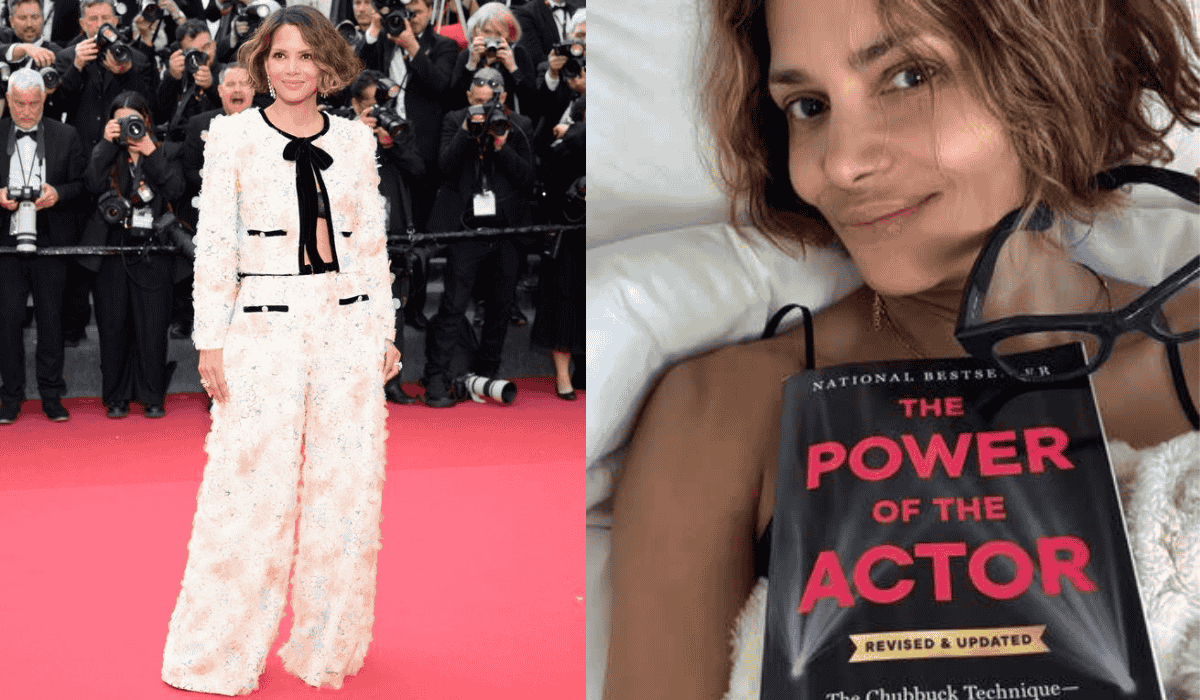
The image looks deceptively simple. Halle Berry, 58, lies in bed without makeup, wearing a tiny black tank top and cat eye glasses, holding up a book about acting. She posted it to Instagram on December 20, showing followers her quiet Saturday morning routine.
But this seemingly casual selfie represents something much larger than celebrity vanity. It captures a woman at the center of a healthcare revolution, someone who transformed personal medical trauma into a national movement demanding better treatment for millions of women navigating menopause.
The Misdiagnosis That Changed Everything
Berry has spoken openly about her journey through perimenopause and the challenges she faced getting accurate medical care. She experienced concerning symptoms including brain fog, heart palpitations, vaginal dryness, and dry eyes. Her doctor initially misdiagnosed her condition as herpes.
The actual cause was vaginal atrophy, a common menopause-related issue affecting roughly half of all postmenopausal women. Berry's experience reflects a broader pattern. Research indicates that many women between 45 and 60 receive incorrect diagnoses when seeking help for menopause symptoms, while a significant portion find their doctor's advice unhelpful.
The Oscar winner describes her doctors as competent professionals, which makes the misdiagnosis more troubling rather than less. If someone with Berry's resources and access to top medical care struggles to get accurate information, what happens to women without those advantages?
That question launched her into what she now calls her "second act" in life.
From Hollywood Icon to Healthcare Advocate
Berry didn't retreat after her diagnosis. She got angry, then productive. She researched why medical professionals fail women during this critical life transition and discovered significant gaps in medical education. Studies show that only a small percentage of medical residents feel adequately prepared to treat menopausal women, with many medical programs dedicating minimal curriculum time to menopause education. This leaves practitioners unprepared to recognize or treat a condition affecting half the population.
The actress began showing up in places Hollywood celebrities rarely venture. She testified before the Maine Legislature in March 2025, sharing intimate details about her symptoms and medical gaslighting. She stood outside the U.S. Capitol with senators, shouting "I'm in menopause, OK?" to advocate for the bipartisan Advancing Menopause Care and Mid-Life Women's Health Act.
In December, she took the stage at the New York Times DealBook Summit wearing a plunging navy blazer that dipped to her ribs. But the power move wasn't her outfit. Berry used that platform to directly criticize California Governor Gavin Newsom for vetoing menopause legislation twice, declaring he "probably should not be our next president" because he's "overlooked women" and "devalued us in midlife."
The audience gasped. Newsom was scheduled to speak at the same event hours later. Berry didn't back down.
The Business of Menopause Care
While advocating politically, Berry simultaneously built a commercial solution. In February 2025, she relaunched Respin, transforming her general wellness platform into Respin Health, a comprehensive menopause care company focused on what she calls female longevity.
The platform operates on four pillars: community, content, commerce, and care. Members access private forums moderated by experts, evidence-based educational materials, curated products, and personalized health coaching. Subscription plans range from $100 to $150 monthly depending on commitment length.
Respin Health creates individualized care plans analyzing over 150 data points unique to each woman's experience. The service includes certified menopause coaches, nutritionists, hormone replacement therapy consultations through virtual clinics, and AI-powered support available around the clock.
Berry partnered with CEO Ally Tam Tumasova, who previously supported Maven Clinic and other digital health companies. The leadership team includes AI technologist Manasa Murthy and community builder Natalie Bruss. In February, the company announced backing from Khosla Ventures, an early investor in OpenAI and DoorDash, alongside Night Ventures, Range Media Partners, Precursor Ventures, and Able Partners.
Securing venture capital proved challenging initially. Berry told Fortune magazine it was "really hard to get people, largely men, at some of these venture capital companies to believe that menopause was a real thing." That skepticism exists despite the menopause care market expected to exceed $28 billion by 2028.
Early results suggest Respin Health works. In a pilot program involving 250 women (40 percent identifying as women of color), 90 percent reported symptom improvement after eight weeks. Nearly two-thirds experienced clinically significant improvement within the same timeframe.
Why This Approach Fills a Critical Gap
Traditional healthcare often dismisses menopause symptoms as normal aging, telling women to simply endure hot flashes, night sweats, mood swings, depression, anxiety, sleep disruption, and cognitive changes that can persist for many years. Research shows that some women, particularly Black women, experience hot flashes for extended periods, creating sustained quality of life impacts.
The transition affects women's professional lives significantly. One in six women leave the workforce due to menopausal symptoms, costing the economy approximately $1.8 billion annually in lost productivity. Women currently comprise 25 percent of the U.S. workforce at some stage of menopause.
Beyond workplace considerations, menopause symptoms connect to serious long-term health concerns. Researchers link them to Alzheimer's disease biomarkers, stroke-like brain lesions, mood disorders, and memory problems. The condition affects bone density, cardiovascular health, and brain function in ways medical science is only beginning to understand.
Berry emphasizes that menopause isn't a disease requiring a cure. It's a natural biological transition that women will spend potentially 30 to 40 years of their lives navigating, given increasing lifespans. Globally, more than one billion women live in menopausal or postmenopausal stages.
The medical establishment's failure to adequately research, fund, and educate around menopause reflects broader patterns of neglect toward women's health. Berry argues that if men experienced similar symptoms disrupting sleep, brain function, and sexual health, society would treat it as a health crisis comparable to COVID-19.
The Personal Cost of Speaking Out
Berry's advocacy carries risks. Openly discussing menopause, aging, and intimate health challenges Hollywood's youth-obsessed culture. She acknowledged at the DealBook Summit that "our culture thinks that at 59 years old, I am past my prime, and that women my age start to become invisible in Hollywood, in the workplace, on social media."
Her December Instagram selfie without makeup, showing natural aging, pushes against those expectations. The post demonstrates confidence about appearing publicly without the polished glamour typically demanded of female celebrities. Berry pairs vulnerability with authority, reading books about her craft while casually dismantling beauty standards.
The actress has maintained advocacy momentum throughout 2025. In early December, she appeared at the DealBook Summit. Just weeks before, she completed her Academy Awards qualifying run and festival appearances. She splits time between political lobbying, business development, and maintaining her acting career.
That December 20 selfie captures someone who refuses to choose between being beautiful, accomplished, vulnerable, and outspoken. Berry wears cat eye glasses and a tiny tank top while reading about acting technique. She looks relaxed, unguarded, and entirely comfortable with who she is at 58.
The Political Backlash and Response
Governor Newsom's office responded to Berry's criticism by stating he "has deep admiration for Ms. Berry's advocacy and looks forward to working with her." His spokesperson explained the veto by claiming the legislation "would have unintentionally raised health care costs for millions of working women and working families already stretched thin."
Newsom later told reporters at Newark Airport that Berry "didn't know" his administration plans to include funding for menopause care in next year's budget. He claimed the issue is "being resolved" and said "we have the ability to reconcile that, so we're reconciling."
Berry hasn't publicly responded to those statements. Her position remains clear: vetoing bipartisan-supported legislation twice demonstrates a lack of commitment to women's health, regardless of alternative funding promises. Other states, including Illinois, have successfully passed similar legislation mandating hormone replacement therapy coverage.
The public nature of their disagreement highlights how menopause advocacy intersects with political ambition, healthcare policy, and gender equity. Newsom's potential 2028 presidential run makes Berry's criticism particularly pointed. She essentially declared that overlooking women's health should disqualify politicians from higher office.
What Success Actually Looks Like
Berry frames her work through a deeply personal lens. She builds "what I wish I had access to" when she needed help. That motivation drives both her political advocacy and commercial ventures. She wants women to have comprehensive, accessible, affordable menopause care years before their first hot flash begins.
The actress emphasizes community as Respin Health's differentiating feature. Research shows people achieve better health outcomes when connected to supportive communities of others facing similar challenges. Berry experienced this herself when discussing symptoms with other women revealed how widespread and misunderstood menopause remains.
Respin Health encourages practical lifestyle interventions alongside medical treatment. The platform promotes "movement snacks," brief exercises integrated into daily routines without requiring gym time or special clothing. Examples include doing ten squats before sitting, performing door frame push-ups before leaving rooms, and incorporating lunges while folding laundry.
The approach acknowledges that women need multiple types of support simultaneously: medical expertise, peer connection, accurate information, lifestyle guidance, and emotional validation. No single intervention addresses the complexity of navigating a decade-long biological transition affecting every body system.
The Bigger Picture on Women's Health
Berry's menopause advocacy exists within a broader context of women's health neglect. Medical research historically excluded women from clinical trials, designing treatments based primarily on male physiology. Women's pain gets dismissed more frequently than men's, leading to delayed diagnoses and inadequate treatment across numerous conditions.
Menopause research receives minimal funding compared to its widespread impact. The condition affects every woman who lives long enough, making it nearly universal. Yet pharmaceutical companies, research institutions, and medical schools treat it as a niche concern unworthy of sustained attention or resources.
This neglect stems partly from ageism and sexism intersecting. Society devalues older women, viewing them as less economically productive and sexually desirable. Menopause marks a cultural boundary where women supposedly become irrelevant. Berry directly challenges that narrative by remaining professionally successful, sexually confident, and culturally visible while openly discussing her menopausal experience.
Her willingness to discuss intimate symptoms publicly destigmatizes conversations other women fear having. When someone of Berry's stature admits to vaginal dryness, brain fog, and misdiagnosis, it gives permission for less famous women to demand better care without shame.
Why the Instagram Post Resonates
That December 20 image works because it refuses performance. Berry isn't promoting a product, announcing a project, or presenting a carefully curated brand image. She's simply existing, looking comfortable and content on a Saturday morning.
The book she's reading, "The Power of the Actor" by Ivana Chubbuck, signals continued professional development. At 58, after decades of success including an Oscar, Berry still studies her craft. The image contradicts narratives about women her age becoming irrelevant or past their prime.
Her white fuzzy blanket, natural curls with golden highlights, and minimal black tank top create intimacy without oversharing. The composition feels authentic rather than staged, though Berry undoubtedly understands how to craft compelling imagery. She looks like someone you might know, not an untouchable celebrity.
Fans responded enthusiastically. The post received substantial engagement, with followers praising her natural beauty and relaxed confidence. Many women commented about appreciating seeing makeup-free selfies from famous women, noting it helps normalize aging without constant cosmetic intervention.
The Road Ahead
Berry shows no signs of slowing her advocacy. She's declared she has "zero fucks left to give" about whether her activism makes powerful people uncomfortable. Her longevity, she emphasizes, depends on continuing this fight. So does the longevity of millions of other women struggling to access adequate menopause care.
The actress plans to continue lobbying for federal and state legislation supporting menopause research, education, and treatment access. She'll keep building Respin Health, expanding services and reaching more women. She'll remain visible in Hollywood, taking roles that interest her without apologizing for her age.
Most importantly, Berry will keep talking about menopause loudly and publicly. She'll share symptoms, treatments, frustrations, and victories. She'll demand that politicians, doctors, researchers, and the general public take women's health seriously.
That December selfie captures someone who has found her purpose beyond acting. Berry discovered that using her platform to improve women's lives matters more than maintaining a perfect public image. She's willing to be vulnerable, angry, demanding, and unapologetically herself.
The revolution she's leading won't happen overnight. Changing medical education, research funding, insurance coverage, and cultural attitudes requires sustained effort across years or decades. But Berry seems committed for the long haul, approaching menopause advocacy with the same intensity she once brought to perfecting difficult roles.
Halle Berry lying in bed reading a book shouldn't be revolutionary. But in a culture that insists women remain perpetually youthful and conventionally beautiful, that erases older women from public life, and that treats menopause as shameful or trivial, her unfiltered Saturday selfie becomes an act of defiance.
She demonstrates that women can age visibly, discuss uncomfortable health topics openly, build successful businesses, challenge powerful politicians, maintain glamorous careers, and still enjoy quiet mornings in bed with a good book. These things aren't mutually exclusive.
Berry's transformation from Hollywood star to menopause advocate illustrates how personal medical trauma can fuel broader social change. Her misdiagnosis at 54 sparked a mission affecting millions of women. That's the power of refusing to suffer silently, of demanding better, of using whatever platform you have to elevate issues others ignore.
The actress proves that second acts can be just as meaningful as first ones, that women past 50 have immense value to contribute, and that speaking uncomfortable truths matters more than maintaining comfortable relationships with those in power.
Whether posing makeup-free in bed or confronting a governor at a high-profile summit, Berry models the kind of confident, unapologetic advocacy women's health desperately needs. She's not asking for permission to matter. She's insisting on it, and inviting other women to do the same.