
That last part is the underrated benefit. The mental overhead of calorie tracking is enormous and most people do not realize how much cognitive space it occupies until it is gone.
17
Sign up to see more
SignupAlready a member?
LoginBy continuing, you agree to Sociomix's Terms of Service, Privacy Policy

That last part is the underrated benefit. The mental overhead of calorie tracking is enormous and most people do not realize how much cognitive space it occupies until it is gone.
As someone who has worked adjacent to the art world for years, the commentary about wealthy collectors treating shock as a commodity lands extremely hard. Kim did not need to go that real but here we are.
Jobs that require you to physically be present will always have a floor that remote and automated alternatives cannot undercut. That is the deepest version of the job security argument and it applies perfectly here.
The manhwa world exploded when Solo Leveling first introduced us to Sung Jinwoo's journey from the weakest hunter to humanity's strongest defender. Now, Solo Leveling Ragnarok brings a fresh perspective to this beloved universe, and fans everywhere are asking the same questions. Can the sequel live up to the original? Do you need to read Solo Leveling first? What makes this continuation worth your time? This guide covers everything you need to know about Solo Leveling Ragnarok, whether you're a longtime fan or someone curious about jumping into the series Solo Leveling Ragnarok is not a reboot or alternate timeline. This is a direct sequel that continues the story years after the original series concluded. The protagonist shifts from Sung Jinwoo to his son, Sung Suho, who must forge his own path in a world still recovering from the catastrophic events his father prevented.

The year 2026 marks a pivotal moment in the evolution of manhwa as a medium. What started as a trickle of Korean comics receiving anime adaptations has become a flood, with at least fifteen confirmed projects bringing beloved manhwa to animated life. This explosive growth wasn't accidental but the inevitable result of Solo Leveling's massive success proving that manhwa adaptations can compete with traditional manga anime in quality, popularity, and profitability. Studios across Japan and Korea are investing heavily in manhwa properties, recognizing that Korean storytelling brings fresh perspectives, innovative premises, and built-in fanbases eager to see their favorite series animated. The diversity of genres receiving adaptations demonstrates that manhwa appeal extends far beyond action and fantasy into romance, psychological thriller, sports, and slice-of-life territories.

Second Life Ranker gets unfairly dismissed by readers who gave up in the middle chapters. The series goes through some pacing issues around the midpoint but the later arcs are some of the most ambitious storytelling in the entire genre.
Anyone else notice that Windsurf's own proprietary SWE models consume zero credits while third-party models like Claude burn through your quota fast? The flat pricing claim gets complicated once you start using the powerful models.
Two weekends to ship a product you had sitting in your head for three years. That sentence right there is the whole value proposition distilled.
As a former studio video producer who retrained into L&D, watching this play out has been surreal. The workflow I spent years mastering is now software. The scripting and instructional design skills I always treated as secondary turned out to be the durable ones.
The argument that this becomes standard enterprise infrastructure feels right to me. Video for internal communications used to be a luxury. The cost curve Synthesia created makes it accessible enough to become default.
Video Agents that auto-generate content based on triggers and data sources sounds incredible on paper. New hire paperwork triggering a personalized onboarding video is genuinely useful. The part that makes me nervous is who audits the output before it reaches the employee.
Flat pricing with daily resets versus flat pricing with no limits are two completely different products. The headline of this article describes the second but Windsurf now operates on the first.
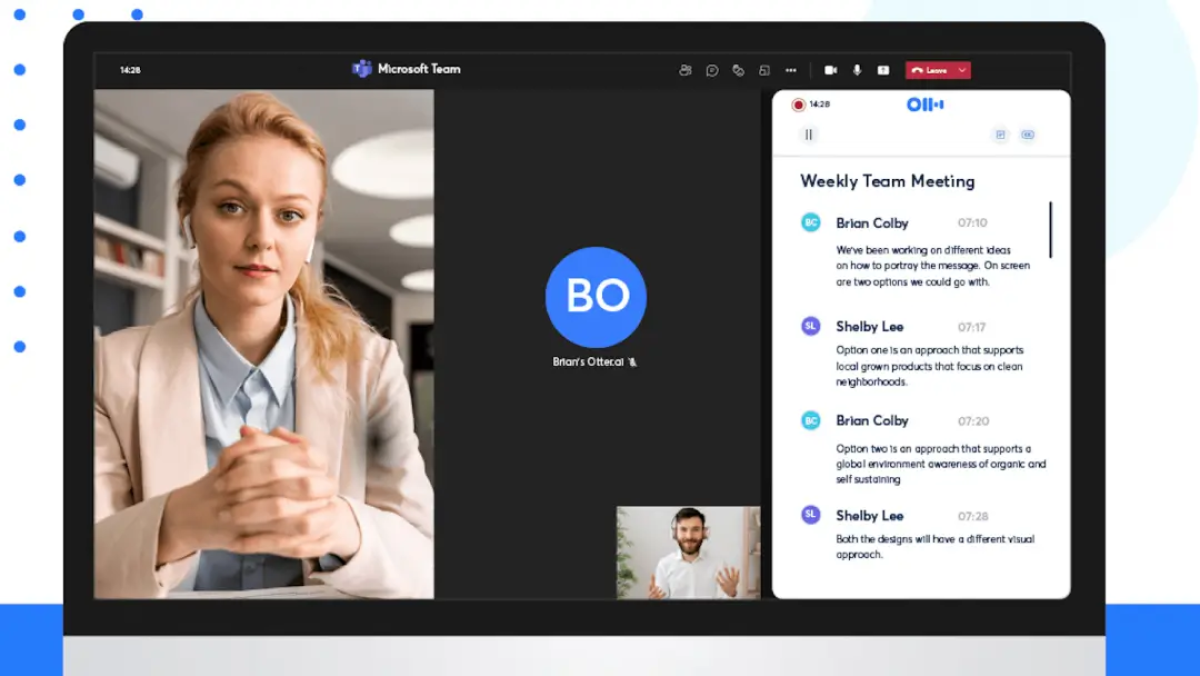
Knowledge workers spend an average of 18 hours per week in meetings. Much of that time involves routine status updates, recurring check-ins, and informational sessions where your physical presence adds minimal value. Otter.ai introduced a provocative concept called OtterPilot: an AI assistant that joins meetings autonomously when you can't attend, records everything, generates summaries, and answers questions about what happened. Connect Otter.ai to your calendar. The system monitors your scheduled meetings and automatically joins Zoom, Google Meet, or Microsoft Teams calls when they start. OtterPilot records audio, generates real-time transcripts, identifies speakers, and creates AI summaries with action items. You receive a meeting briefing without attending the meeting yourself.
Most people can edit a Google Doc. Delete some words, rearrange sentences, fix typos, add paragraphs. It's intuitive and requires no special training. Now imagine editing video the same way. That's Descript's core innovation, and it transformed video editing from a specialized skill requiring expensive software into something anyone who can edit text can do effectively. Descript started as a transcription tool for podcasters. Record your podcast, upload it to Descript, and get an accurate transcript for show notes. But the founders realized something bigger. If you have a perfect transcript synchronized to audio, you can edit the audio by editing the text. Delete a word from the transcript and that word disappears from the audio. That insight became the foundation for a complete editing platform.

When a company's revenue jumps from $10 million to $100 million in nine months, you pay attention. When that growth comes from an AI agent that builds entire applications autonomously, you realize something fundamental just changed in software development. Replit Agent represents that change, and the numbers prove developers are ready for it. Replit started as a browser-based coding environment for education. Students could write Python or JavaScript without installing anything locally. Teachers loved it because setup time vanished. But the company saw something bigger. If you could run code in the browser, why not let AI write that code? That question led to Agent 3, an AI that doesn't just suggest code completions. It builds entire applications from scratch.
The five-tier structure kind of works if you think about it. Go for light use, Plus for daily professional use, the new $100 for heavy daily coding, and $200 for teams who need priority everything. The positioning logic is there.
Love that angle. It is a good reminder that every comment section on every platform is a constructed artifact, not a live documentary of what people actually said in the moment.
Honestly the article's best point is the correlation with Asian equity markets. That structural link is underappreciated and it means global risk appetite is the real driver, not just crypto-specific narratives.
The thing that keeps this from being purely a cost story is reliability. When you are training a frontier model and you need thousands of chips to run reliably for weeks, guaranteed access and predictable performance matter more than headline cost per chip.
The real tell is going to be whether this affects TikTok's advertiser relationships. Brands care a lot about brand safety and a platform that is publicly associated with surveillance concerns and unresolved government data access litigation is a harder sell to risk-averse marketing departments.