
The moonwalk recreation in IMAX sounds like a genuinely physical experience. I have tickets for opening weekend and this detail is making me more excited than anything else I have read.
15
Sign up to see more
SignupAlready a member?
LoginBy continuing, you agree to Sociomix's Terms of Service, Privacy Policy

The moonwalk recreation in IMAX sounds like a genuinely physical experience. I have tickets for opening weekend and this detail is making me more excited than anything else I have read.
Kim is clearly building toward the reveal of what that obsession does to both of them. The structural mirroring the article describes in Hwang's panel composition is already telegraphing something about how similar these two might turn out to be.
This is not a tech trend. This is an infrastructure mega-cycle, like the railroad boom or the interstate highway system. The difference is it is happening in a decade instead of a century.
The webtoon medium is actually perfect for this type of story because the vertical scroll pacing lets you control exactly when reveals land in a way print pagination cannot replicate as precisely.
Curious whether the anime will adapt the full 123 episodes or just the earlier arcs. Twelve episodes for this material feels extremely compressed.
Sports anime and manga have delivered countless memorable series over the decades, from Slam Dunk's basketball brilliance to Haikyuu's volleyball excellence. These stories typically follow familiar patterns: talented but inexperienced protagonist joins a team, forms bonds with teammates, faces rivals, grows through competition, and ultimately pursues championship glory. The formula works because it taps into universal themes about effort, teamwork, and self-improvement. The Boxer, created by JH, takes everything you expect from sports stories and systematically deconstructs it. The protagonist doesn't love boxing. He doesn't form deep bonds with teammates. He doesn't overcome challenges through friendship and determination. Instead, the manhwa presents one of the darkest, most psychologically complex examinations of combat sports ever created, wrapped in stunningly minimalist artwork that elevates the narrative to something approaching high art.

While Synthesia leads in revenue, HeyGen leads in customer acquisition momentum with 152% year-over-year growth in mid-market adoption. That explosive growth rate allowed HeyGen to close much of the customer count gap by late 2025. The company is winning by making avatar video accessible to smaller teams and individual creators who cannot afford enterprise contracts but need professional video capabilities. HeyGen positioned itself for small and medium businesses, marketing teams, content creators, and solo entrepreneurs rather than enterprise learning and development departments. This market segment values affordability, ease of use, and creative flexibility over governance features and advanced integrations. Average contract values are roughly one-third of Synthesia's, reflecting this different customer profile.

The GitHub integration is a game changer for hybrid workflows. Start a prototype in Bolt, hand it off to a GitHub repo when it gets complex, continue in your normal dev environment. That handoff being smooth is what makes it actually useful for teams.
What no one is discussing is the environmental cost of running these AI generation models at scale for millions of projects. Every prompt runs through massive compute infrastructure. That is not free in any meaningful sense.
When a company's revenue jumps from $10 million to $100 million in nine months, you pay attention. When that growth comes from an AI agent that builds entire applications autonomously, you realize something fundamental just changed in software development. Replit Agent represents that change, and the numbers prove developers are ready for it. Replit started as a browser-based coding environment for education. Students could write Python or JavaScript without installing anything locally. Teachers loved it because setup time vanished. But the company saw something bigger. If you could run code in the browser, why not let AI write that code? That question led to Agent 3, an AI that doesn't just suggest code completions. It builds entire applications from scratch.
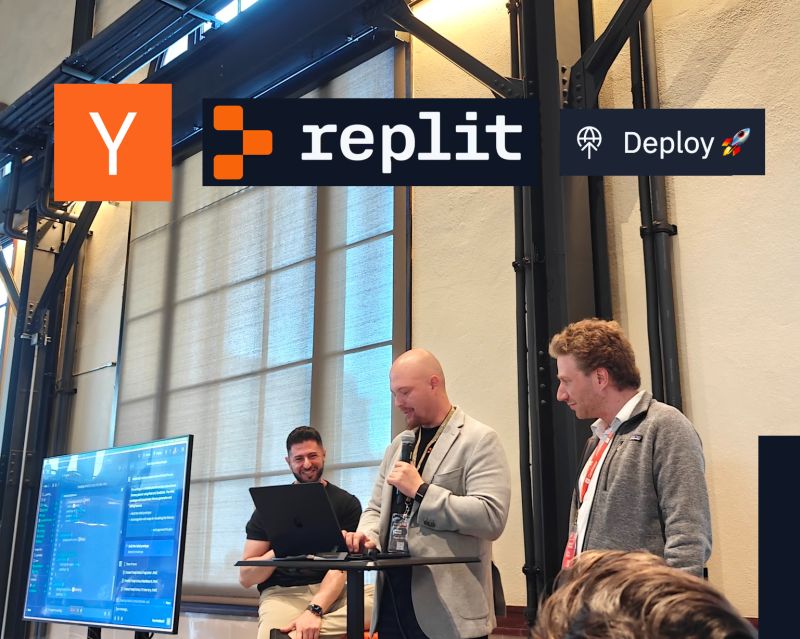
Built a full SaaS landing page with auth, database, and payment integration in a weekend using this. Two years ago that would have been a two-month project. My brain still hasn't fully processed what happened.
Okay but does anyone else find it mildly funny that the company almost died right before launching the product that made it worth billions? Eight years of struggle and then nine months of rocketship growth.
The competitive landscape is ferocious right now. Cursor at $500M ARR, Claude Code growing extremely fast, Windsurf getting acquired. Replit is in a serious race and being the most accessible option for non-technical users is a real strategic bet.
Forty million dollars in annual recurring revenue. Six months. One browser-based platform. Those numbers would be impressive for any software company, but for Bolt.new, they represent something more significant: the moment when development environments moved permanently into the cloud and never looked back. Traditional software development has always required setup. Install Node.js, configure your environment, manage dependencies, set up local servers, troubleshoot version conflicts. Before writing a single line of code, developers spend hours or even days preparing their machines. Junior developers often spend their first week just getting their environment working. Bolt.new eliminated all of that with WebContainers technology.
Niche take but this feature matters most for non-English speakers commenting in a second language. The pressure of posting something grammatically off and not being able to fix it is way higher when you are already self-conscious about how you write.
The global cryptocurrency market capitalization has climbed back above the $2.5 trillion threshold, fueled by a massive liquidation of short positions and renewed institutional interest. Geopolitical developments and shifting investor sentiment combined to create a powerful rally that caught bearish traders off guard, resulting in substantial losses for those betting against the market. According to data from CoinGecko, the total market capitalization of all cryptocurrencies combined increased 1.4% to reach $2.52 trillion on Friday, April 10. Bitcoin experienced a notable surge of over 3%, briefly touching the $73,000 mark before consolidating around $72,000 at the time of writing. Ethereum demonstrated equally impressive strength, pushing past the $2,200 level, while the majority of top 10 cryptocurrencies by market capitalization also posted significant gains.

I've been dollar-cost averaging through every dip since $60K. I'm not celebrating until we get a sustained weekly close above $75K.
Respectfully pushing back on the gold narrative here. Gold pulling back 1% on a single volatile day is completely normal profit-taking. Calling it a capital rotation into crypto is a stretch.
When you hear “Paris Fashion Week,” your mind races to haute couture, bold statements, and the world’s most glamorous attendees. But on October 4, 2025, the scene got a surprise guest—Meghan Markle, making what might be her most talked-about entrance yet. To call it a “debut” feels almost too neat, as if she’s stepping into a world she’s never touched. Yet, Meghan’s gradual evolution as a style influencer has been anything but accidental. Her Paris moment isn’t just celebrity spectacle; it’s a statement, a pivot, and a nuanced step into a new chapter. Here’s my take on why this matters.