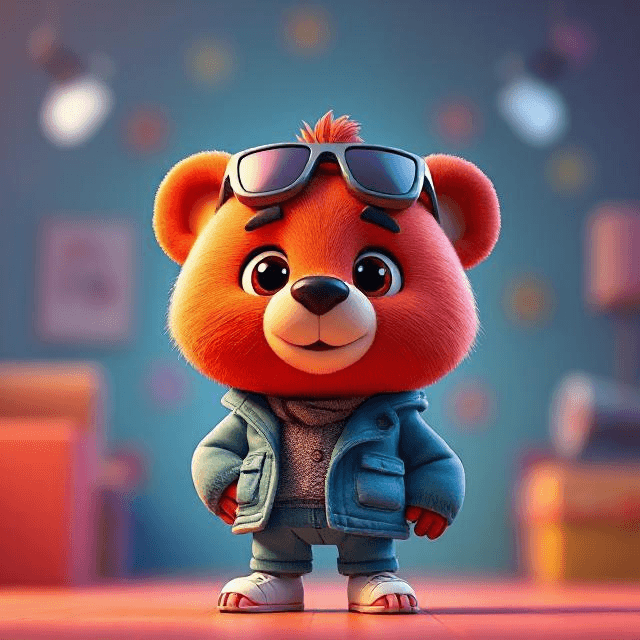
This is literally what Barack Obama and others have talked about with wearing the same type of clothes every day. Cognitive load management is ancient wisdom with new branding.
12
Sign up to see more
SignupAlready a member?
LoginBy continuing, you agree to Sociomix's Terms of Service, Privacy Policy

This is literally what Barack Obama and others have talked about with wearing the same type of clothes every day. Cognitive load management is ancient wisdom with new branding.
The fact that the Solo Leveling franchise topped charts consistently from 2019 through 2024 on major platforms tells you this isn't a one-hit trend. Ragnarok is a continuation of something with real staying power.
The series being in its final arc right now actually makes the anime case stronger. You can announce an adaptation, build hype, and have a clear endpoint to market toward.
In a manhwa landscape dominated by dungeon crawling, regression narratives, and power fantasies, The Greatest Estate Developer stands out by asking a simple question: what if the protagonist's greatest weapon wasn't a sword or magic system, but civil engineering knowledge? This bizarre premise transforms into one of the most entertaining, genuinely funny, and surprisingly heartfelt series currently running, proving that innovation in storytelling comes from unexpected places. The series takes the familiar isekai setup where a modern person finds themselves in a fantasy world and completely subverts expectations. Instead of becoming an adventurer or hero, protagonist Kim Suho uses his engineering knowledge to revolutionize construction, infrastructure, and economic development. What sounds like it should be boring becomes absolutely captivating through sharp writing, excellent comedic timing, and genuine passion for showing how infrastructure improves lives.

The social mobility point the article makes about male characters in historical fantasy settings is accurate but I want to add that Elliot specifically being a minor villain rather than a protagonist or love interest complicates that mobility significantly. He has male privilege in the setting but no narrative privilege.
Tower climbing stories have become a dominant force in manhwa, but most follow predictable patterns. A protagonist enters a mysterious tower, gains powers, forms a party, and ascends floors while growing stronger. The formula works because progression feels satisfying and each floor presents new challenges. However, Doom Breaker takes this familiar framework and transforms it into something far more emotionally devastating and psychologically complex than typical tower stories. Also known as SSS-Class Suicide Hunter, Doom Breaker initially appears to be another power fantasy where the protagonist gains an overpowered ability. The premise sounds almost comedic. Kim Gongja can copy any skill by dying, then returns to life to use that ability. But beneath this seemingly absurd power lies a story about pain, sacrifice, redemption, and what it truly means to be a hero when heroism demands everything from you.

Manhwa readers are living in genuinely historic times right now. Warner Bros partnering with Webtoon for animated adaptations on top of everything else happening with Korean comics in global media is unprecedented.
Runway winning this benchmark matters but the bigger signal is the enterprise spend data. When actual money is flowing into a platform at scale, that is harder to argue with than any leaderboard score.
Ran into that performance issue too. The workaround that helped me was splitting longer recordings into segments rather than one giant project file. Bit annoying but it mostly solves the sluggishness.
The multi-IDE plugin support is what got me. My team has three people on JetBrains and two on VS Code and we can all use the same tool without anyone compromising their setup.
Walking in on a friend reading this series at the chapter where a certain minor character from the merchant arc dies and trying to explain manhwa to someone who has never read it before is an experience.
Hot take: this is not replacing your development team. It is replacing your intern. There is a significant difference.
Sports anime and manga have delivered countless memorable series over the decades, from Slam Dunk's basketball brilliance to Haikyuu's volleyball excellence. These stories typically follow familiar patterns: talented but inexperienced protagonist joins a team, forms bonds with teammates, faces rivals, grows through competition, and ultimately pursues championship glory. The formula works because it taps into universal themes about effort, teamwork, and self-improvement. The Boxer, created by JH, takes everything you expect from sports stories and systematically deconstructs it. The protagonist doesn't love boxing. He doesn't form deep bonds with teammates. He doesn't overcome challenges through friendship and determination. Instead, the manhwa presents one of the darkest, most psychologically complex examinations of combat sports ever created, wrapped in stunningly minimalist artwork that elevates the narrative to something approaching high art.

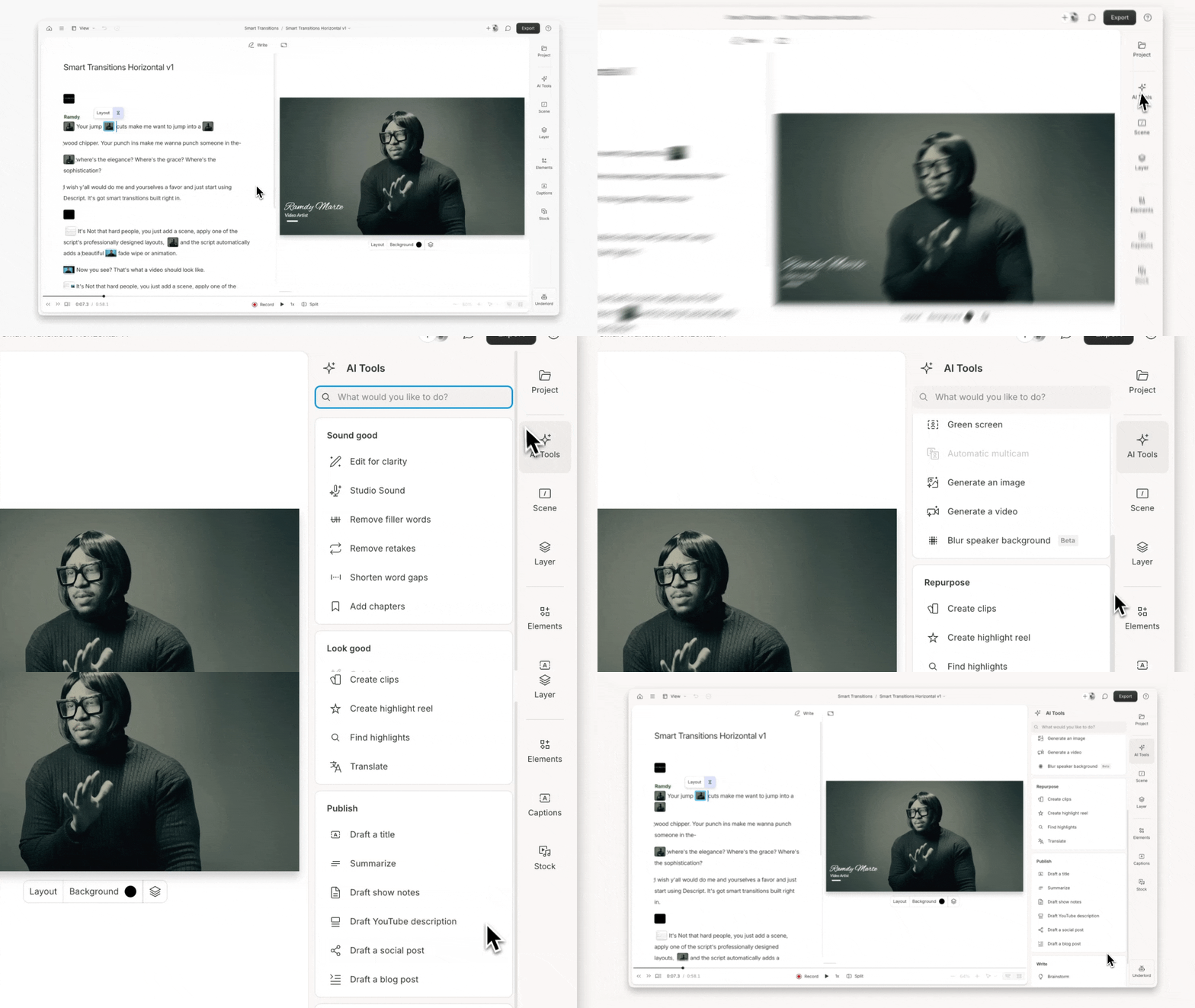
Most people can edit a Google Doc. Delete some words, rearrange sentences, fix typos, add paragraphs. It's intuitive and requires no special training. Now imagine editing video the same way. That's Descript's core innovation, and it transformed video editing from a specialized skill requiring expensive software into something anyone who can edit text can do effectively. Descript started as a transcription tool for podcasters. Record your podcast, upload it to Descript, and get an accurate transcript for show notes. But the founders realized something bigger. If you have a perfect transcript synchronized to audio, you can edit the audio by editing the text. Delete a word from the transcript and that word disappears from the audio. That insight became the foundation for a complete editing platform.
This is fundamentally a story about what happens when you pick a boring unsexy enterprise use case and execute on it for eight years while everyone else chases the consumer market. Corporate training is not glamorous. The financials very much are.
Can someone explain how the security actually works at scale though? Row-level security through Supabase sounds fine for an MVP but what about a production app with 50,000 users and sensitive data?
Tried Gen-4.5 for a fashion client last month and the fabric movement and texture consistency were legitimately impressive. Previous models always had that weird liquid-fabric shimmer that screamed AI. This mostly avoided it.
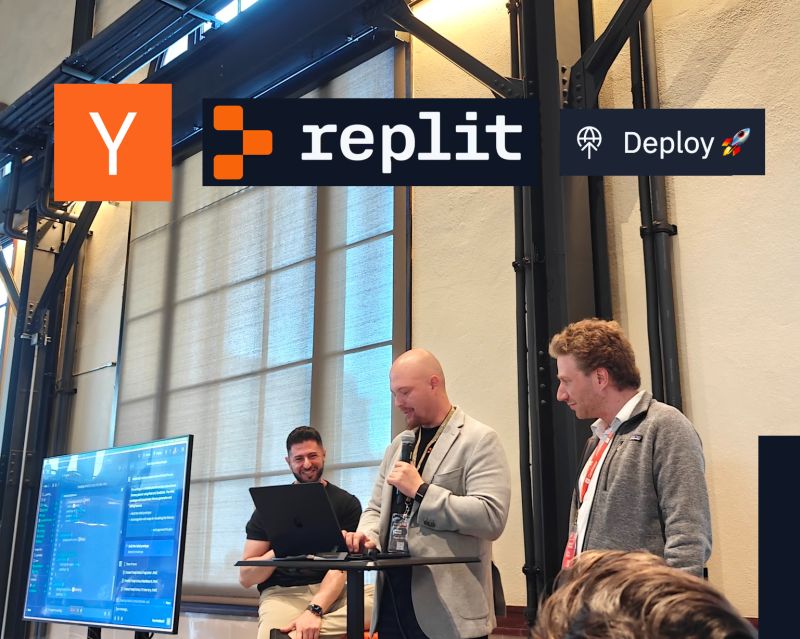
When a company's revenue jumps from $10 million to $100 million in nine months, you pay attention. When that growth comes from an AI agent that builds entire applications autonomously, you realize something fundamental just changed in software development. Replit Agent represents that change, and the numbers prove developers are ready for it. Replit started as a browser-based coding environment for education. Students could write Python or JavaScript without installing anything locally. Teachers loved it because setup time vanished. But the company saw something bigger. If you could run code in the browser, why not let AI write that code? That question led to Agent 3, an AI that doesn't just suggest code completions. It builds entire applications from scratch.
The post mentions LMS integration was added. For anyone running employee training or online education that is a meaningful feature. Getting video content directly into the learning environment where learners already are removes a whole distribution headache.
There's a photograph from February 2026 that pretty much sums up the state of AI right now. At the India AI Impact Summit in New Delhi, Indian Prime Minister Narendra Modi invited the world's tech leaders onstage for a group photo. Everyone held hands. Well, almost everyone. Sam Altman of OpenAI and Dario Amodei of Anthropic, standing right next to each other, refused to clasp hands and instead raised their fists separately. The internet, predictably, lost its mind. An awkward moment between OpenAI CEO Sam Altman and Anthropic CEO Dario Amodei at an AI Summit captured the increasingly icy relations between two rival tech leaders who started off as colleagues. That's not just petty drama. It's a window into what may be the most consequential corporate rivalry in the technology world right now, one that's playing out in boardrooms, courtrooms, Super Bowl ads, and billion-dollar compute deals all at once.