
If you told me two years ago that I'd be more emotionally invested in a sequel protagonist than in Jinwoo himself at certain points, I would not have believed you. Suho gets there.
23
Sign up to see more
SignupAlready a member?
LoginBy continuing, you agree to Sociomix's Terms of Service, Privacy Policy

If you told me two years ago that I'd be more emotionally invested in a sequel protagonist than in Jinwoo himself at certain points, I would not have believed you. Suho gets there.
The adaptation was originally supposed to drop in the second half of 2025 and we still have no confirmed release date. My hype has officially entered survival mode.
Jooheon does not need saving and does not need encouragement. He just needs opportunity. That self-sufficiency is so much more satisfying to watch than protagonists who discover their potential through friendship speeches.
The year 2026 marks a pivotal moment in the evolution of manhwa as a medium. What started as a trickle of Korean comics receiving anime adaptations has become a flood, with at least fifteen confirmed projects bringing beloved manhwa to animated life. This explosive growth wasn't accidental but the inevitable result of Solo Leveling's massive success proving that manhwa adaptations can compete with traditional manga anime in quality, popularity, and profitability. Studios across Japan and Korea are investing heavily in manhwa properties, recognizing that Korean storytelling brings fresh perspectives, innovative premises, and built-in fanbases eager to see their favorite series animated. The diversity of genres receiving adaptations demonstrates that manhwa appeal extends far beyond action and fantasy into romance, psychological thriller, sports, and slice-of-life territories.

The regression subgenre has exploded in popularity over the past few years, becoming one of the most beloved narrative frameworks in Korean manhwa. The core premise is deceptively simple: a protagonist dies or fails catastrophically, then returns to an earlier point in time with their memories intact. Armed with future knowledge, they get a second chance to change their fate, save loved ones, gain power, or pursue revenge against those who wronged them. What makes regression stories so compelling is the combination of dramatic irony, strategic satisfaction, and emotional depth they provide. Readers know what the protagonist knows, creating tension when other characters make mistakes we can see coming. We feel smart alongside protagonists who use foreknowledge to outmaneuver enemies. And we experience the emotional weight of carrying memories of futures that haven't happened yet, of people who died who are currently alive, of betrayals that haven't occurred.

Ten years before the invasion is the perfect window. Long enough to actually prepare, short enough that there's constant urgency.
Hard disagree that this fixes the designer-developer relationship. Tools do not fix relationships. Communication, mutual respect, and shared goals fix relationships. v0 is a productivity accelerator, not a culture intervention.
To the person asking about mobile, they launched a full mobile development workflow in early 2026 where you can preview apps on device and submit directly to the App Store. Still early but I have tested it and it is legitimately functional.
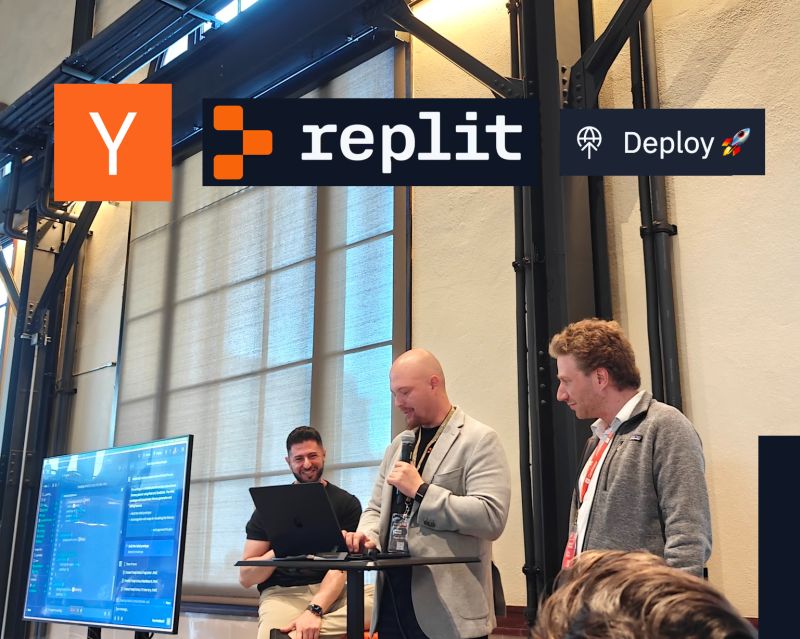
When a company's revenue jumps from $10 million to $100 million in nine months, you pay attention. When that growth comes from an AI agent that builds entire applications autonomously, you realize something fundamental just changed in software development. Replit Agent represents that change, and the numbers prove developers are ready for it. Replit started as a browser-based coding environment for education. Students could write Python or JavaScript without installing anything locally. Teachers loved it because setup time vanished. But the company saw something bigger. If you could run code in the browser, why not let AI write that code? That question led to Agent 3, an AI that doesn't just suggest code completions. It builds entire applications from scratch.
Physical realism in water and liquids is the tell for me. Pour a drink in the wrong AI model and it looks like mercury flowing in zero gravity. Gen-4.5 actually makes it look like water. Small thing but it breaks the illusion completely when it is wrong.
Genuinely curious question: does the video extension feature maintain the same visual coherence as the original clip, or does quality drift noticeably when you start extending past 20 seconds?
To the stress test question above: the Supabase backend is solid. I have had apps handle several thousand concurrent users without issues. The generated frontend code is where things can get messy under load.
Not gonna lie, the line about AI leading players treating their software less like consumer products and more like digital weaponry is the most important sentence in this whole piece and it got buried near the bottom.
Wait, what about the people who didn't consent to being recorded? The article breezes past the privacy section really fast, but this is genuinely complicated in states like California, Illinois, and Florida where all-party consent is required before recording a conversation.
Speaking from experience doing UX work, the emotional cost of watching your designs get interpreted badly is not trivial. You put weeks into getting the details right and then the implementation feels like a rough draft. A tool that closes that gap has real psychological value.
The article ends with a note about platforms winning by improving how conversations happen rather than just hosting them. That is true but it also sounds like a pitch for a product. The line between analysis and marketing copy is thin here.
Can the rally actually be sustained if the Fed signals no cuts until late in the year? Higher rates and a $72K Bitcoin coexisting requires a very specific set of assumptions about dollar weakness and institutional demand holding firm.
Heard this before. Big catalyst, short squeeze, new highs incoming, and then three weeks later we're back at $65K wondering what happened.
As someone who builds on AI APIs professionally, the move to proprietary is frustrating but understandable. Meta needed to monetize something. Giving away open weights for years built goodwill but not revenue. The real question is whether their API pricing will be competitive with OpenAI and Anthropic.
The slicked back bun is doing so much work in every photo. It removes distraction completely and forces the clothes and the architecture of the look to speak.