I'm skeptical of any wellness trend that becomes an identity before the evidence base is solid. The article even flags this risk. That sentence lands.
11
Sign up to see more
SignupAlready a member?
LoginBy continuing, you agree to Sociomix's Terms of Service, Privacy Policy

I'm skeptical of any wellness trend that becomes an identity before the evidence base is solid. The article even flags this risk. That sentence lands.
Honestly the thing that sold me on this pivot was the concept of capital lock-in. When a company spends a billion dollars on a facility, they are committed to staffing it no matter what the economy does. That is a very different risk profile than a software team.
The technology sector is experiencing a paradox. While headlines scream about mass layoffs at major tech companies, a critical shortage is quietly building in one of the most essential areas of digital infrastructure. Datacenters, the physical backbone of our digital world, are facing an unprecedented demand surge, and there simply are not enough skilled professionals to build and maintain them. Countries across the globe are rushing to establish their own datacenter infrastructure. From India's ambitious plans to become a datacenter hub to the European Union's push for data sovereignty, and emerging markets in Southeast Asia and Latin America building their first large scale facilities, the construction boom is just beginning.

Wait, is Omniscient Reader even on this list? Because that is the adaptation I thought was supposed to arrive this year and the article does not seem to mention it directly.
The manhwa world exploded when Solo Leveling first introduced us to Sung Jinwoo's journey from the weakest hunter to humanity's strongest defender. Now, Solo Leveling Ragnarok brings a fresh perspective to this beloved universe, and fans everywhere are asking the same questions. Can the sequel live up to the original? Do you need to read Solo Leveling first? What makes this continuation worth your time? This guide covers everything you need to know about Solo Leveling Ragnarok, whether you're a longtime fan or someone curious about jumping into the series Solo Leveling Ragnarok is not a reboot or alternate timeline. This is a direct sequel that continues the story years after the original series concluded. The protagonist shifts from Sung Jinwoo to his son, Sung Suho, who must forge his own path in a world still recovering from the catastrophic events his father prevented.

Hot take but The Warrior Returns' modern Earth setting is actually underused as a concept. The tension between someone with medieval combat instincts and modern civilization never fully becomes the series' main focus when it could have been extraordinary.
The moral ambiguity question raised in the Kill the Hero section is genuinely one of the most interesting ethical puzzles in fiction. Punishing someone for crimes they have not committed yet but definitely will commit is something philosophers actually debate.
When Tomb Raider King first exploded onto the manhwa scene, it brought a fresh take on dungeon crawling stories by combining archaeological adventure with ruthless protagonist energy and a treasure-hunting premise that felt genuinely different from typical gate and dungeon narratives. The series built a dedicated fanbase through its satisfying blend of historical artifact powers, strategic relic acquisition, and a protagonist who wasn't afraid to be morally gray in pursuit of his goals. Now, with the anime adaptation confirmed for 2026 as one of the most anticipated manhwa-to-anime projects, Tomb Raider King is experiencing a resurgence. New readers are discovering the series while longtime fans eagerly await seeing Jooheon Suh's relic-hunting adventures brought to life with animation. The timing couldn't be better, as the series has built enough content to support a substantial adaptation while maintaining momentum in its ongoing storyline.

The AI video generation race just got a clear winner. Runway Gen-4.5 topped the Video Arena leaderboard with a 1,247 Elo score, surpassing both Google Veo 3 and OpenAI Sora 2. For those unfamiliar with Elo ratings, this is the same system used to rank chess players and competitive games. A higher score means more wins in head-to-head comparisons. When real users compare videos side by side without knowing which AI generated them, they consistently choose Runway's output. Runway didn't start as an enterprise video tool. It began as a playground for artists and filmmakers who wanted to experiment with AI-generated visuals. The early versions produced fascinating but inconsistent results. Sometimes you'd get stunning cinematic footage. Other times you'd get distorted motion and unrealistic physics. Gen-4.5 changed that equation by achieving breakthrough consistency in motion quality and physical accuracy.
The fact that positive developer sentiment toward AI tools actually dropped from over 70% to 60% in recent surveys while usage keeps climbing tells you something interesting. People are adopting these tools even when they have reservations. That is not quite the utopia picture the article paints.
The software development world just witnessed something unprecedented. A European startup called Lovable reached $20 million in annual recurring revenue in just two months, making it potentially the fastest-growing startup in European history. But here's the twist that's making traditional software agencies nervous: they did it by giving non-technical founders the power to build full-stack applications without writing a single line of code. For years, the promise of no-code tools has been the same: anyone can build an app. But the reality has always been different. You'd create a beautiful frontend, get excited about your progress, and then hit the technical cliff. Suddenly you needed to configure databases, set up authentication, manage API keys, and deploy to servers. The "no-code" dream became a "hire-a-developer-anyway" nightmare.
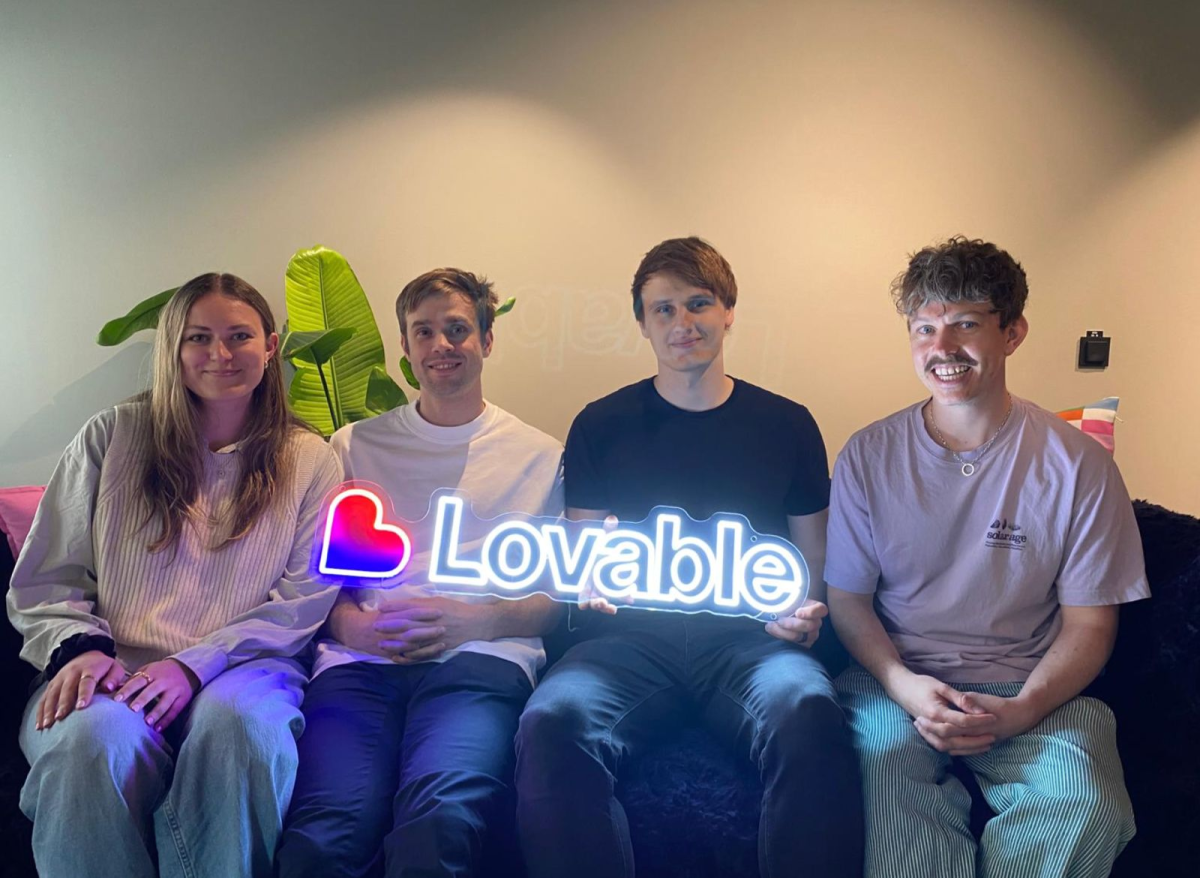
The vibe coding wave is real. Cursor went from zero to a $29 billion valuation. Lovable is at $6.6 billion. Replit is at $3 billion. Vercel is at $9 billion. An entire ecosystem is being valued at what was previously reserved for only the largest tech companies.
The fact that Premiere Pro has now added text-based editing to its own timeline is probably the clearest signal that Descript validated the concept. When the incumbents copy your core feature you have already won the argument.
Competitors should be paying attention to how HeyGen handles the credit system overhaul they recently did. Renaming confusing credits, labeling premium features clearly, showing cost estimates before you generate. That kind of UX honesty builds trust and reduces churn.
OpenAI's latest subscription offering represents its most aggressive move yet to reclaim market share in the rapidly expanding AI-powered coding assistant sector
Could definitely see this working for a first date if you want to show off your artistic side
Does anyone else think the clutch might be a bit too much with all the other spiky details? Maybe a sleek metallic envelope clutch instead?