
Been a fan of Michael Jackson since childhood and I will say this carefully: I can love the music and the artistry and still think a complete biographical film owes the audience the full story. Those two things are not in conflict.
20
Sign up to see more
SignupAlready a member?
LoginBy continuing, you agree to Sociomix's Terms of Service, Privacy Policy

Been a fan of Michael Jackson since childhood and I will say this carefully: I can love the music and the artistry and still think a complete biographical film owes the audience the full story. Those two things are not in conflict.
My big question before starting was whether Copycat manhwa is better than Bastard, and honestly after 10 chapters I still cannot decide. They feel like completely different kinds of disturbing.
Painter of the Night broke open what BL historical manhwa could be in terms of moral complexity and I feel like this series is arriving at a similar moment where the genre is ready for something that takes itself seriously. The timing feels right.
In a manhwa landscape dominated by dungeon crawling, regression narratives, and power fantasies, The Greatest Estate Developer stands out by asking a simple question: what if the protagonist's greatest weapon wasn't a sword or magic system, but civil engineering knowledge? This bizarre premise transforms into one of the most entertaining, genuinely funny, and surprisingly heartfelt series currently running, proving that innovation in storytelling comes from unexpected places. The series takes the familiar isekai setup where a modern person finds themselves in a fantasy world and completely subverts expectations. Instead of becoming an adventurer or hero, protagonist Kim Suho uses his engineering knowledge to revolutionize construction, infrastructure, and economic development. What sounds like it should be boring becomes absolutely captivating through sharp writing, excellent comedic timing, and genuine passion for showing how infrastructure improves lives.

The system genre being described as wish fulfillment without requiring extensive world-building is exactly why it took off so fast. You can pick up any series and understand the stakes within three chapters.
It is interesting that this is rated Young Adult on Webtoon because the themes feel very much like adult literary fiction dressed in fantasy clothing.
The Fortune 100 adoption numbers are impressive but also a little circular. Once enough big companies adopt something it becomes safer for other big companies to adopt it. Network effects in enterprise compliance culture are wild.
Respectfully the $400 million funding round with investors including sovereign wealth funds suggests this is not just developer hype. When large institutional capital moves into an AI coding platform, the use case has been validated beyond the early adopter crowd.
Anyone using Runway for architectural visualization? Wondering how it handles interior rendering with consistent material properties across different lighting scenarios.
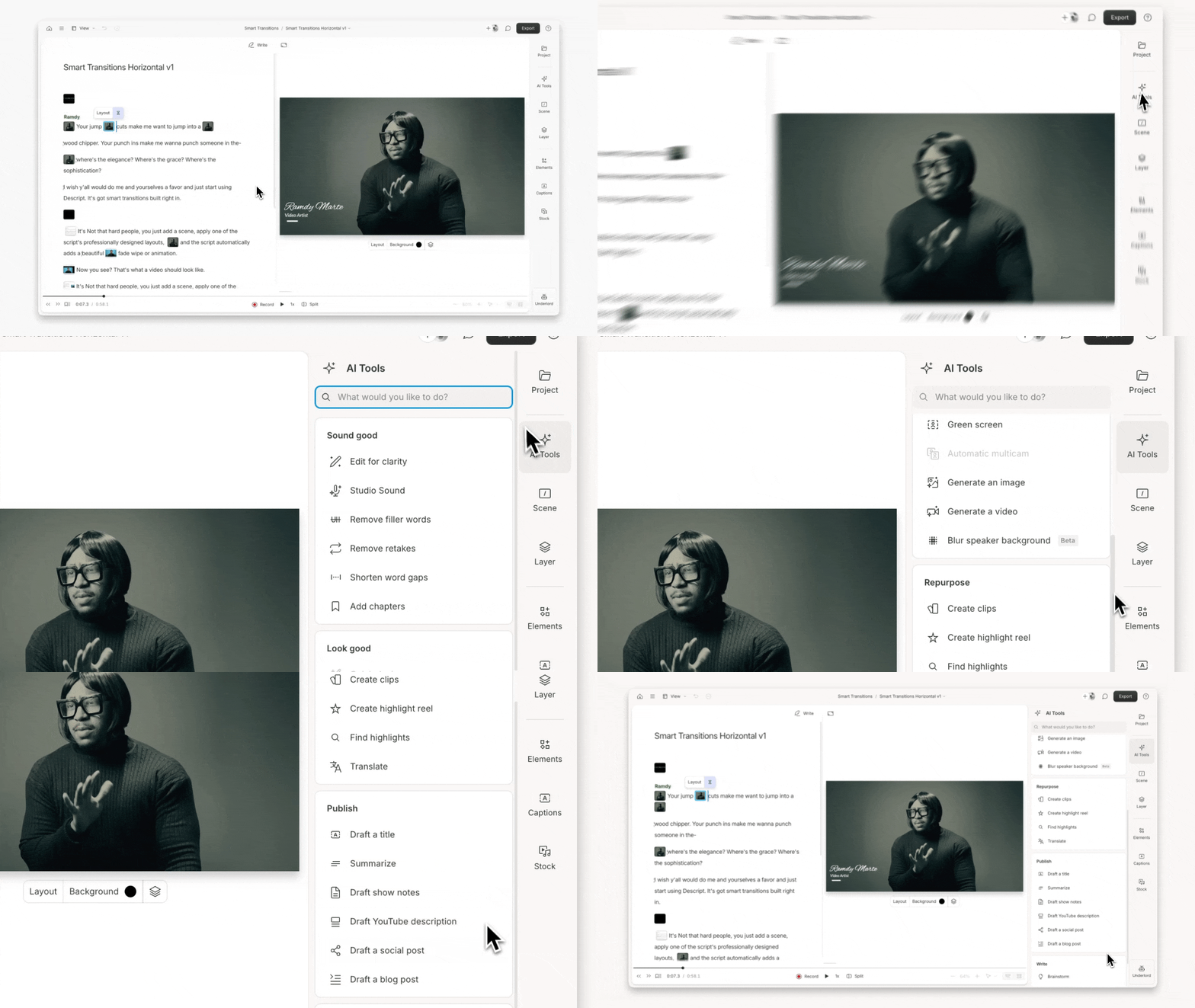
Most people can edit a Google Doc. Delete some words, rearrange sentences, fix typos, add paragraphs. It's intuitive and requires no special training. Now imagine editing video the same way. That's Descript's core innovation, and it transformed video editing from a specialized skill requiring expensive software into something anyone who can edit text can do effectively. Descript started as a transcription tool for podcasters. Record your podcast, upload it to Descript, and get an accurate transcript for show notes. But the founders realized something bigger. If you have a perfect transcript synchronized to audio, you can edit the audio by editing the text. Delete a word from the transcript and that word disappears from the audio. That insight became the foundation for a complete editing platform.
The chess Elo comparison is a bit misleading though. Chess Elo measures performance against other players over time with consistent rules. AI video arena Elo is based on user preference which is inherently subjective and the voting pool can shift dramatically.
Three months in on the free tier and only hit the 25 credit limit twice. Using it mostly for autocomplete and small refactors. For light usage the free plan is genuinely viable.
The AI video generation race just got a clear winner. Runway Gen-4.5 topped the Video Arena leaderboard with a 1,247 Elo score, surpassing both Google Veo 3 and OpenAI Sora 2. For those unfamiliar with Elo ratings, this is the same system used to rank chess players and competitive games. A higher score means more wins in head-to-head comparisons. When real users compare videos side by side without knowing which AI generated them, they consistently choose Runway's output. Runway didn't start as an enterprise video tool. It began as a playground for artists and filmmakers who wanted to experiment with AI-generated visuals. The early versions produced fascinating but inconsistent results. Sometimes you'd get stunning cinematic footage. Other times you'd get distorted motion and unrealistic physics. Gen-4.5 changed that equation by achieving breakthrough consistency in motion quality and physical accuracy.

There's a photograph from February 2026 that pretty much sums up the state of AI right now. At the India AI Impact Summit in New Delhi, Indian Prime Minister Narendra Modi invited the world's tech leaders onstage for a group photo. Everyone held hands. Well, almost everyone. Sam Altman of OpenAI and Dario Amodei of Anthropic, standing right next to each other, refused to clasp hands and instead raised their fists separately. The internet, predictably, lost its mind. An awkward moment between OpenAI CEO Sam Altman and Anthropic CEO Dario Amodei at an AI Summit captured the increasingly icy relations between two rival tech leaders who started off as colleagues. That's not just petty drama. It's a window into what may be the most consequential corporate rivalry in the technology world right now, one that's playing out in boardrooms, courtrooms, Super Bowl ads, and billion-dollar compute deals all at once.

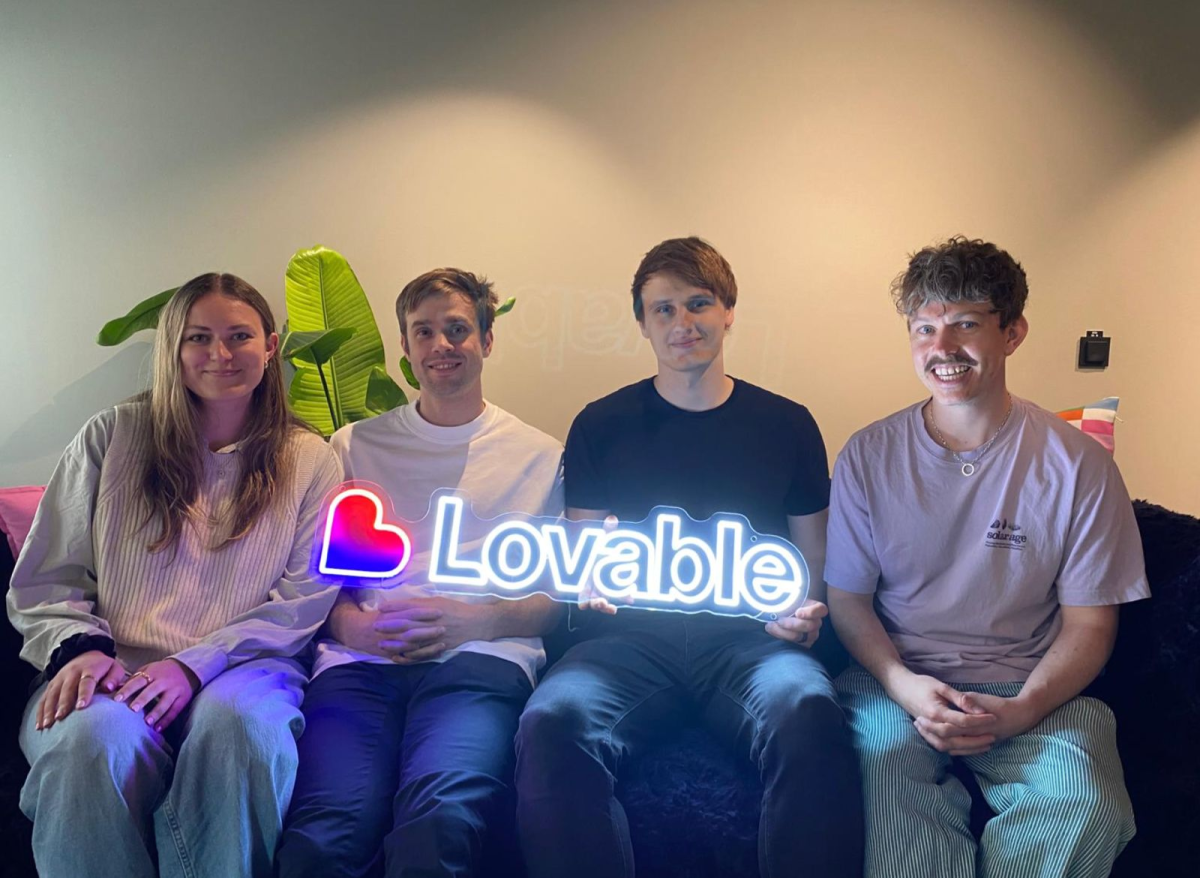
The software development world just witnessed something unprecedented. A European startup called Lovable reached $20 million in annual recurring revenue in just two months, making it potentially the fastest-growing startup in European history. But here's the twist that's making traditional software agencies nervous: they did it by giving non-technical founders the power to build full-stack applications without writing a single line of code. For years, the promise of no-code tools has been the same: anyone can build an app. But the reality has always been different. You'd create a beautiful frontend, get excited about your progress, and then hit the technical cliff. Suddenly you needed to configure databases, set up authentication, manage API keys, and deploy to servers. The "no-code" dream became a "hire-a-developer-anyway" nightmare.
As someone in financial compliance, the Treasury AI Risk Management Framework that came out earlier this year suddenly looks a lot less theoretical. They were building the governance scaffolding right before the model that requires it arrived.
I'm wondering if the shirt would look good untucked with a belt? I feel like that could create another cool variation