
For people worried about the complexity, the story is actually very accessible in its early arcs. It gets dense but it builds to that density in a way that feels earned rather than overwhelming.
Sign up to see more
SignupAlready a member?
LoginBy continuing, you agree to Sociomix's Terms of Service, Privacy Policy

For people worried about the complexity, the story is actually very accessible in its early arcs. It gets dense but it builds to that density in a way that feels earned rather than overwhelming.
What chapter does it actually start getting good? Asking genuinely because a few people told me to push through the early episodes.
Jung Heewon does not get nearly enough attention in most discussions of this series. Her arc from terrified office worker to someone who actively challenges Dokja when she thinks he is wrong is one of the most satisfying in the whole story.
Eleceed doesn't get enough credit in these beginner lists. It has all the power progression satisfaction but with genuinely funny comedy and a surprisingly heartfelt core.
Respectfully the $400 million funding round with investors including sovereign wealth funds suggests this is not just developer hype. When large institutional capital moves into an AI coding platform, the use case has been validated beyond the early adopter crowd.
The shift from passive tool to active meeting agent is the most interesting development. The new Meeting Agent can actually answer questions asked aloud during a live call, which is a different category of thing than transcription.
Does anyone know whether the 40 additional organizations beyond the core twelve Glasswing partners have received the same level of access to the model or a more restricted version?
Dimon writing in his shareholder letter that AI will almost surely make cybersecurity risk worse and then scheduling a conflict on the day of the emergency meeting is quite a move.
Genuinely, how many of the 3 million weekly Codex users are actually using it as their primary coding tool versus experimenting with it occasionally? Those numbers are very different things.
The whole situation highlights something underappreciated: we are in the middle of a massive reordering of who controls the foundational infrastructure of AI. The companies that control compute at scale will have structural advantages that compound over time.
Meta has just had one of its most important AI moments yet and the early signals are hard to ignore. Following the launch of its newest AI model Muse Spark, the company’s standalone Meta AI app surged dramatically in popularity, hinting at a much larger shift that is beginning to take shape. The release is particularly significant because it marks the first major AI model rollout under Alexandr Wang, who joined Meta to reboot its AI strategy. This is not just another incremental update. It represents a more aggressive and focused push into the AI race. According to data from Appfigures, Meta AI jumped from number 57 to number 5 on the U.S. App Store within a day of the launch. That kind of movement rarely happens without a strong underlying pull from users. It signals not curiosity but intent.
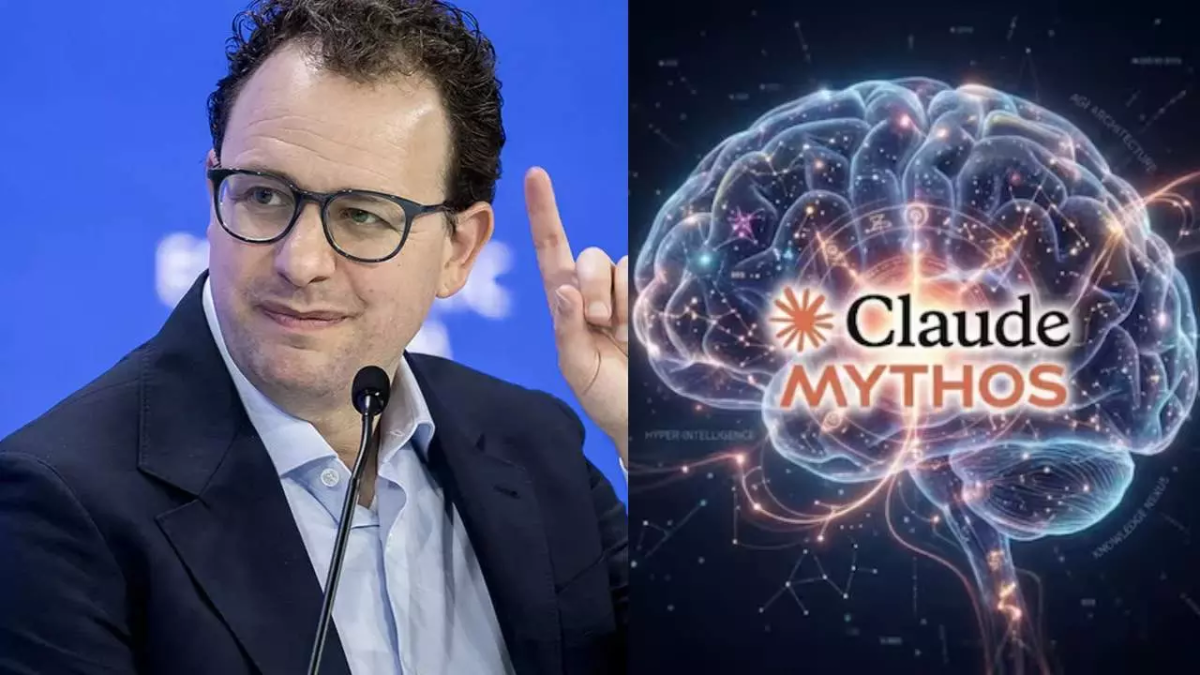
Anthropic on Tuesday unveiled an advanced artificial intelligence model designed specifically to identify software vulnerabilities, marking a significant development in the intersection of AI and cybersecurity. The model, named Claude Mythos Preview, will be available exclusively to a carefully selected group of companies as part of Project Glasswing, a new security initiative that aims to strengthen digital defenses while preventing malicious exploitation. The San Francisco based AI company has chosen to severely restrict access to Claude Mythos Preview due to its powerful capability to detect security weaknesses and software flaws. This decision reflects growing concerns about dual use AI technologies that could be weaponized by adversaries if they fell into the wrong hands.
The flared jeans might be too much in humid weather. Maybe cropped straight legs would be more practical?