
What I want to know is whether Jaafar's own singing voice is in the film at all or if it is entirely Michael's original recordings.
19
Sign up to see more
SignupAlready a member?
LoginBy continuing, you agree to Sociomix's Terms of Service, Privacy Policy

What I want to know is whether Jaafar's own singing voice is in the film at all or if it is entirely Michael's original recordings.
Took a 12 week datacenter technician program at a community college last year after getting laid off from a software QA role. Had a job offer before the program even ended. The demand is not theoretical.
Basically without major spoilers, the Itarim are entities from other universes who see Earth as unclaimed territory now that the system's original purpose is over. Their power level makes the original gate monsters look like warm-up enemies.
For people on the fence, chapters one and two are a slow burn but chapter three completely changed my read on everything that came before. Give it at least that far.
In a manhwa landscape dominated by dungeon crawling, regression narratives, and power fantasies, The Greatest Estate Developer stands out by asking a simple question: what if the protagonist's greatest weapon wasn't a sword or magic system, but civil engineering knowledge? This bizarre premise transforms into one of the most entertaining, genuinely funny, and surprisingly heartfelt series currently running, proving that innovation in storytelling comes from unexpected places. The series takes the familiar isekai setup where a modern person finds themselves in a fantasy world and completely subverts expectations. Instead of becoming an adventurer or hero, protagonist Kim Suho uses his engineering knowledge to revolutionize construction, infrastructure, and economic development. What sounds like it should be boring becomes absolutely captivating through sharp writing, excellent comedic timing, and genuine passion for showing how infrastructure improves lives.

Sora 2 inside Descript is interesting but I would not lead with that as a selling point yet. The generative video stuff is genuinely impressive for atmospheric b-roll but the restriction on human faces limits practical use cases significantly.
The deepfake concern is real and I do not think the article addresses it seriously enough. Yes, they use paid actors and have consent protocols. But the same technology that makes your compliance video also makes synthetic propaganda, and that actor whose face ended up in Venezuelan government disinformation campaigns probably did not sign up for that.
The vibe coding wave is real and Replit is riding it harder than anyone. Andrej Karpathy named the trend and now the entire dev tooling space is scrambling to own it.
Amazon entering the AI coding market with Kiro just made this landscape significantly more competitive. The pricing pressure across all these tools is going to keep intensifying through the rest of 2026.
Code quality is a weird thing to rate out of 10. Does that mean it compiles? Does that mean it follows your team's conventions? Does that mean it passes security review? Those are very different bars.
The article says a consultant built a client portal with payments in four hours. That checks out. I built something similar on a Saturday afternoon. Did it need polish? Yes. Did it work? Absolutely.
When a company raises $200 million in Series E funding during January 2026, investors are betting on more than potential. They're backing proven market demand and sustainable growth. Synthesia's funding round came alongside a 44% year-over-year increase in headcount to 706 employees, signaling aggressive expansion in a category the company essentially created: AI avatar-based video generation for enterprise training and communications. Corporate training videos have been expensive and slow to produce for decades. Recording a single 10-minute training module traditionally required booking a studio, hiring a presenter, scheduling a videographer, managing multiple takes, and editing everything together. If you needed to update information or translate content, you essentially started over. Synthesia eliminated this entire production workflow by replacing human presenters with AI avatars.
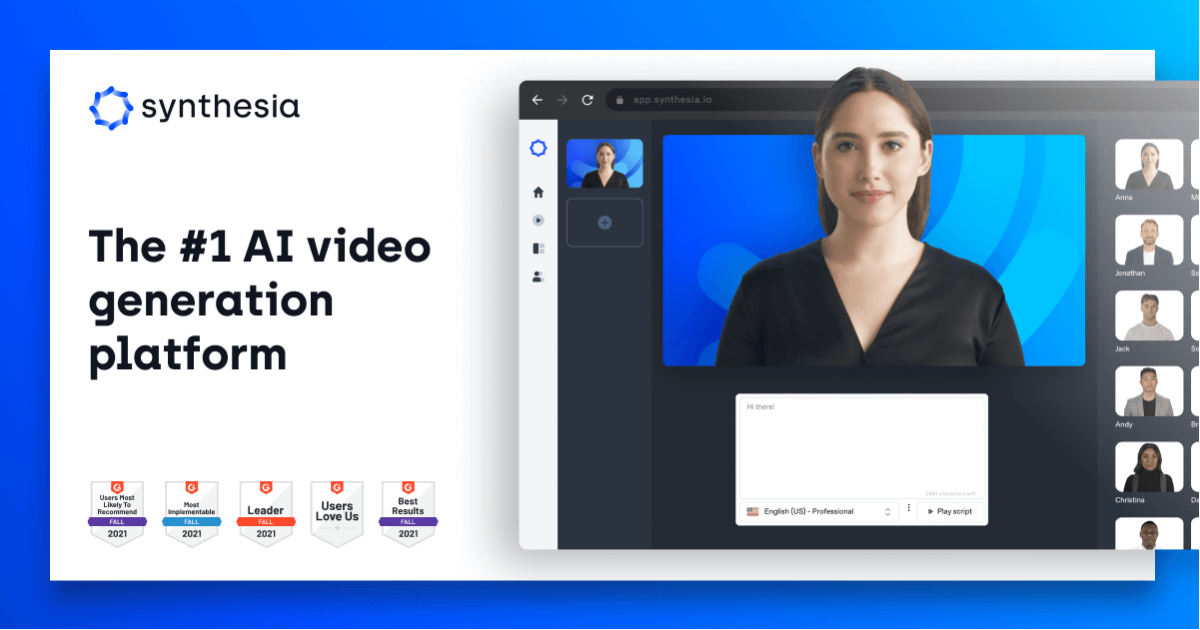
Just wild to me that we went from videos requiring studios and camera crews to write a script, click generate, download in maybe two years.
Hot take: the real winners in this trend are not the AI labs building chips, it is the chip design services companies and IP licensors who get paid no matter who wins the AI model competition.
That is actually kind of what the Google and Broadcom partnership already is. They are getting chips that are optimized for their workloads without having to build an in-house semiconductor team from scratch. There is a spectrum here between buying off the shelf and doing everything internally.
In a rare divergence from industry norms, TikTok has confirmed it will not adopt end-to-end encryption (E2EE) for direct messages, breaking with nearly every major social media platform and reigniting one of the tech industry's most contentious debates. The Chinese-owned video platform told the BBC exclusively that it believes the privacy technology championed by Meta, Apple, and others as essential for user protection actually makes users less safe by creating "dark spaces" where harmful content can flourish beyond the reach of safety teams and law enforcement. The decision puts TikTok in direct opposition to its competitors while potentially exposing the company to fresh criticism over data protection, particularly given ongoing concerns about its ties to Beijing.
I found similar butterfly patches on Etsy and DIYed my old jeans. Saved so much money and made them totally unique!
I'm concerned about keeping that white blouse pristine. Any stain removal tips for a clumsy coffee drinker?
I recently bought a similar olive blouse from Uniqlo and it's amazing quality for the price. Highly recommend!