
This is literally what Barack Obama and others have talked about with wearing the same type of clothes every day. Cognitive load management is ancient wisdom with new branding.
12
Sign up to see more
SignupAlready a member?
LoginBy continuing, you agree to Sociomix's Terms of Service, Privacy Policy

This is literally what Barack Obama and others have talked about with wearing the same type of clothes every day. Cognitive load management is ancient wisdom with new branding.
Critics calling it feature-length publicity are not wrong, but that framing also ignores that most fans going to see this film are not expecting a documentary. They want the music and the performances and this film delivers those.
Jaafar having grown up at Neverland and watching movies with his uncle is the kind of biographical detail that changes how you think about the performance. He is not playing a stranger.
Jaafar is the son of Jermaine Jackson, who is Michael's older brother. That makes Jaafar Michael's nephew, not his son. Michael's actual children are Prince, Paris, and Bigi.
Jaafar Jackson plays Michael Jackson in the 2026 biopic Michael, and the story of how the 29-year-old newcomer landed the role is more interesting than the film itself. It started with a voice note. It involved a two-year global casting search with no formal auditions. It required Jaafar to keep the role secret from his own family for a full year. And it ended with his grandmother Katherine Jackson, the woman who knew Michael longest and loved him most, telling producers that her grandson didn't just resemble her son, he embodied him. After tracking every interview, behind-the-scenes video, and production report released since the film was announced, I can tell you that the choice of Jaafar was not nepotism, not a publicity play, and not the obvious pick everyone assumes it was. It was a hard-earned outcome of the most unusual casting process in recent biopic history, and here is how it actually happened.

The regression genre being so dominant right now reflects something real about reader psychology. The idea that knowledge and preparation could override disadvantage is deeply appealing in a world where people feel like systemic forces are beyond their control.
Bigang as an instructor training others is going to be the emotional core of this series and the article correctly identifies it. Watching someone who endured centuries of suffering choose to invest in others is deeply compelling.
Speaking as someone who reads a lot of historical fiction, the way this series ties relic powers to actual historical and mythological context scratches a very specific itch that most fantasy series completely ignore.
If the animation quality is anywhere near what Solo Leveling received this would be absolutely stunning to watch.
YA rating threw me off too. The emotional content is definitely heavier than most YA I have read. Maybe the absence of graphic violence or explicit content keeps it in that category technically.
This is my biggest worry going in. Isekai protagonists with full plot knowledge have a tendency to feel emotionally detached in a way that makes rooting for them complicated. The best series in this space find ways to make the meta-knowledge a wound rather than a superpower.
This is the kind of tool that sounds great in the pitch and then causes a compliance crisis eighteen months after deployment when nobody thought to ask about data governance. Ask first.
The article mentions teams use v0 output for dashboards and data tables. In my experience those are the hardest things to get right manually. If v0 can reliably produce a good data table with sorting and pagination I would use it for that alone.
Hot take but the art is doing more storytelling work here than the writing is, and that is a compliment to both.
There is a federal lawsuit in the Northern District of California right now specifically challenging whether tools like this violate the Electronic Communications Privacy Act. The legal picture around these tools is actively unsettled.
Nobody ever posts the failure stories though. The channels that went all in on AI avatars and lost audience trust when they disclosed it, the agencies whose clients pulled back when they found out. Survivorship bias makes every case study look cleaner than reality.
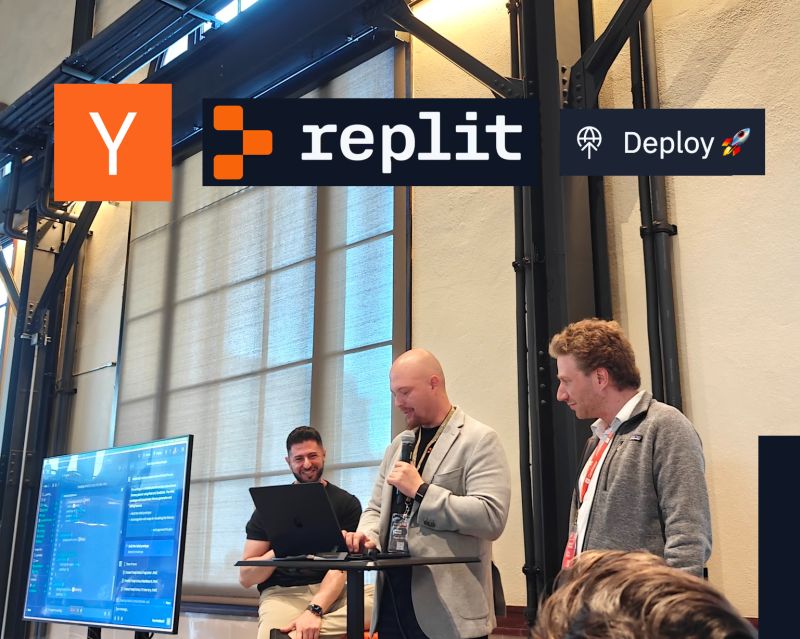
When a company's revenue jumps from $10 million to $100 million in nine months, you pay attention. When that growth comes from an AI agent that builds entire applications autonomously, you realize something fundamental just changed in software development. Replit Agent represents that change, and the numbers prove developers are ready for it. Replit started as a browser-based coding environment for education. Students could write Python or JavaScript without installing anything locally. Teachers loved it because setup time vanished. But the company saw something bigger. If you could run code in the browser, why not let AI write that code? That question led to Agent 3, an AI that doesn't just suggest code completions. It builds entire applications from scratch.
While Synthesia leads in revenue, HeyGen leads in customer acquisition momentum with 152% year-over-year growth in mid-market adoption. That explosive growth rate allowed HeyGen to close much of the customer count gap by late 2025. The company is winning by making avatar video accessible to smaller teams and individual creators who cannot afford enterprise contracts but need professional video capabilities. HeyGen positioned itself for small and medium businesses, marketing teams, content creators, and solo entrepreneurs rather than enterprise learning and development departments. This market segment values affordability, ease of use, and creative flexibility over governance features and advanced integrations. Average contract values are roughly one-third of Synthesia's, reflecting this different customer profile.

In an extraordinary move signaling growing alarm over artificial intelligence capabilities, US Treasury Secretary Scott Bessent and Federal Reserve Chair Jerome Powell jointly summoned the nation's most powerful banking executives to an emergency meeting this week at Treasury headquarters in Washington, DC. The hastily arranged gathering centered on mounting cybersecurity concerns stemming from Anthropic's latest artificial intelligence system, known as Claude Mythos. The San Francisco-based AI company recently disclosed that its newest model demonstrates unprecedented abilities to identify and exploit software vulnerabilities, raising immediate red flags across the financial sector and national security establishment.

Anthropic on Tuesday unveiled an advanced artificial intelligence model designed specifically to identify software vulnerabilities, marking a significant development in the intersection of AI and cybersecurity. The model, named Claude Mythos Preview, will be available exclusively to a carefully selected group of companies as part of Project Glasswing, a new security initiative that aims to strengthen digital defenses while preventing malicious exploitation. The San Francisco based AI company has chosen to severely restrict access to Claude Mythos Preview due to its powerful capability to detect security weaknesses and software flaws. This decision reflects growing concerns about dual use AI technologies that could be weaponized by adversaries if they fell into the wrong hands.