
What is the recommended chapter count to read before the anime drops in July? Asking because I want enough context to appreciate the adaptation but not so much that I spoil everything.
Sign up to see more
SignupAlready a member?
LoginBy continuing, you agree to Sociomix's Terms of Service, Privacy Policy

What is the recommended chapter count to read before the anime drops in July? Asking because I want enough context to appreciate the adaptation but not so much that I spoil everything.
The meta-commentary about readers and protagonists becomes so much more layered once you understand the full context of who tls123 is. Cannot wait to see new fans experience that reveal.
Currently Webtoon exclusive for the English version as far as I can tell. The Korean original has been ongoing for a while though.
The manhwa community has been buzzing with anticipation ever since MAPPA Studio announced their adaptation of Omniscient Reader's Viewpoint. With a spring 2026 release date confirmed and 24 episodes planned for the first season, this adaptation represents one of the most ambitious manhwa-to-anime projects ever undertaken. But what makes this series so special that it warranted such a massive production commitment? If you're hearing about Omniscient Reader's Viewpoint for the first time or wondering whether the hype is justified, this guide will prepare you for what promises to be one of the biggest anime releases of the year. We'll cover the story premise, why it's captured millions of readers worldwide, what MAPPA's involvement means, and everything else you need to know before the first episode airs
The article says transcription accuracy exceeds 95% with clear audio. That qualifier, with clear audio, is doing a lot of heavy lifting. Home offices, open floor plans, overlapping speakers, accents. Real conditions are messier than the demo.
Speaking from experience running remote engineering standups, the async participation feature genuinely reduced meeting bloat. Engineers in Europe stop getting scheduled for 8am calls just to hear updates they can read in three minutes.
Sora 2 inside Descript is interesting but I would not lead with that as a selling point yet. The generative video stuff is genuinely impressive for atmospheric b-roll but the restriction on human faces limits practical use cases significantly.
The Google Docs comparison is genuinely the most accurate way to explain this to people who have never used it. Every single person I have shown it to had the same reaction, which was basically why did video editing work any other way before this.
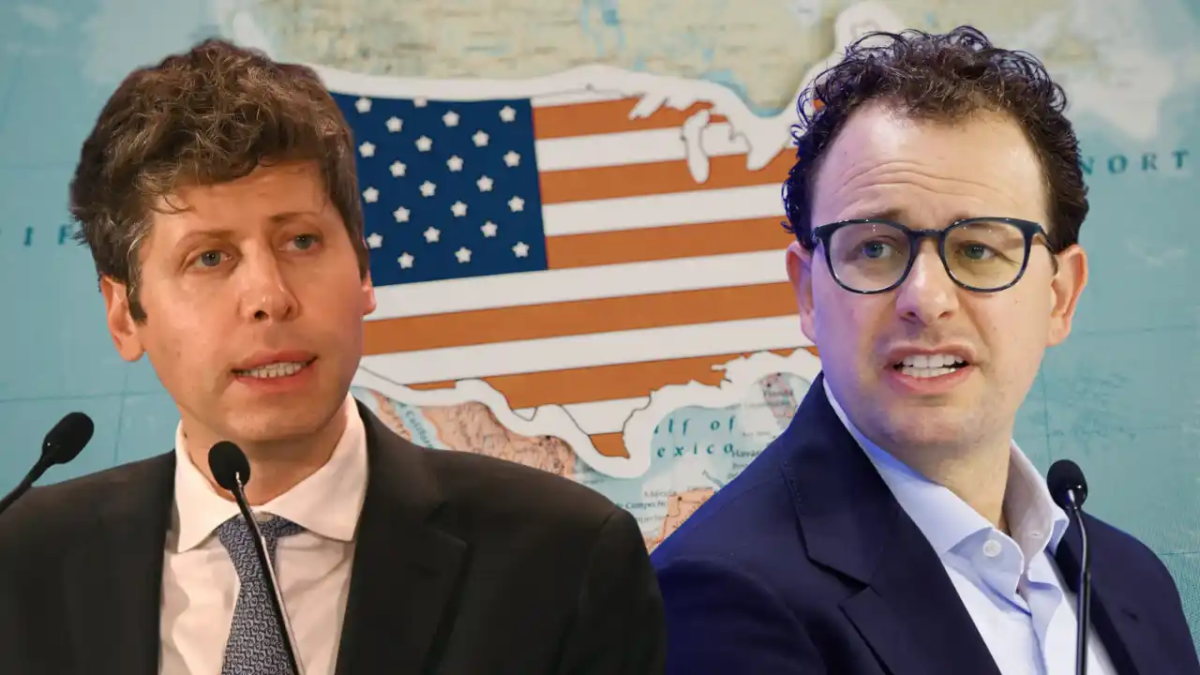
There's a photograph from February 2026 that pretty much sums up the state of AI right now. At the India AI Impact Summit in New Delhi, Indian Prime Minister Narendra Modi invited the world's tech leaders onstage for a group photo. Everyone held hands. Well, almost everyone. Sam Altman of OpenAI and Dario Amodei of Anthropic, standing right next to each other, refused to clasp hands and instead raised their fists separately. The internet, predictably, lost its mind. An awkward moment between OpenAI CEO Sam Altman and Anthropic CEO Dario Amodei at an AI Summit captured the increasingly icy relations between two rival tech leaders who started off as colleagues. That's not just petty drama. It's a window into what may be the most consequential corporate rivalry in the technology world right now, one that's playing out in boardrooms, courtrooms, Super Bowl ads, and billion-dollar compute deals all at once.
While Synthesia leads in revenue, HeyGen leads in customer acquisition momentum with 152% year-over-year growth in mid-market adoption. That explosive growth rate allowed HeyGen to close much of the customer count gap by late 2025. The company is winning by making avatar video accessible to smaller teams and individual creators who cannot afford enterprise contracts but need professional video capabilities. HeyGen positioned itself for small and medium businesses, marketing teams, content creators, and solo entrepreneurs rather than enterprise learning and development departments. This market segment values affordability, ease of use, and creative flexibility over governance features and advanced integrations. Average contract values are roughly one-third of Synthesia's, reflecting this different customer profile.
Forty million dollars in annual recurring revenue. Six months. One browser-based platform. Those numbers would be impressive for any software company, but for Bolt.new, they represent something more significant: the moment when development environments moved permanently into the cloud and never looked back. Traditional software development has always required setup. Install Node.js, configure your environment, manage dependencies, set up local servers, troubleshoot version conflicts. Before writing a single line of code, developers spend hours or even days preparing their machines. Junior developers often spend their first week just getting their environment working. Bolt.new eliminated all of that with WebContainers technology.
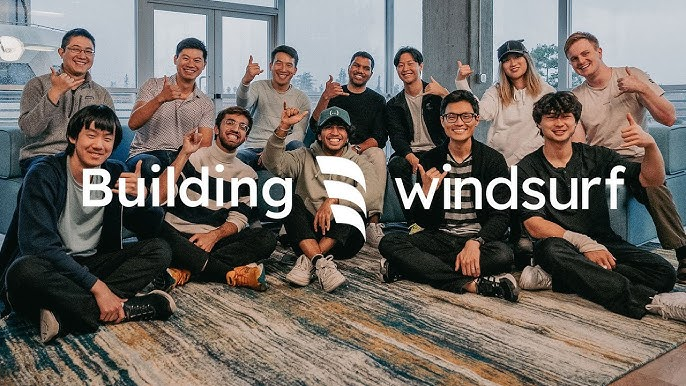
Developers have a new anxiety in 2026: token anxiety. You're in the middle of debugging a complex problem, the AI is helping you refactor three files simultaneously, and suddenly you wonder if this session is about to cost you $50. That mental tax slows you down and makes you second-guess using the tool you're paying for. Windsurf eliminated that anxiety with a simple decision: flat monthly pricing with no token limits. Fifteen dollars per month. Unlimited usage. No tracking credits or calculating costs per query. That pricing model sounds almost boring compared to the complex token systems other AI coding tools use, but boring is exactly what professional developers want when it comes to pricing. They want predictable costs and unlimited usage so they can focus on writing code instead of budgeting AI queries.
Anthropic's enterprise market share going from 18 percent in 2024 to 29 percent in 2025 is the stat that explains why OpenAI is so rattled right now.
In a rare divergence from industry norms, TikTok has confirmed it will not adopt end-to-end encryption (E2EE) for direct messages, breaking with nearly every major social media platform and reigniting one of the tech industry's most contentious debates. The Chinese-owned video platform told the BBC exclusively that it believes the privacy technology championed by Meta, Apple, and others as essential for user protection actually makes users less safe by creating "dark spaces" where harmful content can flourish beyond the reach of safety teams and law enforcement. The decision puts TikTok in direct opposition to its competitors while potentially exposing the company to fresh criticism over data protection, particularly given ongoing concerns about its ties to Beijing.
Genuinely do not understand the people calling this a smart business move. Europe is TikTok's most important market for growth and Europe has the strictest data protection laws. Not encrypting messages while also fighting a massive GDPR fine is not a winning strategy in that market.
Does anyone know if the supply chain risk classification affects Anthropic's Amazon investment relationship since AWS is simultaneously a Glasswing partner? That seems like a genuine conflict of interest worth examining.
Dimon writing in his shareholder letter that AI will almost surely make cybersecurity risk worse and then scheduling a conflict on the day of the emergency meeting is quite a move.
The article frames this as TikTok breaking from industry norms, but given that Meta just reversed Instagram E2EE around the same time, maybe the industry norm is shifting back toward access. The era of unconditional privacy promises on social media might genuinely be ending.
In terms of fashion specifically though, yeah this is probably her biggest fashion world moment. The others were royal or personal. This is purely style and industry.