
The genre has surged so much that publishers are clearly greenlighting anything with a regression premise right now. The signal-to-noise ratio has gotten rough for new readers trying to find quality entries.
Sign up to see more
SignupAlready a member?
LoginBy continuing, you agree to Sociomix's Terms of Service, Privacy Policy

The genre has surged so much that publishers are clearly greenlighting anything with a regression premise right now. The signal-to-noise ratio has gotten rough for new readers trying to find quality entries.
The character design in the teaser trailer looked faithful to the manhwa which is the first hurdle cleared. Art style translation between manhwa and anime can go very wrong very fast.
In a manhwa landscape dominated by dungeon crawling, regression narratives, and power fantasies, The Greatest Estate Developer stands out by asking a simple question: what if the protagonist's greatest weapon wasn't a sword or magic system, but civil engineering knowledge? This bizarre premise transforms into one of the most entertaining, genuinely funny, and surprisingly heartfelt series currently running, proving that innovation in storytelling comes from unexpected places. The series takes the familiar isekai setup where a modern person finds themselves in a fantasy world and completely subverts expectations. Instead of becoming an adventurer or hero, protagonist Kim Suho uses his engineering knowledge to revolutionize construction, infrastructure, and economic development. What sounds like it should be boring becomes absolutely captivating through sharp writing, excellent comedic timing, and genuine passion for showing how infrastructure improves lives.
Someone asked about streaming and honestly the smart money is on Crunchyroll handling global distribution like they do with most manhwa adaptations right now. But nothing is confirmed.
What is the realistic ceiling here? HeyGen had roughly 85,000 customers as of mid-2025. The total addressable market for affordable video creation is probably in the tens of millions. The ceiling is very far away.
While Synthesia leads in revenue, HeyGen leads in customer acquisition momentum with 152% year-over-year growth in mid-market adoption. That explosive growth rate allowed HeyGen to close much of the customer count gap by late 2025. The company is winning by making avatar video accessible to smaller teams and individual creators who cannot afford enterprise contracts but need professional video capabilities. HeyGen positioned itself for small and medium businesses, marketing teams, content creators, and solo entrepreneurs rather than enterprise learning and development departments. This market segment values affordability, ease of use, and creative flexibility over governance features and advanced integrations. Average contract values are roughly one-third of Synthesia's, reflecting this different customer profile.
Different genre indeed but also a completely different artistic project. Comparing Nano Machine and The Boxer is like comparing action cinema to slow literary drama. Both can be excellent without competing.
The article talks about teams shipping v0 output directly to production with minor adjustments. I would love to see what that actually looks like in practice for a complex feature vs. a landing page. The bar is very different.
There's a photograph from February 2026 that pretty much sums up the state of AI right now. At the India AI Impact Summit in New Delhi, Indian Prime Minister Narendra Modi invited the world's tech leaders onstage for a group photo. Everyone held hands. Well, almost everyone. Sam Altman of OpenAI and Dario Amodei of Anthropic, standing right next to each other, refused to clasp hands and instead raised their fists separately. The internet, predictably, lost its mind. An awkward moment between OpenAI CEO Sam Altman and Anthropic CEO Dario Amodei at an AI Summit captured the increasingly icy relations between two rival tech leaders who started off as colleagues. That's not just petty drama. It's a window into what may be the most consequential corporate rivalry in the technology world right now, one that's playing out in boardrooms, courtrooms, Super Bowl ads, and billion-dollar compute deals all at once.
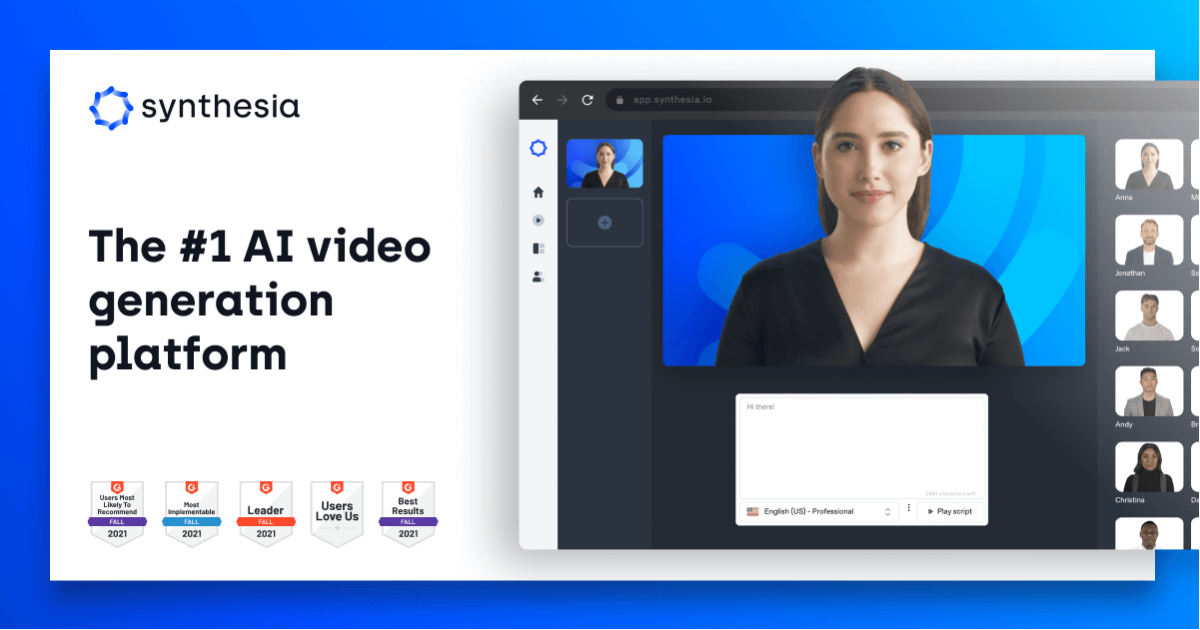
When a company raises $200 million in Series E funding during January 2026, investors are betting on more than potential. They're backing proven market demand and sustainable growth. Synthesia's funding round came alongside a 44% year-over-year increase in headcount to 706 employees, signaling aggressive expansion in a category the company essentially created: AI avatar-based video generation for enterprise training and communications. Corporate training videos have been expensive and slow to produce for decades. Recording a single 10-minute training module traditionally required booking a studio, hiring a presenter, scheduling a videographer, managing multiple takes, and editing everything together. If you needed to update information or translate content, you essentially started over. Synthesia eliminated this entire production workflow by replacing human presenters with AI avatars.
One underappreciated angle: the fact that Codex CLI is open source with 67,000 GitHub stars gives it a community momentum that the subscription tier numbers do not capture. Developers contribute to it, customize it, and build on top of it. That matters.
OpenAI's latest subscription offering represents its most aggressive move yet to reclaim market share in the rapidly expanding AI-powered coding assistant sector
I actually styled this with a thin crystal belt and it added such a beautiful detail to the waistline. Really elevated the whole look!