
The novel is already complete at 125 chapters including side stories, so the full story exists, it is just the manhwa adaptation that is ongoing. If you want to read ahead the light novel translation community has been active on it for a while now.
Sign up to see more
SignupAlready a member?
LoginBy continuing, you agree to Sociomix's Terms of Service, Privacy Policy

The novel is already complete at 125 chapters including side stories, so the full story exists, it is just the manhwa adaptation that is ongoing. If you want to read ahead the light novel translation community has been active on it for a while now.
The part of the article about how supporting characters die messily and unfairly with regrets and things left unsaid rather than heroically is the most accurate description of what makes this emotionally different from standard fare.
The psychological dimension of this series is what the article nails perfectly. Regression doesn't erase trauma. Bigang has centuries of memories of things that technically haven't happened yet but are completely real to him. That's a heavy psychological burden most manhwa just ignores.
What I appreciate about the Regressor Instruction Manual is that it deconstructs what readers actually want from a regression protagonist by showing a character who treats the regressor as a tool. It makes you examine your own reading expectations.
Sports anime and manga have delivered countless memorable series over the decades, from Slam Dunk's basketball brilliance to Haikyuu's volleyball excellence. These stories typically follow familiar patterns: talented but inexperienced protagonist joins a team, forms bonds with teammates, faces rivals, grows through competition, and ultimately pursues championship glory. The formula works because it taps into universal themes about effort, teamwork, and self-improvement. The Boxer, created by JH, takes everything you expect from sports stories and systematically deconstructs it. The protagonist doesn't love boxing. He doesn't form deep bonds with teammates. He doesn't overcome challenges through friendship and determination. Instead, the manhwa presents one of the darkest, most psychologically complex examinations of combat sports ever created, wrapped in stunningly minimalist artwork that elevates the narrative to something approaching high art.
Omniscient Reader's Viewpoint being listed fifth on a regression list still feels odd to me personally, not because it doesn't belong but because it transcends the genre entirely. It uses regression logic but operates on a completely different literary level.
When Tomb Raider King first exploded onto the manhwa scene, it brought a fresh take on dungeon crawling stories by combining archaeological adventure with ruthless protagonist energy and a treasure-hunting premise that felt genuinely different from typical gate and dungeon narratives. The series built a dedicated fanbase through its satisfying blend of historical artifact powers, strategic relic acquisition, and a protagonist who wasn't afraid to be morally gray in pursuit of his goals. Now, with the anime adaptation confirmed for 2026 as one of the most anticipated manhwa-to-anime projects, Tomb Raider King is experiencing a resurgence. New readers are discovering the series while longtime fans eagerly await seeing Jooheon Suh's relic-hunting adventures brought to life with animation. The timing couldn't be better, as the series has built enough content to support a substantial adaptation while maintaining momentum in its ongoing storyline.
The free plan is genuinely useful for testing, not just a teaser. You get 60 media minutes a month and enough AI credits to actually evaluate whether the workflow fits you.
The designer-developer relationship has been tense for decades. Designers create pixel-perfect mockups in Figma. Developers translate them to code and somehow everything looks slightly wrong. Fonts don't match. Spacing is inconsistent. Buttons have different corner radiuses. Both sides get frustrated, blame each other, and the product suffers. V0 by Vercel is fixing this problem by generating production-quality React components that look exactly like the designs. The rebrand from v0.dev to v0.app in January 2026 signaled expanded ambitions beyond just UI component generation. Vercel positioned the tool for full-stack web development, though its core strength remains frontend excellence. That strategic clarity matters because trying to be everything often means excelling at nothing. V0 chose to dominate the handoff between design and code before expanding into other areas.
Does Descript work well for non-English content? Genuinely curious about language support for creators in other markets.
Real talk: the token consumption during complex builds is brutal. Had a project burn through a month's worth of tokens in three days because the AI kept regenerating components instead of making targeted edits.
Started a SaaS product six weeks ago. Have paying customers. Hiring my first employee next month. Did not write any code. The economic opportunity here is real and it is available right now.
Forty million dollars in annual recurring revenue. Six months. One browser-based platform. Those numbers would be impressive for any software company, but for Bolt.new, they represent something more significant: the moment when development environments moved permanently into the cloud and never looked back. Traditional software development has always required setup. Install Node.js, configure your environment, manage dependencies, set up local servers, troubleshoot version conflicts. Before writing a single line of code, developers spend hours or even days preparing their machines. Junior developers often spend their first week just getting their environment working. Bolt.new eliminated all of that with WebContainers technology.
The point about product managers building demos during client meetings is the most underappreciated use case in this article. That scenario alone is worth the subscription cost for certain industries.
The article says developers review v0 output the same way they review junior developer code. That is actually a perfect framing. You are not trusting it blindly, you are reviewing it intelligently. That mental model matters.
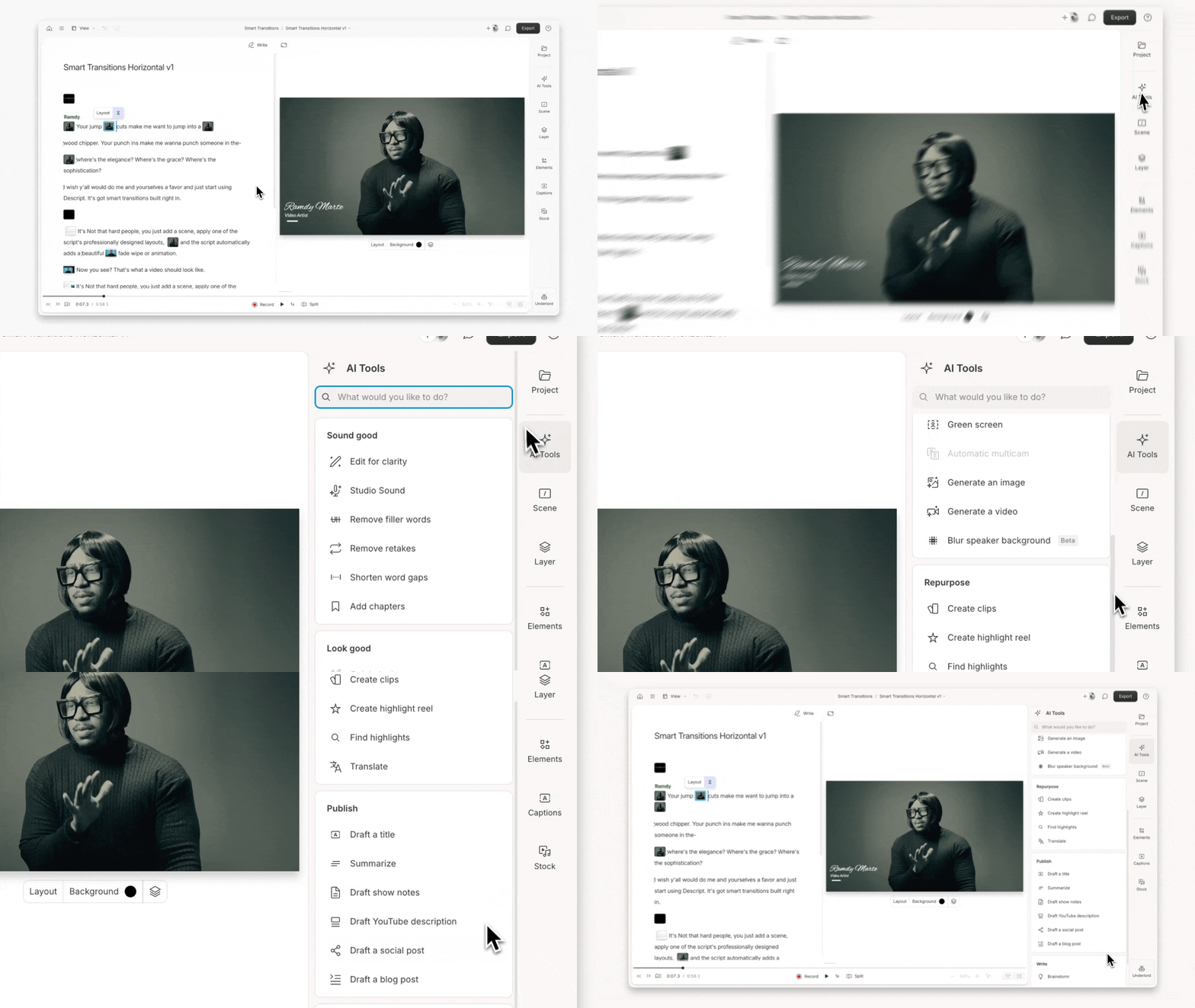
Most people can edit a Google Doc. Delete some words, rearrange sentences, fix typos, add paragraphs. It's intuitive and requires no special training. Now imagine editing video the same way. That's Descript's core innovation, and it transformed video editing from a specialized skill requiring expensive software into something anyone who can edit text can do effectively. Descript started as a transcription tool for podcasters. Record your podcast, upload it to Descript, and get an accurate transcript for show notes. But the founders realized something bigger. If you have a perfect transcript synchronized to audio, you can edit the audio by editing the text. Delete a word from the transcript and that word disappears from the audio. That insight became the foundation for a complete editing platform.
the article buries the most important detail. E2EE is effectively banned in China. So when a Chinese-owned company tells you encryption is bad for users, you have to at least ask whether corporate philosophy or government pressure is driving that decision.
Does anyone actually think the benchmark scores Meta published are reliable at this point? They were caught manipulating benchmarks for a previous model. There is no independent verification attached to the claims they are making about Muse Spark's performance.
Meta has just had one of its most important AI moments yet and the early signals are hard to ignore. Following the launch of its newest AI model Muse Spark, the company’s standalone Meta AI app surged dramatically in popularity, hinting at a much larger shift that is beginning to take shape. The release is particularly significant because it marks the first major AI model rollout under Alexandr Wang, who joined Meta to reboot its AI strategy. This is not just another incremental update. It represents a more aggressive and focused push into the AI race. According to data from Appfigures, Meta AI jumped from number 57 to number 5 on the U.S. App Store within a day of the launch. That kind of movement rarely happens without a strong underlying pull from users. It signals not curiosity but intent.
I'm curious about the comfort level of those boots. Would you recommend them for a full day of walking?