
Very much connected. The estate's involvement in both situations is not a coincidence.
10
Sign up to see more
SignupAlready a member?
LoginBy continuing, you agree to Sociomix's Terms of Service, Privacy Policy

Very much connected. The estate's involvement in both situations is not a coincidence.
YA rating threw me off too. The emotional content is definitely heavier than most YA I have read. Maybe the absence of graphic violence or explicit content keeps it in that category technically.
The article mentions that fights function as character studies. This is the key thing. You do not watch The Boxer to find out if Yu wins. You watch to understand what losing means to the person across from him.
The difference is how the connection is formed though. Most rivals-to-partners arcs use shared battles or mutual respect built over time. This one uses literally experiencing someone's death from the inside. That is not comparable.
Honestly the biggest story buried in this article is that a hundred-person company is beating organizations with AI research budgets in the tens of billions. The efficiency argument for focused teams versus sprawling labs is being proved in real time.
Being used by 70% of FTSE 100 companies and 90% of Fortune 100 is a moat in the form of institutional inertia as much as anything technical. Switching costs compound with every integrated workflow and every content library built on the platform.
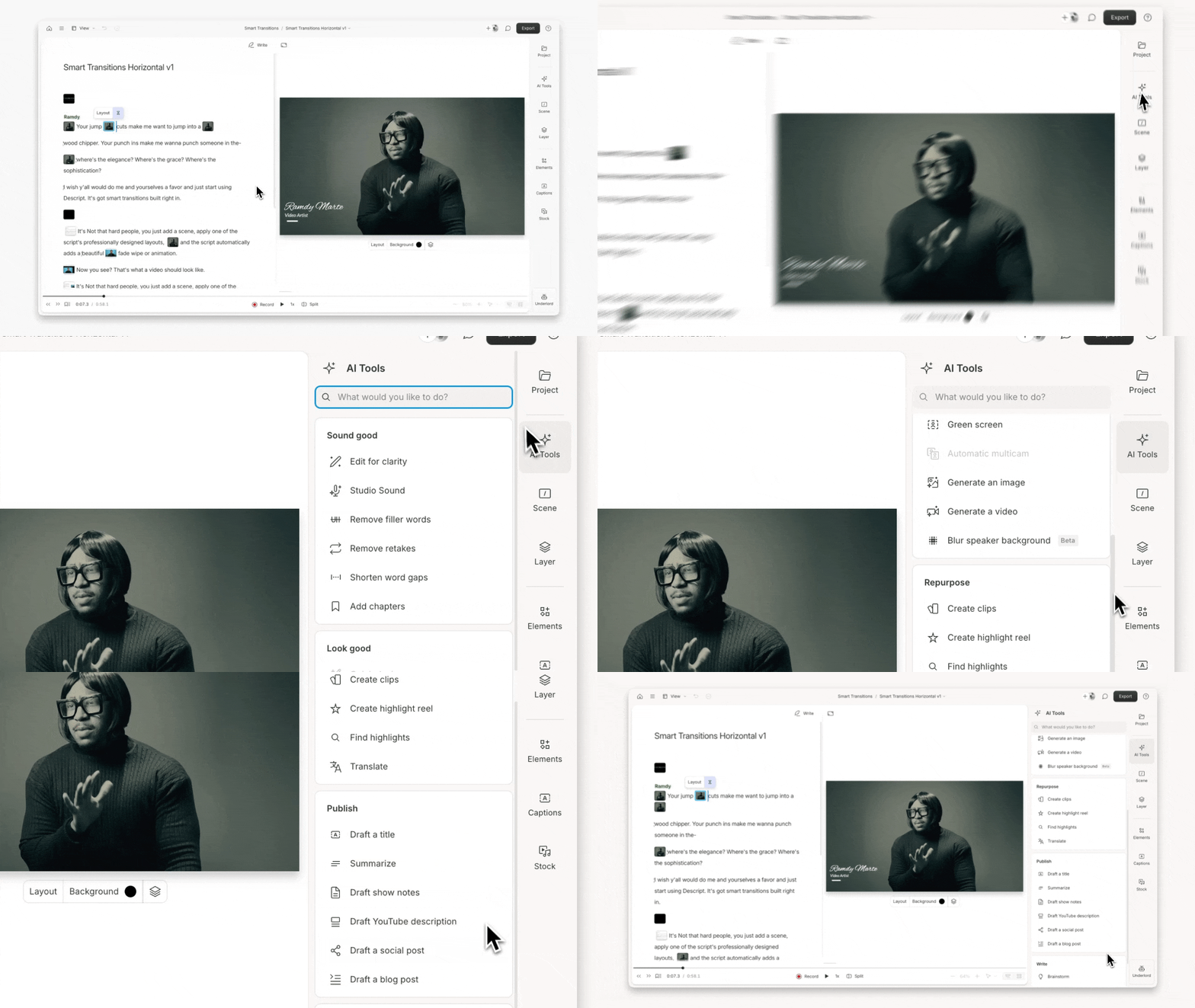
Most people can edit a Google Doc. Delete some words, rearrange sentences, fix typos, add paragraphs. It's intuitive and requires no special training. Now imagine editing video the same way. That's Descript's core innovation, and it transformed video editing from a specialized skill requiring expensive software into something anyone who can edit text can do effectively. Descript started as a transcription tool for podcasters. Record your podcast, upload it to Descript, and get an accurate transcript for show notes. But the founders realized something bigger. If you have a perfect transcript synchronized to audio, you can edit the audio by editing the text. Delete a word from the transcript and that word disappears from the audio. That insight became the foundation for a complete editing platform.
Something the article didn't fully address is how the secondary characters are developing. Some of them who Bigang is training feel like they could carry their own arcs.
The part about course creators translating content into languages they do not speak is the use case that stops me cold every time I think about it. That would have been science fiction five years ago.
A 27-year-old bug in OpenBSD found autonomously by an AI. A 17-year-old remote code execution vulnerability in FreeBSD exploited with no human in the loop. If those were offensive capabilities instead of defensive ones we'd be calling this a national security crisis.
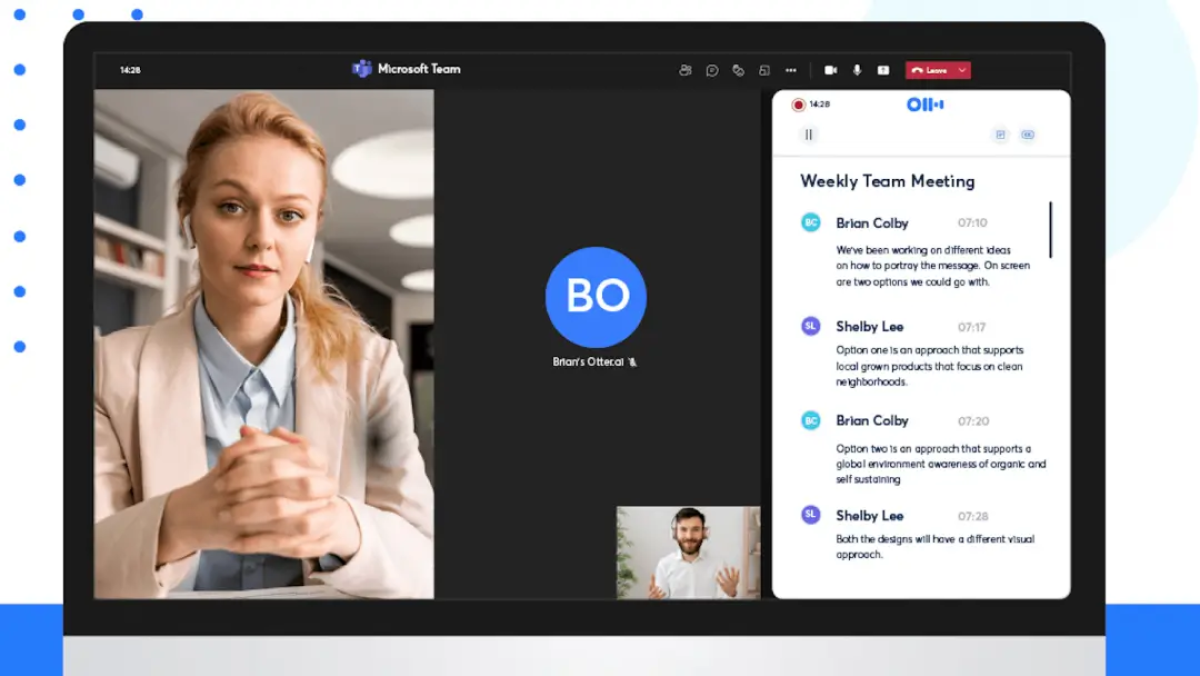
Knowledge workers spend an average of 18 hours per week in meetings. Much of that time involves routine status updates, recurring check-ins, and informational sessions where your physical presence adds minimal value. Otter.ai introduced a provocative concept called OtterPilot: an AI assistant that joins meetings autonomously when you can't attend, records everything, generates summaries, and answers questions about what happened. Connect Otter.ai to your calendar. The system monitors your scheduled meetings and automatically joins Zoom, Google Meet, or Microsoft Teams calls when they start. OtterPilot records audio, generates real-time transcripts, identifies speakers, and creates AI summaries with action items. You receive a meeting briefing without attending the meeting yourself.
Features that reduce friction for users usually take a back seat to features that increase time on app. Comment editing probably did not meaningfully move engagement metrics in testing which is why it got deprioritized for years.
Speaking from experience on a security-focused enterprise team, the fact that Claude Code runs locally by default versus Codex's cloud-first sandbox model is a real compliance consideration, not a minor footnote.
Muse Spark being built in nine months is the impressive part nobody is talking about enough. Building a frontier competitive model from a near standing start in nine months with a rebuilt technology stack is a real engineering achievement regardless of where benchmarks land.
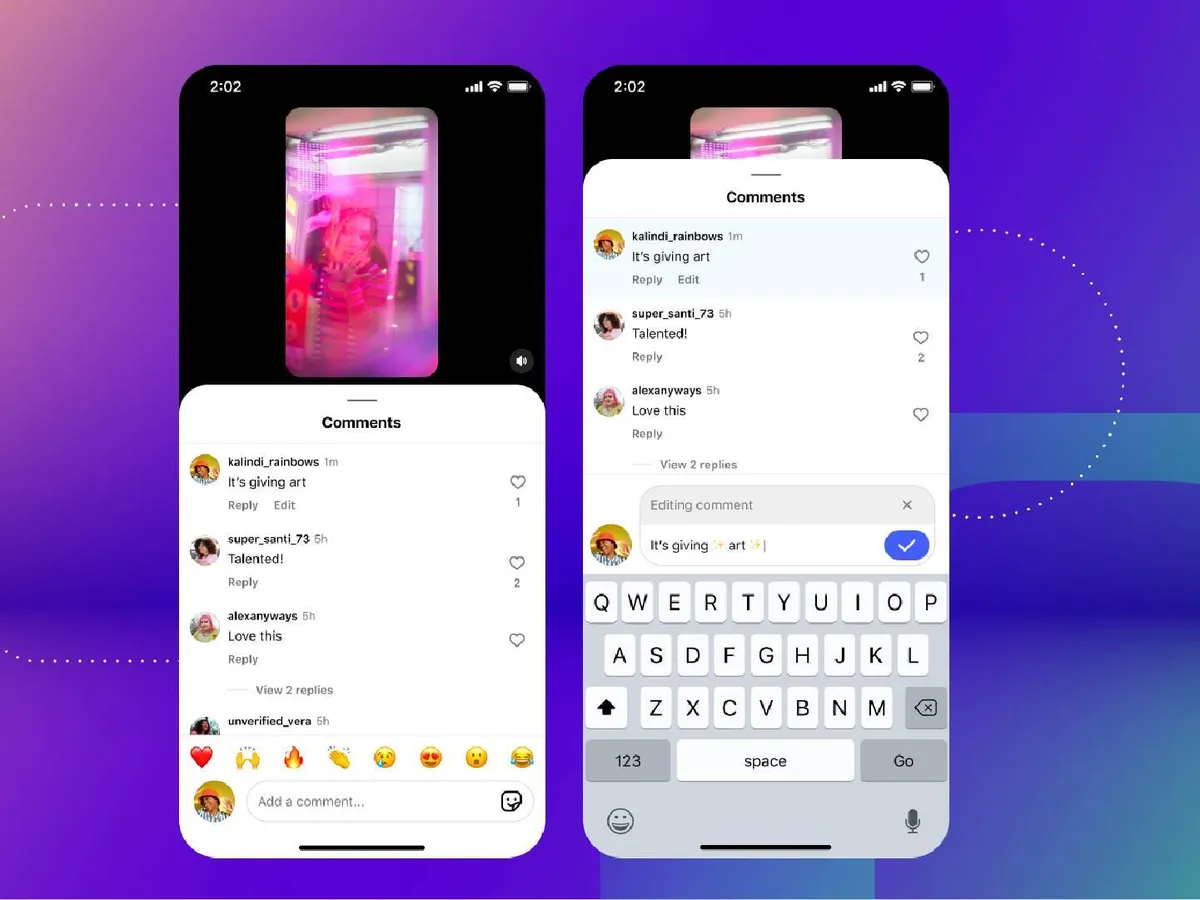
Instagram has rolled out a small but long overdue feature that users have been asking for years. You can now edit your comments after posting them. This simple change solves a very real frustration. Until now, fixing even the smallest typo meant deleting your comment and writing it all over again. That friction is finally gone. But there is a boundary. You get a 15 minute window after posting to make edits. Within that time, you can update your comment as many times as you want. There is also a layer of transparency built in. Once a comment is edited, others will be able to see that it has been modified. However, unlike platforms such as iMessage, Instagram does not show the edit history. What was originally written stays hidden.
The article could have spent more time on what sustaining above $72K actually requires technically. The 50-day EMA was mentioned elsewhere as key support around $70.6K. Losing that would change the picture.
The $8 Go tier is interesting too and barely gets mentioned. There are a lot of developers who want occasional agentic help but do not need daily limits. That tier is smart market segmentation.
Facebook has shown edit history for years and it works fine. There is no reason Instagram cannot do the same. Hiding original text while slapping an edited label on it is the worst of both worlds.
OpenAI's latest subscription offering represents its most aggressive move yet to reclaim market share in the rapidly expanding AI-powered coding assistant sector
Would this outfit work for a first date? I'm thinking yes but wondering if the distressed jeans are too casual?