Antoine Fuqua getting Colman Domingo and Jaafar Jackson both delivering at this level in the same film is an achievement regardless of script quality. Two first-rate performances do not happen by accident.
23
Sign up to see more
SignupAlready a member?
LoginBy continuing, you agree to Sociomix's Terms of Service, Privacy Policy

Antoine Fuqua getting Colman Domingo and Jaafar Jackson both delivering at this level in the same film is an achievement regardless of script quality. Two first-rate performances do not happen by accident.
Curious what people think the right voice direction for Yu should be. Flat and monotone could be accurate but could also make him boring to watch for twelve episodes.
Solo Leveling being the first manhwa adaptation to win anime of the year is proof the genre has fully arrived. ORV has the narrative depth to go even further if the adaptation respects it.
The bit about Suho being more emotionally expressive than Jinwoo is accurate and it took me a while to warm up to that. Jinwoo's cold efficiency was part of his appeal.
Enterprise momentum is real but there is a legitimate question about what happens when Google decides to bundle Veo into Workspace at a price that makes standalone Runway subscriptions hard to justify.
In a manhwa landscape dominated by dungeon crawling, regression narratives, and power fantasies, The Greatest Estate Developer stands out by asking a simple question: what if the protagonist's greatest weapon wasn't a sword or magic system, but civil engineering knowledge? This bizarre premise transforms into one of the most entertaining, genuinely funny, and surprisingly heartfelt series currently running, proving that innovation in storytelling comes from unexpected places. The series takes the familiar isekai setup where a modern person finds themselves in a fantasy world and completely subverts expectations. Instead of becoming an adventurer or hero, protagonist Kim Suho uses his engineering knowledge to revolutionize construction, infrastructure, and economic development. What sounds like it should be boring becomes absolutely captivating through sharp writing, excellent comedic timing, and genuine passion for showing how infrastructure improves lives.

Hot take: any developer who dismisses v0 because they think AI-generated code is beneath them is going to spend the next five years watching their colleagues ship twice as fast.
Forty million dollars in annual recurring revenue. Six months. One browser-based platform. Those numbers would be impressive for any software company, but for Bolt.new, they represent something more significant: the moment when development environments moved permanently into the cloud and never looked back. Traditional software development has always required setup. Install Node.js, configure your environment, manage dependencies, set up local servers, troubleshoot version conflicts. Before writing a single line of code, developers spend hours or even days preparing their machines. Junior developers often spend their first week just getting their environment working. Bolt.new eliminated all of that with WebContainers technology.
When Tomb Raider King first exploded onto the manhwa scene, it brought a fresh take on dungeon crawling stories by combining archaeological adventure with ruthless protagonist energy and a treasure-hunting premise that felt genuinely different from typical gate and dungeon narratives. The series built a dedicated fanbase through its satisfying blend of historical artifact powers, strategic relic acquisition, and a protagonist who wasn't afraid to be morally gray in pursuit of his goals. Now, with the anime adaptation confirmed for 2026 as one of the most anticipated manhwa-to-anime projects, Tomb Raider King is experiencing a resurgence. New readers are discovering the series while longtime fans eagerly await seeing Jooheon Suh's relic-hunting adventures brought to life with animation. The timing couldn't be better, as the series has built enough content to support a substantial adaptation while maintaining momentum in its ongoing storyline.

Revenue going from $2.8M to $150M annualized in about a year is actually more impressive than the $10M to $100M framing in the post. Those earlier numbers paint an even more dramatic picture of the transformation.
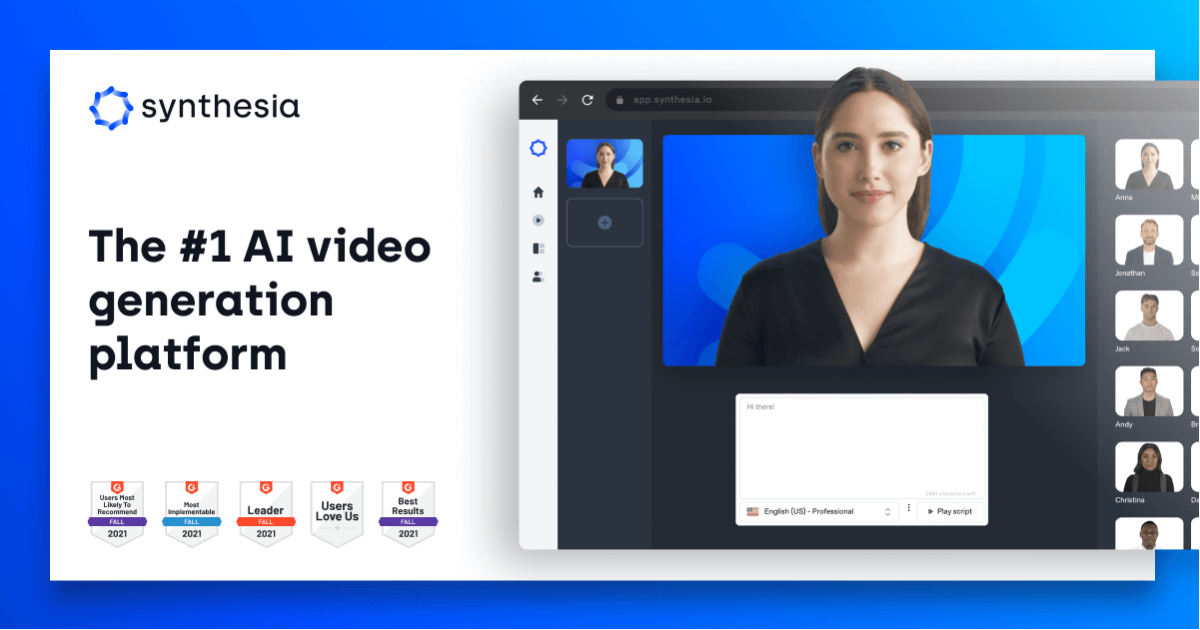
When a company raises $200 million in Series E funding during January 2026, investors are betting on more than potential. They're backing proven market demand and sustainable growth. Synthesia's funding round came alongside a 44% year-over-year increase in headcount to 706 employees, signaling aggressive expansion in a category the company essentially created: AI avatar-based video generation for enterprise training and communications. Corporate training videos have been expensive and slow to produce for decades. Recording a single 10-minute training module traditionally required booking a studio, hiring a presenter, scheduling a videographer, managing multiple takes, and editing everything together. If you needed to update information or translate content, you essentially started over. Synthesia eliminated this entire production workflow by replacing human presenters with AI avatars.
Honestly the productivity angle is oversold a little. The tool saves time for the person who skipped, but everyone who showed up still sat through the full meeting. The meeting itself did not get shorter.
Genuinely, who do you think wins this? Not in terms of revenue right now but in five years when compute gets cheaper and model quality converges across everyone. What's the actual moat?
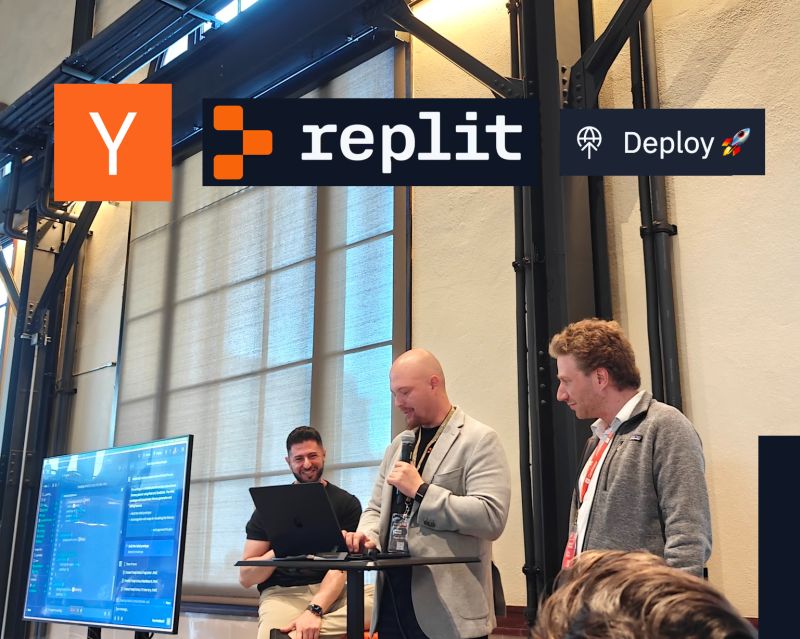
When a company's revenue jumps from $10 million to $100 million in nine months, you pay attention. When that growth comes from an AI agent that builds entire applications autonomously, you realize something fundamental just changed in software development. Replit Agent represents that change, and the numbers prove developers are ready for it. Replit started as a browser-based coding environment for education. Students could write Python or JavaScript without installing anything locally. Teachers loved it because setup time vanished. But the company saw something bigger. If you could run code in the browser, why not let AI write that code? That question led to Agent 3, an AI that doesn't just suggest code completions. It builds entire applications from scratch.
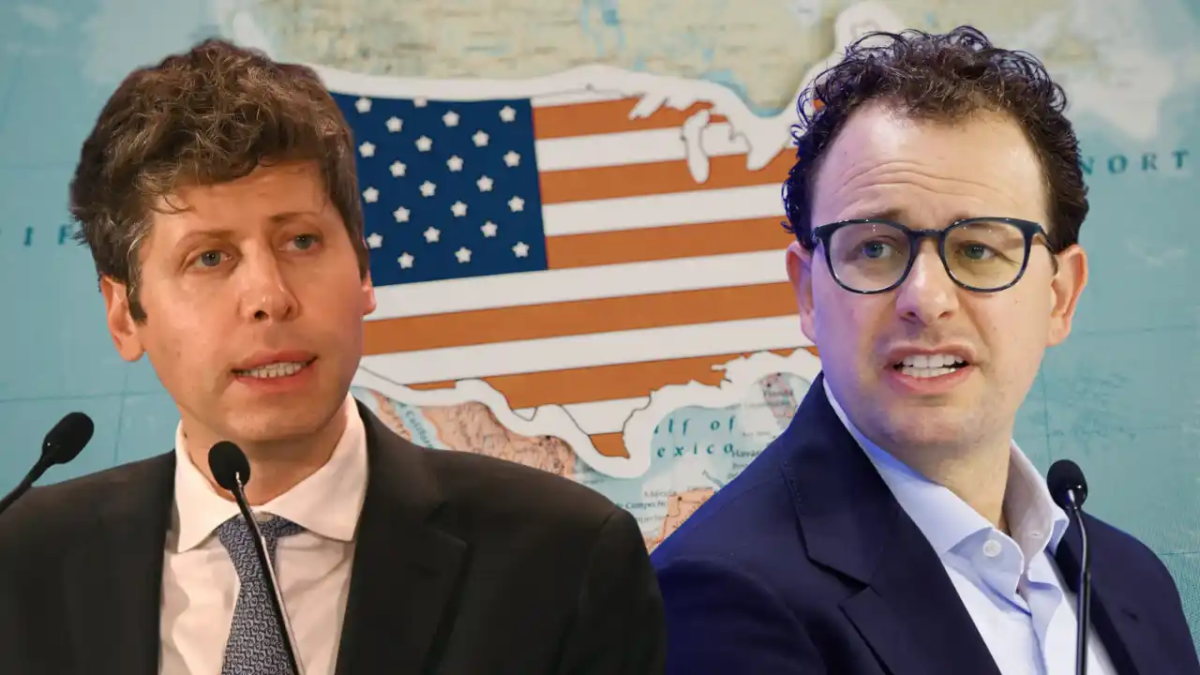
There's a photograph from February 2026 that pretty much sums up the state of AI right now. At the India AI Impact Summit in New Delhi, Indian Prime Minister Narendra Modi invited the world's tech leaders onstage for a group photo. Everyone held hands. Well, almost everyone. Sam Altman of OpenAI and Dario Amodei of Anthropic, standing right next to each other, refused to clasp hands and instead raised their fists separately. The internet, predictably, lost its mind. An awkward moment between OpenAI CEO Sam Altman and Anthropic CEO Dario Amodei at an AI Summit captured the increasingly icy relations between two rival tech leaders who started off as colleagues. That's not just petty drama. It's a window into what may be the most consequential corporate rivalry in the technology world right now, one that's playing out in boardrooms, courtrooms, Super Bowl ads, and billion-dollar compute deals all at once.
As someone who works in trust and safety at a tech company, the internal pressure to be able to scan DMs is enormous. Executives get called before parliament and asked why they let predators communicate freely. Encryption does not play well in those rooms.
My neighbor who works at a pension fund told me last month they were finally allowed to have a small allocation to Bitcoin ETFs. That kind of quiet institutional creep is happening everywhere and most retail traders are not pricing it in.
Not gonna lie, the glasswing butterfly naming is going to make this sound adorable in headlines and that is doing a lot of heavy lifting for what is actually a pretty alarming capability announcement.
That last point is maybe the most important thing to understand about where AI capability development is headed. The dangerous capabilities are not separate tracks, they emerge from the same general intelligence improvements. You cannot easily isolate them.
Respectfully, the article is underselling how competitive the field is at this exact moment. The same week Muse Spark launched, Google, OpenAI, and Anthropic all had major moves. Meta got a good headline but the frontier labs are not standing still.