
Standard Lionsgate window is somewhere between 45 and 75 days after theatrical debut. So probably sometime in July if you want to wait for home viewing, but the musical sequences were clearly made for a large screen and a serious sound system.
Sign up to see more
SignupAlready a member?
LoginBy continuing, you agree to Sociomix's Terms of Service, Privacy Policy
Sign up to see more
SignupAlready a member?
LoginBy continuing, you agree to Sociomix's Terms of Service, Privacy Policy

Standard Lionsgate window is somewhere between 45 and 75 days after theatrical debut. So probably sometime in July if you want to wait for home viewing, but the musical sequences were clearly made for a large screen and a serious sound system.
Miles Teller as John Branca feels oddly cast but based on what critics are saying he barely gets enough screen time to matter anyway.
In a manhwa landscape dominated by dungeon crawling, regression narratives, and power fantasies, The Greatest Estate Developer stands out by asking a simple question: what if the protagonist's greatest weapon wasn't a sword or magic system, but civil engineering knowledge? This bizarre premise transforms into one of the most entertaining, genuinely funny, and surprisingly heartfelt series currently running, proving that innovation in storytelling comes from unexpected places. The series takes the familiar isekai setup where a modern person finds themselves in a fantasy world and completely subverts expectations. Instead of becoming an adventurer or hero, protagonist Kim Suho uses his engineering knowledge to revolutionize construction, infrastructure, and economic development. What sounds like it should be boring becomes absolutely captivating through sharp writing, excellent comedic timing, and genuine passion for showing how infrastructure improves lives.
Speaking as someone who has read a lot of progression fantasy manhwa, Ragnarok's pacing in the early chapters is noticeably slower than what made Solo Leveling addictive. It does pick up but new readers need patience.
Sports anime and manga have delivered countless memorable series over the decades, from Slam Dunk's basketball brilliance to Haikyuu's volleyball excellence. These stories typically follow familiar patterns: talented but inexperienced protagonist joins a team, forms bonds with teammates, faces rivals, grows through competition, and ultimately pursues championship glory. The formula works because it taps into universal themes about effort, teamwork, and self-improvement. The Boxer, created by JH, takes everything you expect from sports stories and systematically deconstructs it. The protagonist doesn't love boxing. He doesn't form deep bonds with teammates. He doesn't overcome challenges through friendship and determination. Instead, the manhwa presents one of the darkest, most psychologically complex examinations of combat sports ever created, wrapped in stunningly minimalist artwork that elevates the narrative to something approaching high art.
In a medium filled with talented artists producing stunning work, making a claim about any series having the "best" art feels bold. Yet Nano Machine consistently delivers combat sequences so fluid, detailed, and visually innovative that even readers who don't typically care about martial arts stories find themselves captivated by the sheer spectacle on display. The series combines traditional murim aesthetics with futuristic sci-fi elements, creating a unique visual identity that stands apart from typical cultivation manhwa. The nano machine implanted in protagonist Cheon Yeo-Woon's body doesn't just give him power. It becomes a storytelling device that allows the artist to visualize techniques, energy flows, and combat analysis in ways other series can't replicate.
Something nobody is mentioning: the copyright lawsuits hanging over the entire AI video industry could reshape which tools are viable for commercial use. A benchmark lead means nothing if legal exposure makes clients unwilling to use AI-generated footage.
The point about product managers building demos during client meetings is the most underappreciated use case in this article. That scenario alone is worth the subscription cost for certain industries.
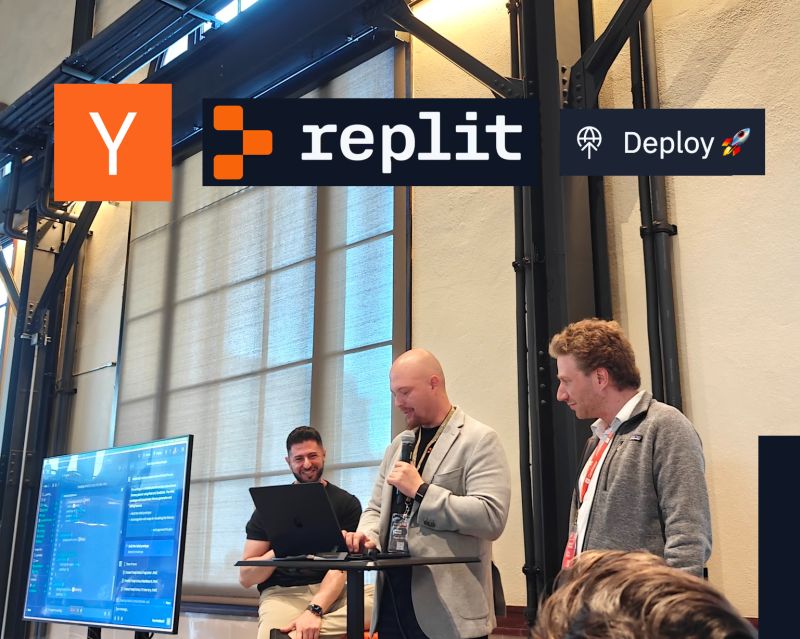
When a company's revenue jumps from $10 million to $100 million in nine months, you pay attention. When that growth comes from an AI agent that builds entire applications autonomously, you realize something fundamental just changed in software development. Replit Agent represents that change, and the numbers prove developers are ready for it. Replit started as a browser-based coding environment for education. Students could write Python or JavaScript without installing anything locally. Teachers loved it because setup time vanished. But the company saw something bigger. If you could run code in the browser, why not let AI write that code? That question led to Agent 3, an AI that doesn't just suggest code completions. It builds entire applications from scratch.
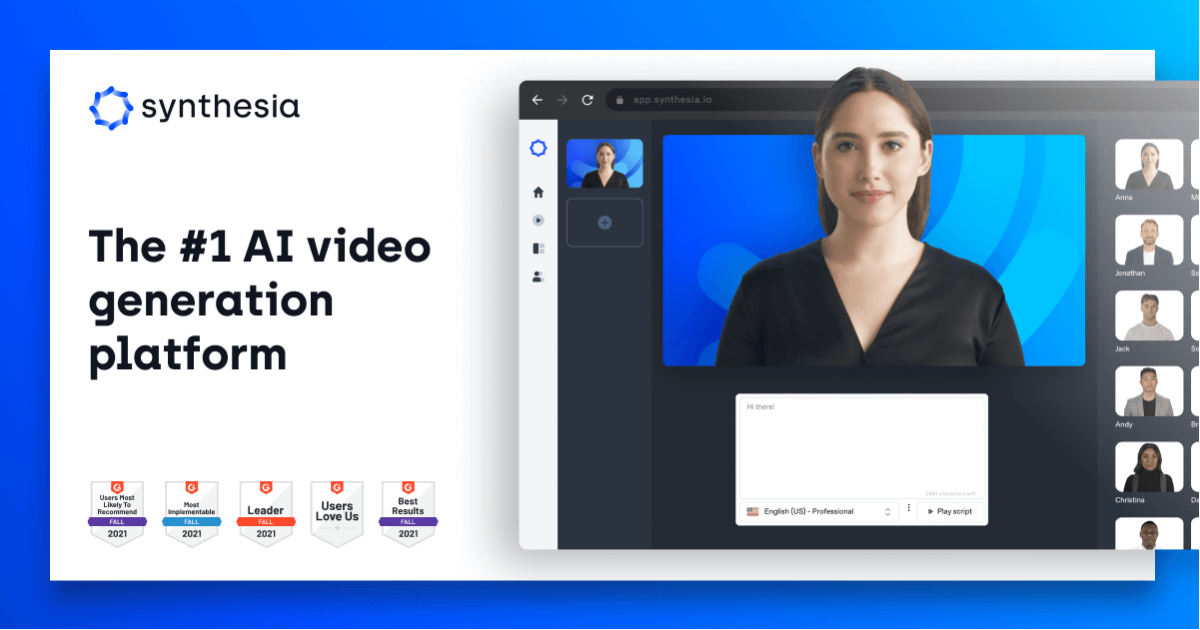
When a company raises $200 million in Series E funding during January 2026, investors are betting on more than potential. They're backing proven market demand and sustainable growth. Synthesia's funding round came alongside a 44% year-over-year increase in headcount to 706 employees, signaling aggressive expansion in a category the company essentially created: AI avatar-based video generation for enterprise training and communications. Corporate training videos have been expensive and slow to produce for decades. Recording a single 10-minute training module traditionally required booking a studio, hiring a presenter, scheduling a videographer, managing multiple takes, and editing everything together. If you needed to update information or translate content, you essentially started over. Synthesia eliminated this entire production workflow by replacing human presenters with AI avatars.
The global cryptocurrency market capitalization has climbed back above the $2.5 trillion threshold, fueled by a massive liquidation of short positions and renewed institutional interest. Geopolitical developments and shifting investor sentiment combined to create a powerful rally that caught bearish traders off guard, resulting in substantial losses for those betting against the market. According to data from CoinGecko, the total market capitalization of all cryptocurrencies combined increased 1.4% to reach $2.52 trillion on Friday, April 10. Bitcoin experienced a notable surge of over 3%, briefly touching the $73,000 mark before consolidating around $72,000 at the time of writing. Ethereum demonstrated equally impressive strength, pushing past the $2,200 level, while the majority of top 10 cryptocurrencies by market capitalization also posted significant gains.
In an extraordinary move signaling growing alarm over artificial intelligence capabilities, US Treasury Secretary Scott Bessent and Federal Reserve Chair Jerome Powell jointly summoned the nation's most powerful banking executives to an emergency meeting this week at Treasury headquarters in Washington, DC. The hastily arranged gathering centered on mounting cybersecurity concerns stemming from Anthropic's latest artificial intelligence system, known as Claude Mythos. The San Francisco-based AI company recently disclosed that its newest model demonstrates unprecedented abilities to identify and exploit software vulnerabilities, raising immediate red flags across the financial sector and national security establishment.
The artificial intelligence industry is entering a new phase of competition, one that extends far beyond the development of advanced language models and neural networks. Companies are now engaged in an intense struggle to secure the computational infrastructure necessary to train and deploy their AI systems. In this context, Anthropic has reportedly begun exploring the possibility of designing and manufacturing its own specialized processors to power Claude, its flagship conversational AI platform, along with its broader suite of artificial intelligence technologies. This strategic consideration emerges at a critical moment in the global AI sector. The exponential growth in model complexity and capability has created unprecedented demand for high-performance computing resources. Sources familiar with the matter indicate that Anthropic is conducting feasibility studies to determine whether developing proprietary semiconductor technology could reduce its dependence on external hardware vendors while ensuring reliable access to the computing power required for its operations.
The article asks what Paris says about the future. My guess is a lot more of this. More curated appearances, fewer of them, each one very deliberate. That is a more interesting public presence than the constant content cycle.
I love how the shorts aren't too short. Finally, a trendy look that's actually wearable!
I've been looking for a top like this forever! The combination of classic white with gingham sleeves is genius
Never thought of pairing a navy watch with brown leather but it actually looks really sophisticated
My concern would be the fabric quality. Anyone know if it wrinkles easily when sitting?
This is perfect for spring events! Though I might add a thin belt to define the waist more
As someone who owns this dress, definitely go one size up if you want more room in the arms. The rest fits true to size
Join independent creators, thought leaders, and storytellers to share your unique perspectives, and spark meaningful conversations.