This happens with every legitimate nutrition concept. Zone diet, intermittent fasting, Mediterranean diet. They all get distilled into a single rule that strips the actual mechanism out.
10
Sign up to see more
SignupAlready a member?
LoginBy continuing, you agree to Sociomix's Terms of Service, Privacy Policy

This happens with every legitimate nutrition concept. Zone diet, intermittent fasting, Mediterranean diet. They all get distilled into a single rule that strips the actual mechanism out.
The creators behind some of Webtoon's most successful psychological thrillers have returned with a series that's already generating intense discussion across manhwa communities. For fans who've been following the horror and thriller genre on digital platforms, Carnby Kim and Youngchan Hwang need no introduction. Their latest collaboration tackles themes of artistic plagiarism, obsession, and murder in ways that feel disturbingly relevant to current conversations about creative theft and AI-generated content. This guide covers everything you need to know about Copycat, from its premise and release schedule to how it compares with their previous masterpieces like Sweet Home and Bastard.

Every time a new wave of manhwa adaptations gets announced, someone asks if this is the bubble bursting. But as long as the platform subscriber numbers hold and streaming rights are competitive, the economics support expansion.
It actually did originate from shorter webcomics, from what I understand, before developing into a serialized format. That explains why the early chapters feel slightly more self-contained.
The demonic versus orthodox visual coding is so ingrained now that when Cheon Yeo-Woon uses orthodox-adjacent techniques the color confusion reads as intentional character development. That is artist and writer working in perfect sync.
In a manhwa landscape dominated by dungeon crawling, regression narratives, and power fantasies, The Greatest Estate Developer stands out by asking a simple question: what if the protagonist's greatest weapon wasn't a sword or magic system, but civil engineering knowledge? This bizarre premise transforms into one of the most entertaining, genuinely funny, and surprisingly heartfelt series currently running, proving that innovation in storytelling comes from unexpected places. The series takes the familiar isekai setup where a modern person finds themselves in a fantasy world and completely subverts expectations. Instead of becoming an adventurer or hero, protagonist Kim Suho uses his engineering knowledge to revolutionize construction, infrastructure, and economic development. What sounds like it should be boring becomes absolutely captivating through sharp writing, excellent comedic timing, and genuine passion for showing how infrastructure improves lives.

Serious question with no opinion attached: what happens to entry-level developer jobs in three to five years if tools like this keep improving at the current rate? Has anyone seen credible research on this?
Sports anime and manga have delivered countless memorable series over the decades, from Slam Dunk's basketball brilliance to Haikyuu's volleyball excellence. These stories typically follow familiar patterns: talented but inexperienced protagonist joins a team, forms bonds with teammates, faces rivals, grows through competition, and ultimately pursues championship glory. The formula works because it taps into universal themes about effort, teamwork, and self-improvement. The Boxer, created by JH, takes everything you expect from sports stories and systematically deconstructs it. The protagonist doesn't love boxing. He doesn't form deep bonds with teammates. He doesn't overcome challenges through friendship and determination. Instead, the manhwa presents one of the darkest, most psychologically complex examinations of combat sports ever created, wrapped in stunningly minimalist artwork that elevates the narrative to something approaching high art.

The part about course creators translating content into languages they do not speak is the use case that stops me cold every time I think about it. That would have been science fiction five years ago.
Bolt v2 apparently made significant strides in agent quality. The earlier version felt more like a code generator that could break in unpredictable ways. The current version feels more like something that actually understands what you are trying to build.
Developers have a new anxiety in 2026: token anxiety. You're in the middle of debugging a complex problem, the AI is helping you refactor three files simultaneously, and suddenly you wonder if this session is about to cost you $50. That mental tax slows you down and makes you second-guess using the tool you're paying for. Windsurf eliminated that anxiety with a simple decision: flat monthly pricing with no token limits. Fifteen dollars per month. Unlimited usage. No tracking credits or calculating costs per query. That pricing model sounds almost boring compared to the complex token systems other AI coding tools use, but boring is exactly what professional developers want when it comes to pricing. They want predictable costs and unlimited usage so they can focus on writing code instead of budgeting AI queries.

The UI learning curve is real but there are enough tutorials now that you can go from zero to usable output in an afternoon. First week is painful, after that it clicks.
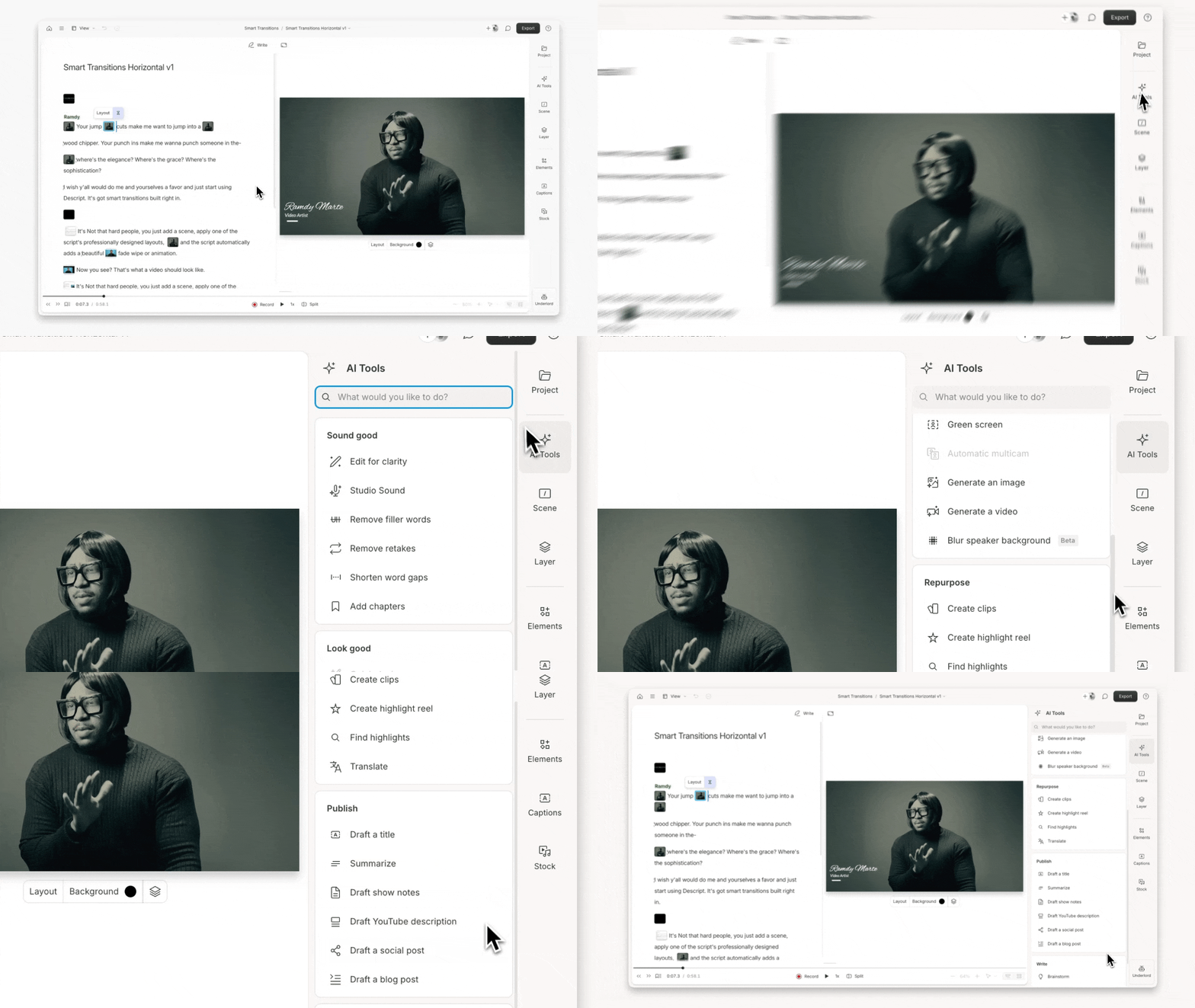
Most people can edit a Google Doc. Delete some words, rearrange sentences, fix typos, add paragraphs. It's intuitive and requires no special training. Now imagine editing video the same way. That's Descript's core innovation, and it transformed video editing from a specialized skill requiring expensive software into something anyone who can edit text can do effectively. Descript started as a transcription tool for podcasters. Record your podcast, upload it to Descript, and get an accurate transcript for show notes. But the founders realized something bigger. If you have a perfect transcript synchronized to audio, you can edit the audio by editing the text. Delete a word from the transcript and that word disappears from the audio. That insight became the foundation for a complete editing platform.
The cybersecurity program finding thousands of zero days in weeks makes me simultaneously grateful Anthropic exists and terrified about what happens when a less careful organization builds something similar.
The line about conversations no longer being just between people but between people and intelligent agents that can act and create landed differently than I expected. We are genuinely in that transition right now and the pace of change is faster than almost anyone predicted two years ago.
The article is pretty fair but I think it undersells how much the ByteDance ownership structure matters. Yes, TikTok US operations are technically separate now, but ByteDance retains a significant ownership stake and continues to run TikTok internationally. The legal exposure is real.
Did anyone else catch the detail that this was her first Paris Fashion Week but she has been to New York Fashion Week before, back in her Suits days? The article glosses over that a bit.
The heart bracelet feels a bit young for this look. I would swap it for something more architectural to match the bag's studs
Really clever how the accessories pull all the colors together. Makes the mixed prints feel intentional