AmeliaJoy_88



Cooling engineers getting 67 percent demand growth since 2022. Let that number sink in.
8

Why Datacenter Jobs Are The Next Big Opportunity While Tech Layoffs Continue
The technology sector is experiencing a paradox. While headlines scream about mass layoffs at major tech companies, a critical shortage is quietly building in one of the most essential areas of digital infrastructure. Datacenters, the physical backbone of our digital world, are facing an unprecedented demand surge, and there simply are not enough skilled professionals to build and maintain them. Countries across the globe are rushing to establish their own datacenter infrastructure. From India's ambitious plans to become a datacenter hub to the European Union's push for data sovereignty, and emerging markets in Southeast Asia and Latin America building their first large scale facilities, the construction boom is just beginning.

316
Save

The comparison between reading system manhwa and playing games is accurate but it also means the genre has the same problem as games. Once you've seen the systems, replaying the same beats in a new package gets exhausting.
5

Why The Greatest Estate Developer Deserves An Anime Adaptation
In a manhwa landscape dominated by dungeon crawling, regression narratives, and power fantasies, The Greatest Estate Developer stands out by asking a simple question: what if the protagonist's greatest weapon wasn't a sword or magic system, but civil engineering knowledge? This bizarre premise transforms into one of the most entertaining, genuinely funny, and surprisingly heartfelt series currently running, proving that innovation in storytelling comes from unexpected places. The series takes the familiar isekai setup where a modern person finds themselves in a fantasy world and completely subverts expectations. Instead of becoming an adventurer or hero, protagonist Kim Suho uses his engineering knowledge to revolutionize construction, infrastructure, and economic development. What sounds like it should be boring becomes absolutely captivating through sharp writing, excellent comedic timing, and genuine passion for showing how infrastructure improves lives.

497
Save

Top 10 Regression Manhwa You Absolutely Must Read In 2026
The regression subgenre has exploded in popularity over the past few years, becoming one of the most beloved narrative frameworks in Korean manhwa. The core premise is deceptively simple: a protagonist dies or fails catastrophically, then returns to an earlier point in time with their memories intact. Armed with future knowledge, they get a second chance to change their fate, save loved ones, gain power, or pursue revenge against those who wronged them. What makes regression stories so compelling is the combination of dramatic irony, strategic satisfaction, and emotional depth they provide. Readers know what the protagonist knows, creating tension when other characters make mistakes we can see coming. We feel smart alongside protagonists who use foreknowledge to outmaneuver enemies. And we experience the emotional weight of carrying memories of futures that haven't happened yet, of people who died who are currently alive, of betrayals that haven't occurred.

265
Save
Vibe editing is a fun framing but I hope people stay skeptical about handing full creative judgment to AI assistants. The editorial decisions that make content actually compelling are still human decisions. The AI speeds up the mechanical work.
14

I wonder how the average training video watcher feels about this. Nobody tells employees their onboarding was made by an AI avatar. Should they be told?
8

What gets lost in the speed conversation is testability. AI-generated code often lacks unit tests, edge case handling, and error states that a thoughtful developer would include. Those gaps bite you later.
21

152% Growth By Making Every Employee Their Own Video Production Studio
While Synthesia leads in revenue, HeyGen leads in customer acquisition momentum with 152% year-over-year growth in mid-market adoption. That explosive growth rate allowed HeyGen to close much of the customer count gap by late 2025. The company is winning by making avatar video accessible to smaller teams and individual creators who cannot afford enterprise contracts but need professional video capabilities. HeyGen positioned itself for small and medium businesses, marketing teams, content creators, and solo entrepreneurs rather than enterprise learning and development departments. This market segment values affordability, ease of use, and creative flexibility over governance features and advanced integrations. Average contract values are roughly one-third of Synthesia's, reflecting this different customer profile.
517
Save
Started using it as a developer to handle boilerplate and setup. Saves me hours on every project. The audience here is not just non-technical founders, experienced developers are also quietly adopting this.
12

Edit Video By Deleting Words Like You're Fixing A Google Doc
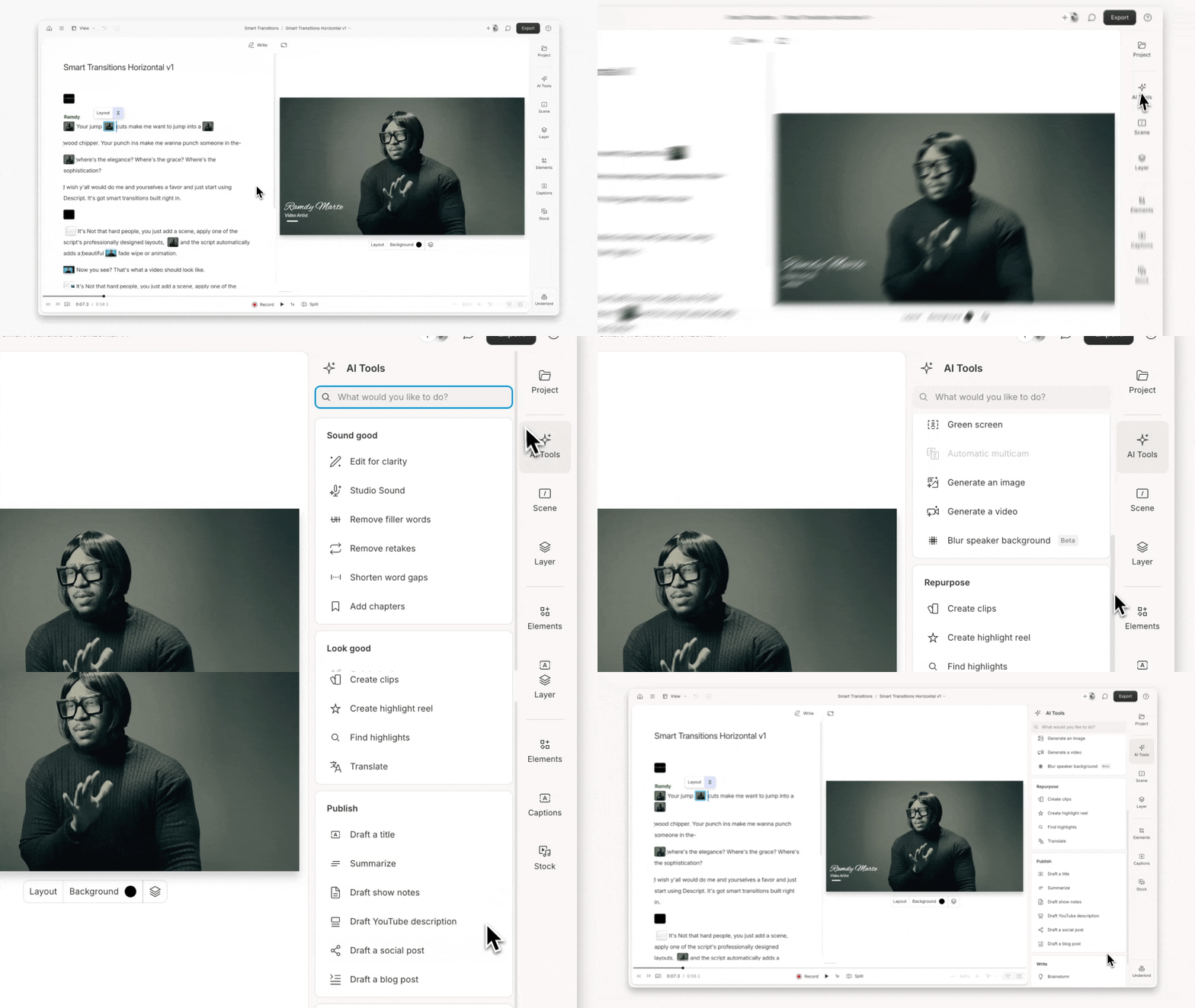
Most people can edit a Google Doc. Delete some words, rearrange sentences, fix typos, add paragraphs. It's intuitive and requires no special training. Now imagine editing video the same way. That's Descript's core innovation, and it transformed video editing from a specialized skill requiring expensive software into something anyone who can edit text can do effectively. Descript started as a transcription tool for podcasters. Record your podcast, upload it to Descript, and get an accurate transcript for show notes. But the founders realized something bigger. If you have a perfect transcript synchronized to audio, you can edit the audio by editing the text. Delete a word from the transcript and that word disappears from the audio. That insight became the foundation for a complete editing platform.
400
Save

Practical question for anyone following this closely, does Anthropic plan to publish a report on what Glasswing found after the initial 90-day phase? They said they would report publicly on what they learned. Holding them to that.
24

OK but does anyone actually believe Apple and Microsoft are going to use Mythos purely defensively and not quietly integrate the capability into competitive product offerings?
17

The point about smaller and mid-sized banks is getting lost in all the big bank CEO coverage. Those institutions are the most exposed because they lack the security budgets and often run the oldest legacy code.
21

Anthropic Unveils Powerful Cybersecurity AI Model With Restricted Access To Tech Giants Only
Anthropic on Tuesday unveiled an advanced artificial intelligence model designed specifically to identify software vulnerabilities, marking a significant development in the intersection of AI and cybersecurity. The model, named Claude Mythos Preview, will be available exclusively to a carefully selected group of companies as part of Project Glasswing, a new security initiative that aims to strengthen digital defenses while preventing malicious exploitation. The San Francisco based AI company has chosen to severely restrict access to Claude Mythos Preview due to its powerful capability to detect security weaknesses and software flaws. This decision reflects growing concerns about dual use AI technologies that could be weaponized by adversaries if they fell into the wrong hands.

333
Save

Hot take: the 15 minute limit is actually the right call. Letting people silently rewrite comments hours later would be a disaster for trust in comment sections.
17

The article mentions that Meta's advantage is not just the model but the network. That is genuinely true and genuinely underappreciated. The marginal cost of adding AI to a platform where people already spend hours a day is essentially zero. You are not acquiring users. You are activating them.
24
US Treasury Summons Banking Chiefs Over Anthropic Mythos Cybersecurity Threat
In an extraordinary move signaling growing alarm over artificial intelligence capabilities, US Treasury Secretary Scott Bessent and Federal Reserve Chair Jerome Powell jointly summoned the nation's most powerful banking executives to an emergency meeting this week at Treasury headquarters in Washington, DC. The hastily arranged gathering centered on mounting cybersecurity concerns stemming from Anthropic's latest artificial intelligence system, known as Claude Mythos. The San Francisco-based AI company recently disclosed that its newest model demonstrates unprecedented abilities to identify and exploit software vulnerabilities, raising immediate red flags across the financial sector and national security establishment.

70
Save
TikTok Breaks Ranks On Privacy: Why The Platform Won't Encrypt Your Messages
In a rare divergence from industry norms, TikTok has confirmed it will not adopt end-to-end encryption (E2EE) for direct messages, breaking with nearly every major social media platform and reigniting one of the tech industry's most contentious debates. The Chinese-owned video platform told the BBC exclusively that it believes the privacy technology championed by Meta, Apple, and others as essential for user protection actually makes users less safe by creating "dark spaces" where harmful content can flourish beyond the reach of safety teams and law enforcement. The decision puts TikTok in direct opposition to its competitors while potentially exposing the company to fresh criticism over data protection, particularly given ongoing concerns about its ties to Beijing.
395
Save