
Does anyone else think Antoine Fuqua was the wrong director for this? His style tends toward big visceral impact and Michael Jackson's story needed someone with more psychological interiority.
21
Sign up to see more
SignupAlready a member?
LoginBy continuing, you agree to Sociomix's Terms of Service, Privacy Policy

Does anyone else think Antoine Fuqua was the wrong director for this? His style tends toward big visceral impact and Michael Jackson's story needed someone with more psychological interiority.
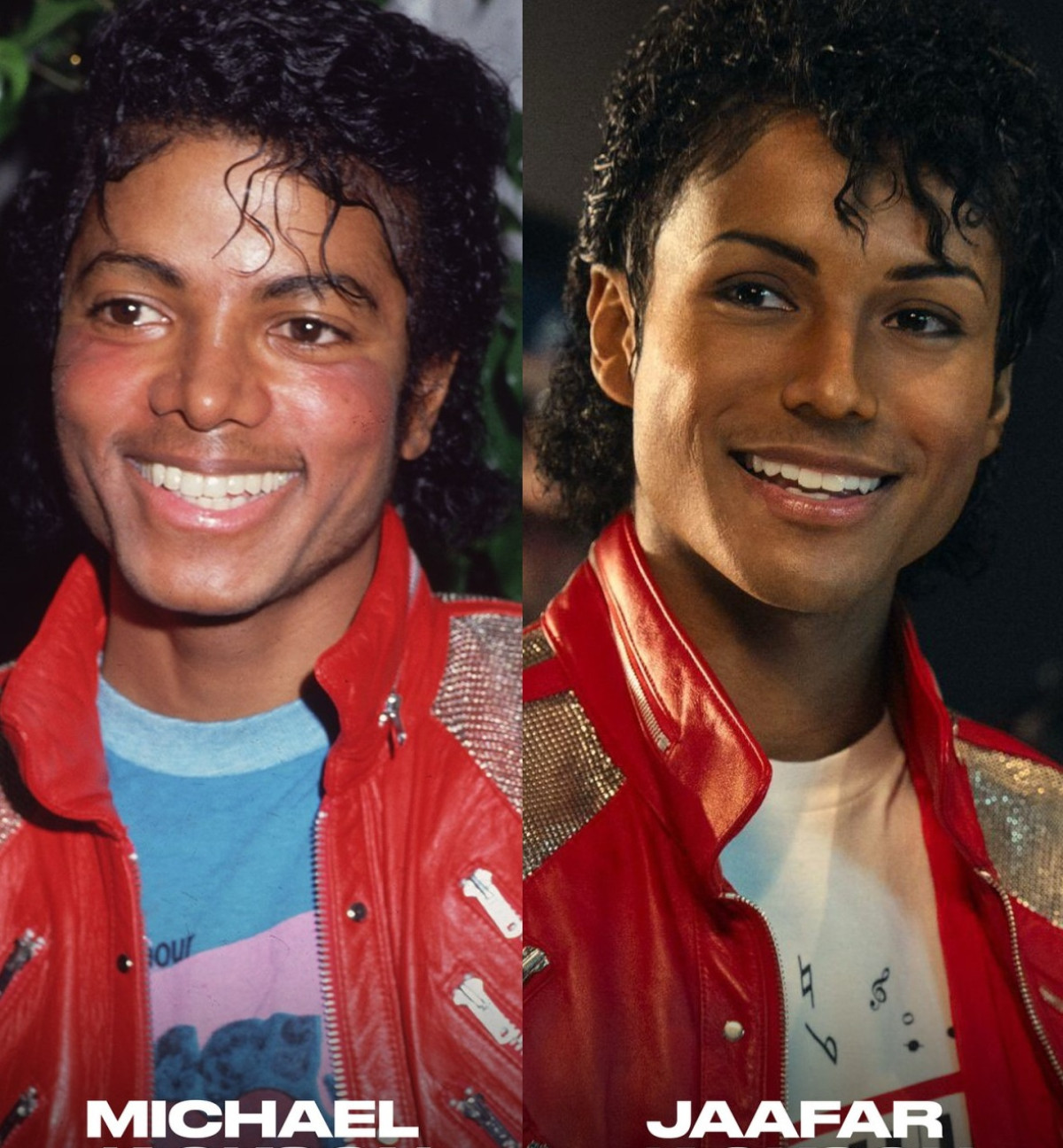
Jaafar Jackson plays Michael Jackson in the 2026 biopic Michael, and the story of how the 29-year-old newcomer landed the role is more interesting than the film itself. It started with a voice note. It involved a two-year global casting search with no formal auditions. It required Jaafar to keep the role secret from his own family for a full year. And it ended with his grandmother Katherine Jackson, the woman who knew Michael longest and loved him most, telling producers that her grandson didn't just resemble her son, he embodied him. After tracking every interview, behind-the-scenes video, and production report released since the film was announced, I can tell you that the choice of Jaafar was not nepotism, not a publicity play, and not the obvious pick everyone assumes it was. It was a hard-earned outcome of the most unusual casting process in recent biopic history, and here is how it actually happened.
The year 2026 marks a pivotal moment in the evolution of manhwa as a medium. What started as a trickle of Korean comics receiving anime adaptations has become a flood, with at least fifteen confirmed projects bringing beloved manhwa to animated life. This explosive growth wasn't accidental but the inevitable result of Solo Leveling's massive success proving that manhwa adaptations can compete with traditional manga anime in quality, popularity, and profitability. Studios across Japan and Korea are investing heavily in manhwa properties, recognizing that Korean storytelling brings fresh perspectives, innovative premises, and built-in fanbases eager to see their favorite series animated. The diversity of genres receiving adaptations demonstrates that manhwa appeal extends far beyond action and fantasy into romance, psychological thriller, sports, and slice-of-life territories.

For anyone who has been on the fence about starting manhwa, the current moment is genuinely the best possible time. More series are being adapted and localized than ever before and the quality ceiling keeps rising.
In a manhwa landscape dominated by dungeon crawling, regression narratives, and power fantasies, The Greatest Estate Developer stands out by asking a simple question: what if the protagonist's greatest weapon wasn't a sword or magic system, but civil engineering knowledge? This bizarre premise transforms into one of the most entertaining, genuinely funny, and surprisingly heartfelt series currently running, proving that innovation in storytelling comes from unexpected places. The series takes the familiar isekai setup where a modern person finds themselves in a fantasy world and completely subverts expectations. Instead of becoming an adventurer or hero, protagonist Kim Suho uses his engineering knowledge to revolutionize construction, infrastructure, and economic development. What sounds like it should be boring becomes absolutely captivating through sharp writing, excellent comedic timing, and genuine passion for showing how infrastructure improves lives.

The Gen-4 Turbo option for rapid iteration is underrated in this writeup. When you are testing a dozen different concept directions, speed matters more than peak quality. Turbo lets you find the right direction before committing to a full render.
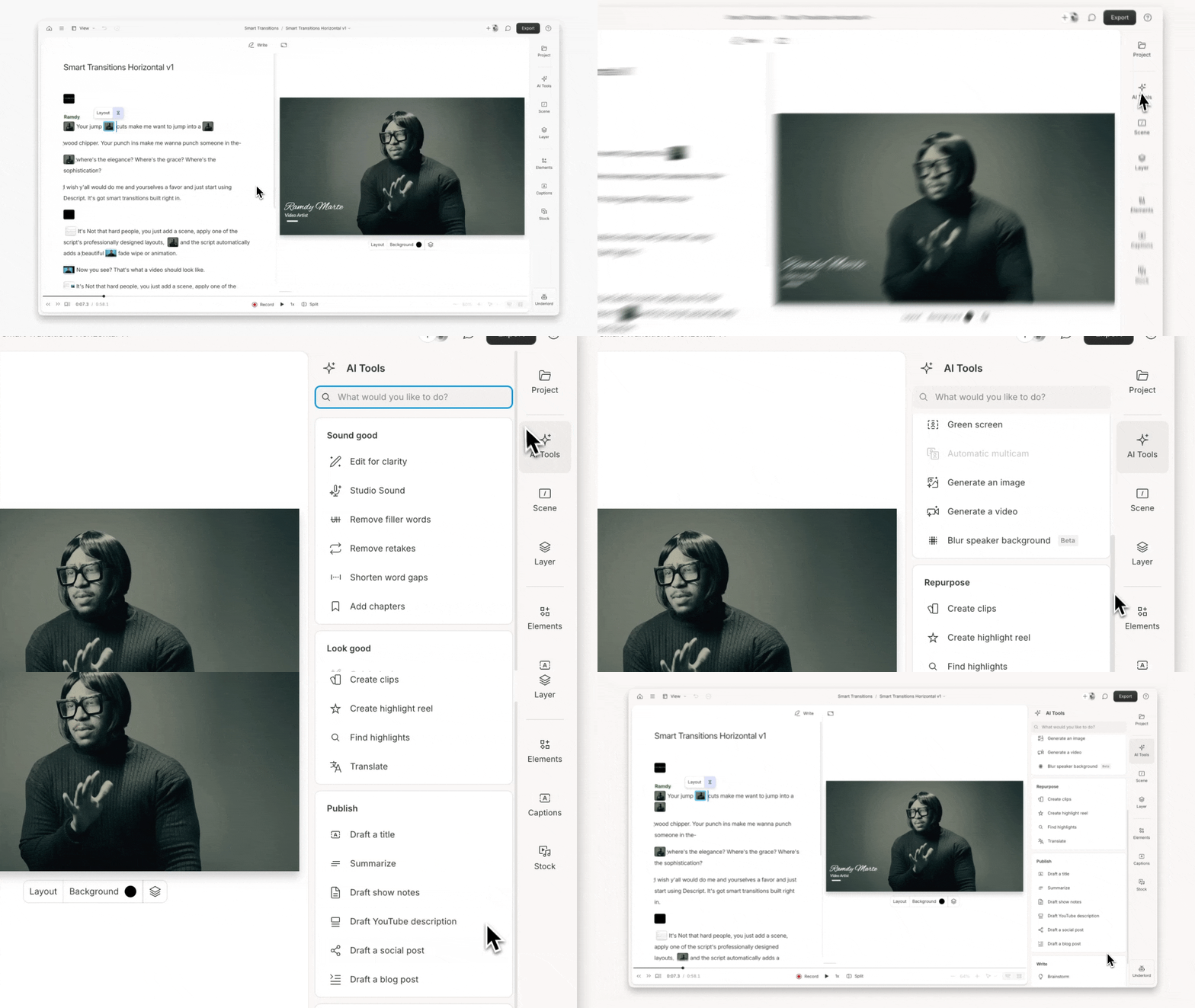
Most people can edit a Google Doc. Delete some words, rearrange sentences, fix typos, add paragraphs. It's intuitive and requires no special training. Now imagine editing video the same way. That's Descript's core innovation, and it transformed video editing from a specialized skill requiring expensive software into something anyone who can edit text can do effectively. Descript started as a transcription tool for podcasters. Record your podcast, upload it to Descript, and get an accurate transcript for show notes. But the founders realized something bigger. If you have a perfect transcript synchronized to audio, you can edit the audio by editing the text. Delete a word from the transcript and that word disappears from the audio. That insight became the foundation for a complete editing platform.
As a newcomer who just finished the manhwa last week, the ending destroyed me. If the anime gets that far I genuinely do not know how I will cope watching it animated.
Tower climbing stories have become a dominant force in manhwa, but most follow predictable patterns. A protagonist enters a mysterious tower, gains powers, forms a party, and ascends floors while growing stronger. The formula works because progression feels satisfying and each floor presents new challenges. However, Doom Breaker takes this familiar framework and transforms it into something far more emotionally devastating and psychologically complex than typical tower stories. Also known as SSS-Class Suicide Hunter, Doom Breaker initially appears to be another power fantasy where the protagonist gains an overpowered ability. The premise sounds almost comedic. Kim Gongja can copy any skill by dying, then returns to life to use that ability. But beneath this seemingly absurd power lies a story about pain, sacrifice, redemption, and what it truly means to be a hero when heroism demands everything from you.

The pattern of OpenAI following Anthropic's lead is new and worth noting. A year ago nobody was saying that. OpenAI launched the new pricing tier to match Claude Code, launched a cybersecurity program to match Project Glasswing, and sent a memo to investors only after Anthropic's revenue numbers dropped. That's a defensive posture.
What happens to the Ray-Ban glasses when this rolls out to the hardware ecosystem? That is where the ambient AI angle gets genuinely interesting and genuinely creepy in equal measure.
In a rare divergence from industry norms, TikTok has confirmed it will not adopt end-to-end encryption (E2EE) for direct messages, breaking with nearly every major social media platform and reigniting one of the tech industry's most contentious debates. The Chinese-owned video platform told the BBC exclusively that it believes the privacy technology championed by Meta, Apple, and others as essential for user protection actually makes users less safe by creating "dark spaces" where harmful content can flourish beyond the reach of safety teams and law enforcement. The decision puts TikTok in direct opposition to its competitors while potentially exposing the company to fresh criticism over data protection, particularly given ongoing concerns about its ties to Beijing.
The line about conversations no longer being just between people but between people and intelligent agents that can act and create landed differently than I expected. We are genuinely in that transition right now and the pace of change is faster than almost anyone predicted two years ago.
Broadcom is already a chip design partner for OpenAI and is now also working with Anthropic on the Google TPU deal. That company is quietly becoming one of the most important players in the entire AI infrastructure story.
The artificial intelligence industry is entering a new phase of competition, one that extends far beyond the development of advanced language models and neural networks. Companies are now engaged in an intense struggle to secure the computational infrastructure necessary to train and deploy their AI systems. In this context, Anthropic has reportedly begun exploring the possibility of designing and manufacturing its own specialized processors to power Claude, its flagship conversational AI platform, along with its broader suite of artificial intelligence technologies. This strategic consideration emerges at a critical moment in the global AI sector. The exponential growth in model complexity and capability has created unprecedented demand for high-performance computing resources. Sources familiar with the matter indicate that Anthropic is conducting feasibility studies to determine whether developing proprietary semiconductor technology could reduce its dependence on external hardware vendors while ensuring reliable access to the computing power required for its operations.
The article mentions that Meta's advantage is not just the model but the network. That is genuinely true and genuinely underappreciated. The marginal cost of adding AI to a platform where people already spend hours a day is essentially zero. You are not acquiring users. You are activating them.
When you hear “Paris Fashion Week,” your mind races to haute couture, bold statements, and the world’s most glamorous attendees. But on October 4, 2025, the scene got a surprise guest—Meghan Markle, making what might be her most talked-about entrance yet. To call it a “debut” feels almost too neat, as if she’s stepping into a world she’s never touched. Yet, Meghan’s gradual evolution as a style influencer has been anything but accidental. Her Paris moment isn’t just celebrity spectacle; it’s a statement, a pivot, and a nuanced step into a new chapter. Here’s my take on why this matters.

Hot take, the Balenciaga archive combined with Piccioli's couture instincts is going to produce something genuinely important in fashion over the next few years and Meghan got a front row seat to the beginning of it.
Thanks for breaking down how versatile each piece is! Just realized I can create so many looks with items I already own