CinemaKing_2024



Michael Movie Review Should You Watch The Michael Jackson Biopic In 2026
The Michael movie review verdict is in, and it is more complicated than the 26% Rotten Tomatoes score suggests. Antoine Fuqua's long-delayed Michael Jackson biopic, simply titled Michael, hit theaters this weekend with Jaafar Jackson playing his late uncle, and the critical response has been brutal. The BBC gave it one star. Roger Ebert's site called it a filmed playlist in search of a story. Yet early audience reactions on social media have been warmer, ticket pre-sales suggest an $80 million opening, and Variety thought it worked as an engrossing middle-of-the-road biopic. After tracking coverage across more than a dozen outlets over the past 48 hours, I think the honest answer to "should you watch this?" depends almost entirely on what you want from a music biopic, and this guide breaks down exactly what the film delivers, what it skips, and who will actually enjoy sitting through its two-hour-and-nine-minute runtime.

430
Save

As someone who reads widely in this genre, the way this series handles what repeated sacrifice does to a person's sense of self-worth is unlike anything else out there. Gongja does not emerge triumphant and intact. He emerges marked.
8

Curious what people think the right voice direction for Yu should be. Flat and monotone could be accurate but could also make him boring to watch for twelve episodes.
14

Murim manhwa is genuinely the most underappreciated genre in comics right now. People who only know Solo Leveling are missing an entire universe of brilliant work.
22

As a murim fan specifically, I would argue the regression formula works even better in a martial arts cultivation setting than in the modern dungeon-system setting. The power hierarchies are more rigid so subverting them with foreknowledge feels more satisfying.
23
The comparison to traditional no-code tools is fair. I spent months on Bubble learning its weird visual workflow paradigm before I could ship anything. Lovable had me building in minutes. The learning curve difference is massive.
0

Edit Video By Deleting Words Like You're Fixing A Google Doc
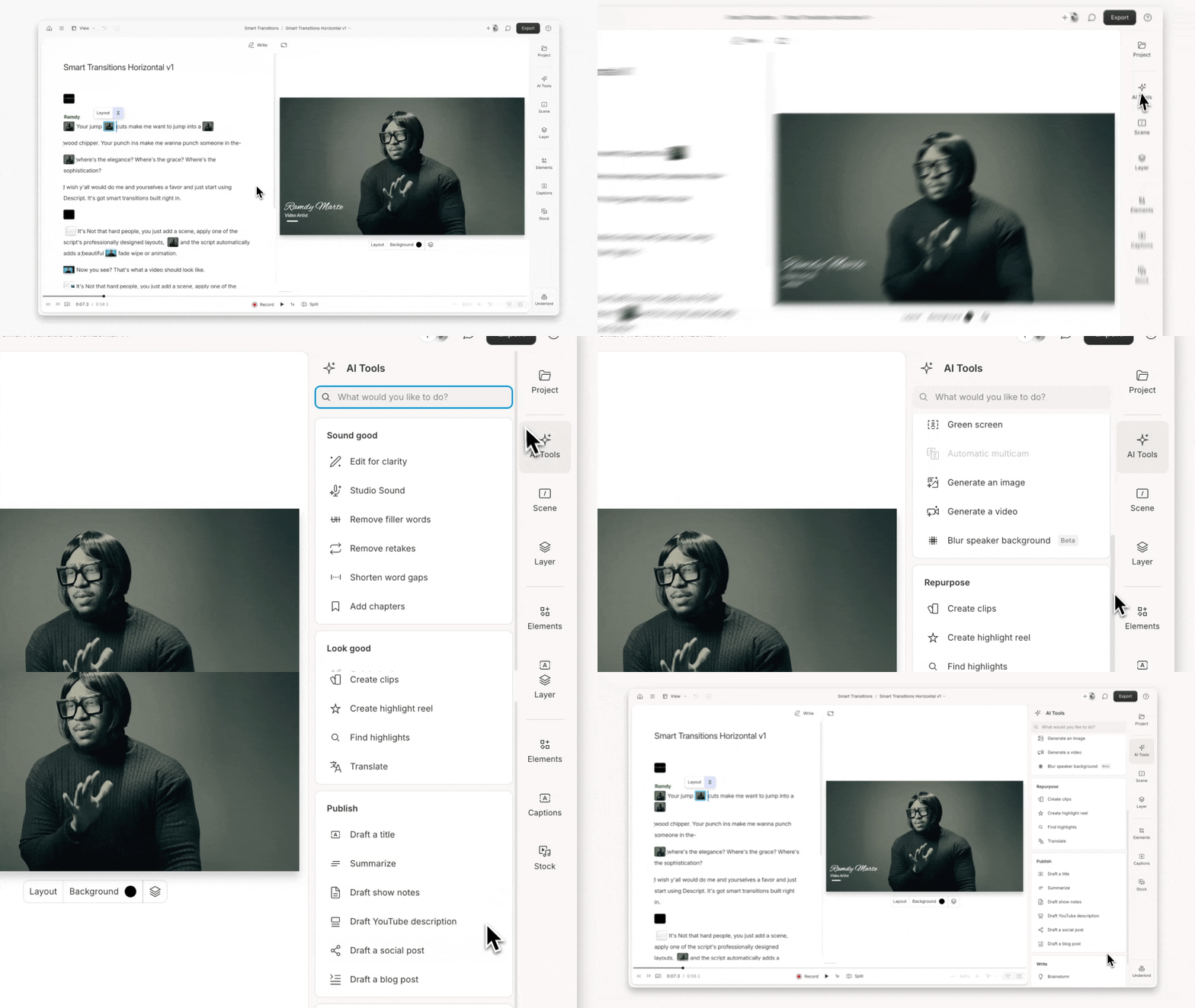
Most people can edit a Google Doc. Delete some words, rearrange sentences, fix typos, add paragraphs. It's intuitive and requires no special training. Now imagine editing video the same way. That's Descript's core innovation, and it transformed video editing from a specialized skill requiring expensive software into something anyone who can edit text can do effectively. Descript started as a transcription tool for podcasters. Record your podcast, upload it to Descript, and get an accurate transcript for show notes. But the founders realized something bigger. If you have a perfect transcript synchronized to audio, you can edit the audio by editing the text. Delete a word from the transcript and that word disappears from the audio. That insight became the foundation for a complete editing platform.
400
Save

The predictive combat modeling showing ghosted future possibilities is wild when you think about how technically difficult that is to draw. You have the present action AND the potential action in the same panel and somehow it never feels cluttered.
22

The AI That Finally Makes Designers And Developers Actually Like Each Other
The designer-developer relationship has been tense for decades. Designers create pixel-perfect mockups in Figma. Developers translate them to code and somehow everything looks slightly wrong. Fonts don't match. Spacing is inconsistent. Buttons have different corner radiuses. Both sides get frustrated, blame each other, and the product suffers. V0 by Vercel is fixing this problem by generating production-quality React components that look exactly like the designs. The rebrand from v0.dev to v0.app in January 2026 signaled expanded ambitions beyond just UI component generation. Vercel positioned the tool for full-stack web development, though its core strength remains frontend excellence. That strategic clarity matters because trying to be everything often means excelling at nothing. V0 chose to dominate the handoff between design and code before expanding into other areas.

568
Save
The ORV anime news has legitimately caused a reading surge and a lot of new readers are asking which regression series to try next. Lists like this one are getting more traffic than ever right now.
0

Beating Google And OpenAI At Video Generation With A 1,247 Elo Score
The AI video generation race just got a clear winner. Runway Gen-4.5 topped the Video Arena leaderboard with a 1,247 Elo score, surpassing both Google Veo 3 and OpenAI Sora 2. For those unfamiliar with Elo ratings, this is the same system used to rank chess players and competitive games. A higher score means more wins in head-to-head comparisons. When real users compare videos side by side without knowing which AI generated them, they consistently choose Runway's output. Runway didn't start as an enterprise video tool. It began as a playground for artists and filmmakers who wanted to experiment with AI-generated visuals. The early versions produced fascinating but inconsistent results. Sometimes you'd get stunning cinematic footage. Other times you'd get distorted motion and unrealistic physics. Gen-4.5 changed that equation by achieving breakthrough consistency in motion quality and physical accuracy.

258
Save

This Startup Hit $20M Revenue In 60 Days Without A Single Developer
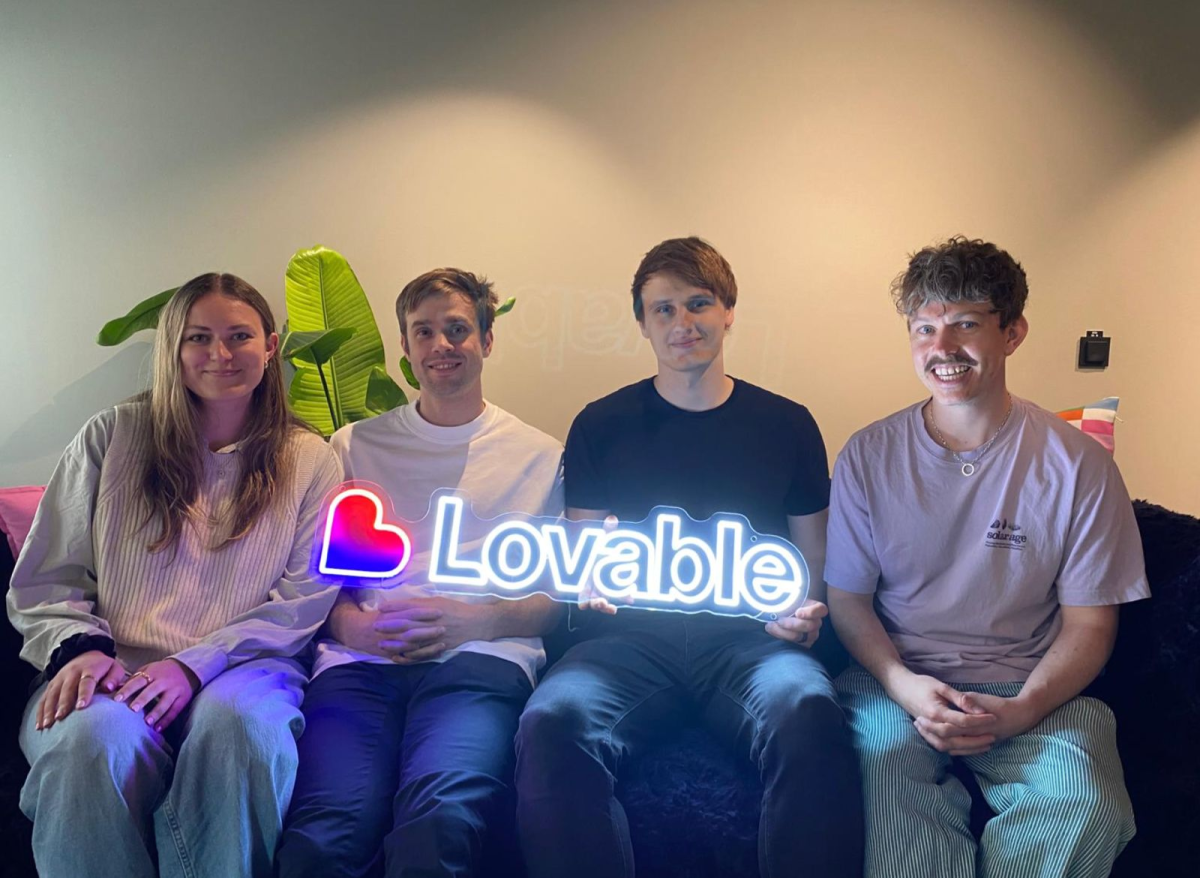
The software development world just witnessed something unprecedented. A European startup called Lovable reached $20 million in annual recurring revenue in just two months, making it potentially the fastest-growing startup in European history. But here's the twist that's making traditional software agencies nervous: they did it by giving non-technical founders the power to build full-stack applications without writing a single line of code. For years, the promise of no-code tools has been the same: anyone can build an app. But the reality has always been different. You'd create a beautiful frontend, get excited about your progress, and then hit the technical cliff. Suddenly you needed to configure databases, set up authentication, manage API keys, and deploy to servers. The "no-code" dream became a "hire-a-developer-anyway" nightmare.
478
Save

Anthropic's Strategic Shift: The Race To Control AI Computing Infrastructure
The artificial intelligence industry is entering a new phase of competition, one that extends far beyond the development of advanced language models and neural networks. Companies are now engaged in an intense struggle to secure the computational infrastructure necessary to train and deploy their AI systems. In this context, Anthropic has reportedly begun exploring the possibility of designing and manufacturing its own specialized processors to power Claude, its flagship conversational AI platform, along with its broader suite of artificial intelligence technologies. This strategic consideration emerges at a critical moment in the global AI sector. The exponential growth in model complexity and capability has created unprecedented demand for high-performance computing resources. Sources familiar with the matter indicate that Anthropic is conducting feasibility studies to determine whether developing proprietary semiconductor technology could reduce its dependence on external hardware vendors while ensuring reliable access to the computing power required for its operations.

447
Save

Nvidia's CUDA ecosystem has literally millions of developers and thousands of optimized applications built up over nearly two decades. That is not something any custom chip program displaces in the near term no matter how good the hardware is.
23

The attackers broke down the attack into small seemingly innocent tasks so Claude would execute them without full context. That technique is going to be the template for AI-enabled intrusions for years. The jailbreak vector is the underrated threat.
19
The supply chain designation while Anthropic is simultaneously your best hope for patching the vulnerabilities it discovered is an interesting strategic contradiction the government will need to resolve fast.
0

Not gonna lie, I was skeptical going in but the more I read about her actual relationship with Piccioli the more this feels genuine rather than calculated.
19

Has anyone tried washing a sweater like this? I always worry about the twist detail losing its shape
1