That is a fair point but also worth noting that Fuqua clearly got an exceptional performance out of a first-time screen actor, which is itself a significant directorial achievement regardless of script issues.
18
Sign up to see more
SignupAlready a member?
LoginBy continuing, you agree to Sociomix's Terms of Service, Privacy Policy

That is a fair point but also worth noting that Fuqua clearly got an exceptional performance out of a first-time screen actor, which is itself a significant directorial achievement regardless of script issues.
Honestly the post undersells how funny some of the Suchan moments are. His specific brand of indignant outrage about the plagiarism has dark comedy energy that keeps the series from becoming oppressively grim.
Okay the Ice Truck Killer comparison the post makes is accurate and I am choosing not to think about it too deeply at 1am.
The King of Hell setup is great and the final season premise is wild. A full scale war against Hell being led by a guy whose main skill is building roads is peak storytelling.
The article could have engaged more with Return of the Blossoming Blade. That series is neck and neck with Nano Machine for visual clarity in group fights and deserves a mention when making best-in-medium claims.
Been following this since close to the beginning and watching the artist grow over two hundred plus chapters has been its own kind of satisfaction. The early chapters are good. The recent chapters are operating at a completely different level of technical maturity.
Does the novel go further into Gongja's psychological state after hundreds of deaths, or does the manhwa cover that sufficiently? Curious whether the source material is worth seeking out separately.
The social media clip automation described here is accurate but the article makes it sound more automatic than it is. The AI surfaces candidates well but you still spend meaningful time selecting and trimming. Calling it fully automated is generous.
Counterpoint: for anyone who already knows Premiere Pro or Final Cut, the learning curve is actually reversed. You have to unlearn instincts and stop reaching for timeline tools that are not the point anymore. Took me a few weeks to fully switch over.
The GitHub integration is a game changer for hybrid workflows. Start a prototype in Bolt, hand it off to a GitHub repo when it gets complex, continue in your normal dev environment. That handoff being smooth is what makes it actually useful for teams.
Hot take, the real disruption here is not the AI avatars. It is the economics. When producing video number 100 costs roughly the same as producing video number one, the entire calculus of corporate training changes overnight.
When Tomb Raider King first exploded onto the manhwa scene, it brought a fresh take on dungeon crawling stories by combining archaeological adventure with ruthless protagonist energy and a treasure-hunting premise that felt genuinely different from typical gate and dungeon narratives. The series built a dedicated fanbase through its satisfying blend of historical artifact powers, strategic relic acquisition, and a protagonist who wasn't afraid to be morally gray in pursuit of his goals. Now, with the anime adaptation confirmed for 2026 as one of the most anticipated manhwa-to-anime projects, Tomb Raider King is experiencing a resurgence. New readers are discovering the series while longtime fans eagerly await seeing Jooheon Suh's relic-hunting adventures brought to life with animation. The timing couldn't be better, as the series has built enough content to support a substantial adaptation while maintaining momentum in its ongoing storyline.

If you're new to manhwa or looking to understand what all the hype is about regarding system and leveling stories, you've arrived at exactly the right place. The system genre has become one of the most popular and accessible entry points into Korean comics, offering clear progression mechanics, satisfying power growth, and narratives that feel like playing your favorite RPG or video game brought to life on the page. System manhwa feature protagonists who gain access to game-like interfaces that display stats, skills, quests, and levels. These systems provide clear frameworks for character growth and power progression. You can literally see the protagonist getting stronger through numbers increasing, new abilities unlocking, and challenges being overcome. This visual and concrete progression creates deeply satisfying reading experiences that hook readers from the first chapter.
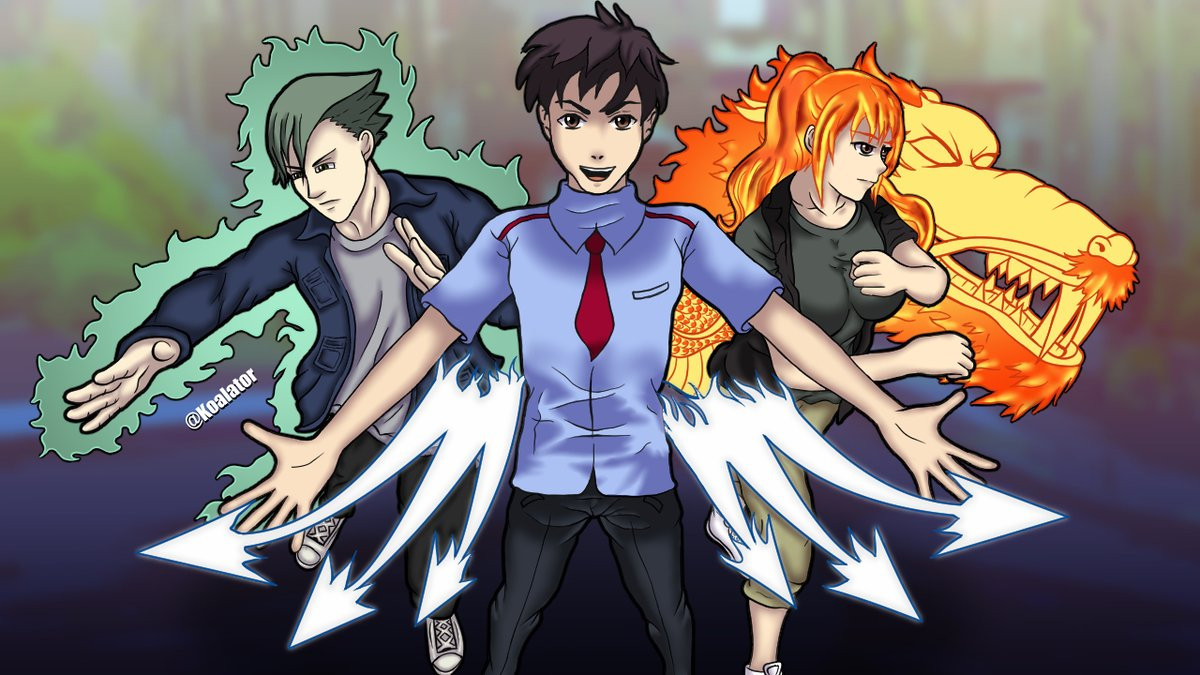
In a manhwa landscape dominated by dungeon crawling, regression narratives, and power fantasies, The Greatest Estate Developer stands out by asking a simple question: what if the protagonist's greatest weapon wasn't a sword or magic system, but civil engineering knowledge? This bizarre premise transforms into one of the most entertaining, genuinely funny, and surprisingly heartfelt series currently running, proving that innovation in storytelling comes from unexpected places. The series takes the familiar isekai setup where a modern person finds themselves in a fantasy world and completely subverts expectations. Instead of becoming an adventurer or hero, protagonist Kim Suho uses his engineering knowledge to revolutionize construction, infrastructure, and economic development. What sounds like it should be boring becomes absolutely captivating through sharp writing, excellent comedic timing, and genuine passion for showing how infrastructure improves lives.

The AI video generation race just got a clear winner. Runway Gen-4.5 topped the Video Arena leaderboard with a 1,247 Elo score, surpassing both Google Veo 3 and OpenAI Sora 2. For those unfamiliar with Elo ratings, this is the same system used to rank chess players and competitive games. A higher score means more wins in head-to-head comparisons. When real users compare videos side by side without knowing which AI generated them, they consistently choose Runway's output. Runway didn't start as an enterprise video tool. It began as a playground for artists and filmmakers who wanted to experiment with AI-generated visuals. The early versions produced fascinating but inconsistent results. Sometimes you'd get stunning cinematic footage. Other times you'd get distorted motion and unrealistic physics. Gen-4.5 changed that equation by achieving breakthrough consistency in motion quality and physical accuracy.

Does anyone else find it slightly ironic that a company founded on AI safety concerns is now building some of the most powerful autonomous hacking tools ever created, even if the intent is defensive? Where exactly is the safety-first line drawn?
The supply chain risk designation from the Pentagon is huge and kind of undercuts the Project Glasswing story. You're launching a cybersecurity model with Apple and Microsoft and Amazon as partners but the US Department of Defense just called you a risk. Those two things happening at the same time are wild.
The five-tier structure kind of works if you think about it. Go for light use, Plus for daily professional use, the new $100 for heavy daily coding, and $200 for teams who need priority everything. The positioning logic is there.
the bigger story here is not any single vulnerability. It is that the entire coordinated disclosure model that the security industry depends on was built for human-speed discovery and it cannot handle AI-speed discovery.
The article could have spent more time on what sustaining above $72K actually requires technically. The 50-day EMA was mentioned elsewhere as key support around $70.6K. Losing that would change the picture.