
What is Jahak's name supposed to mean in Korean? The post explained it but I want to make sure I understood correctly.
17
Sign up to see more
SignupAlready a member?
LoginBy continuing, you agree to Sociomix's Terms of Service, Privacy Policy

What is Jahak's name supposed to mean in Korean? The post explained it but I want to make sure I understood correctly.
That criticism has merit for the later chapters for sure. But the article is specifically about the art, and the art remains consistently strong even when the story conveniences pile up.
Walking in on a friend reading this series at the chapter where a certain minor character from the merchant arc dies and trying to explain manhwa to someone who has never read it before is an experience.
Sci-fi demons invading a martial arts world is not a new concept if you've read enough light novels, but the execution here is genuinely fresh.
In a manhwa landscape dominated by dungeon crawling, regression narratives, and power fantasies, The Greatest Estate Developer stands out by asking a simple question: what if the protagonist's greatest weapon wasn't a sword or magic system, but civil engineering knowledge? This bizarre premise transforms into one of the most entertaining, genuinely funny, and surprisingly heartfelt series currently running, proving that innovation in storytelling comes from unexpected places. The series takes the familiar isekai setup where a modern person finds themselves in a fantasy world and completely subverts expectations. Instead of becoming an adventurer or hero, protagonist Kim Suho uses his engineering knowledge to revolutionize construction, infrastructure, and economic development. What sounds like it should be boring becomes absolutely captivating through sharp writing, excellent comedic timing, and genuine passion for showing how infrastructure improves lives.

When Tomb Raider King first exploded onto the manhwa scene, it brought a fresh take on dungeon crawling stories by combining archaeological adventure with ruthless protagonist energy and a treasure-hunting premise that felt genuinely different from typical gate and dungeon narratives. The series built a dedicated fanbase through its satisfying blend of historical artifact powers, strategic relic acquisition, and a protagonist who wasn't afraid to be morally gray in pursuit of his goals. Now, with the anime adaptation confirmed for 2026 as one of the most anticipated manhwa-to-anime projects, Tomb Raider King is experiencing a resurgence. New readers are discovering the series while longtime fans eagerly await seeing Jooheon Suh's relic-hunting adventures brought to life with animation. The timing couldn't be better, as the series has built enough content to support a substantial adaptation while maintaining momentum in its ongoing storyline.

The OpenAI Startup Fund backed Descript early on, which explains why the AI features feel well integrated rather than bolted on as afterthoughts. The alignment between their AI approach and the underlying product is unusually coherent.
Speaking from experience in L and D: the governance thing is not just corporate box-ticking. When you have 50 people creating training videos, brand consistency and content approval matter enormously. HeyGen was not really built for that workflow and it shows when teams scale past ten users.
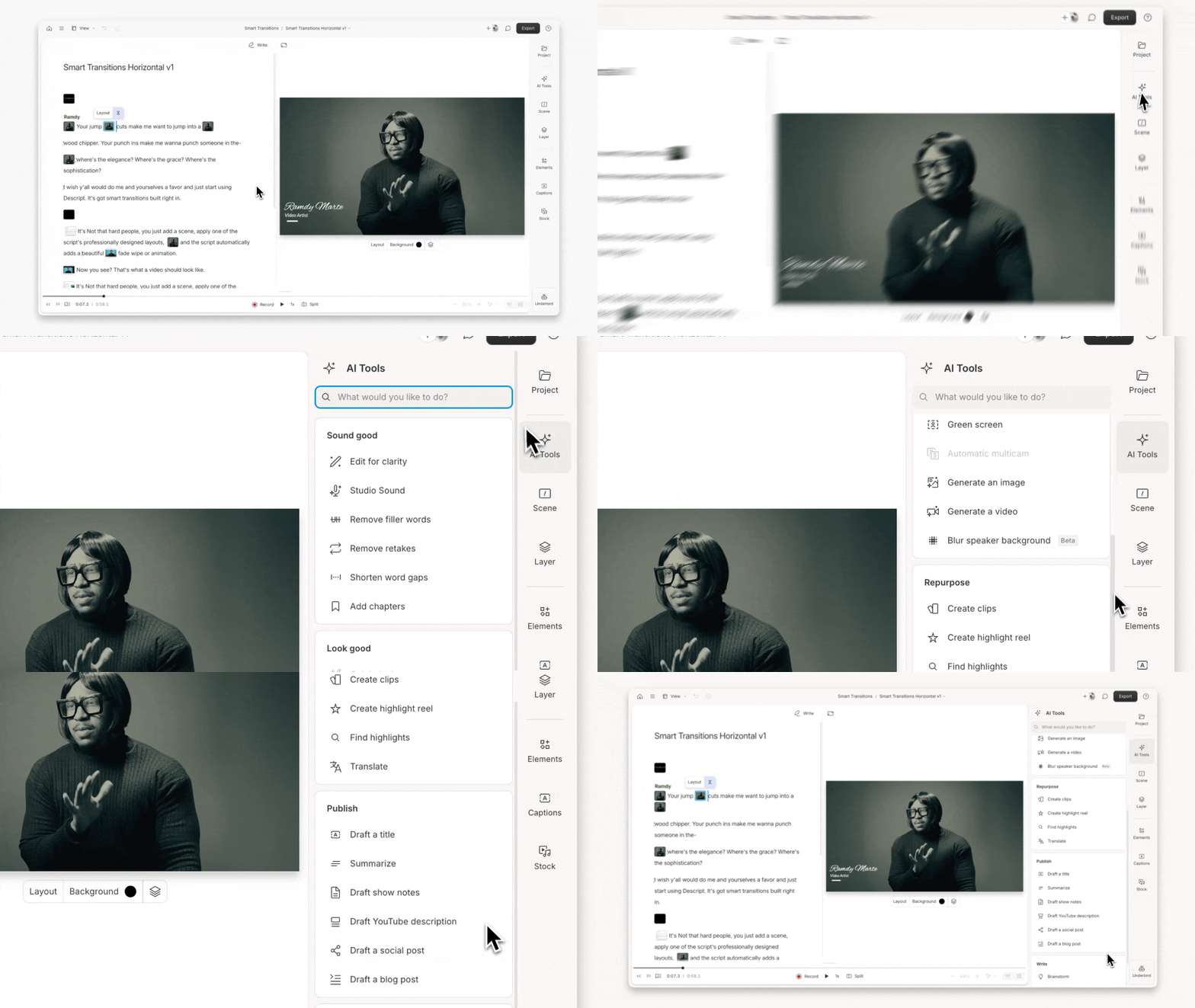
Most people can edit a Google Doc. Delete some words, rearrange sentences, fix typos, add paragraphs. It's intuitive and requires no special training. Now imagine editing video the same way. That's Descript's core innovation, and it transformed video editing from a specialized skill requiring expensive software into something anyone who can edit text can do effectively. Descript started as a transcription tool for podcasters. Record your podcast, upload it to Descript, and get an accurate transcript for show notes. But the founders realized something bigger. If you have a perfect transcript synchronized to audio, you can edit the audio by editing the text. Delete a word from the transcript and that word disappears from the audio. That insight became the foundation for a complete editing platform.
The post frames the drop in barrier to entry as purely positive. But flooded markets with low-quality AI content hurt the good creators too. If everyone can publish daily, attention economics get nastier for everyone.
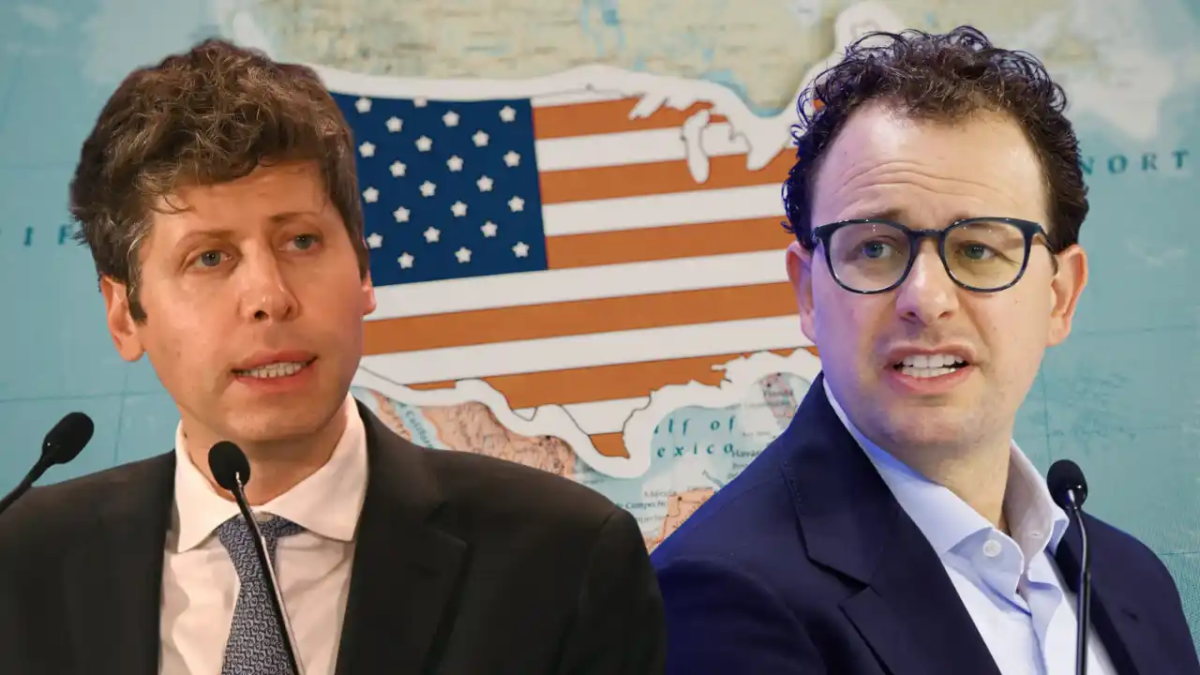
There's a photograph from February 2026 that pretty much sums up the state of AI right now. At the India AI Impact Summit in New Delhi, Indian Prime Minister Narendra Modi invited the world's tech leaders onstage for a group photo. Everyone held hands. Well, almost everyone. Sam Altman of OpenAI and Dario Amodei of Anthropic, standing right next to each other, refused to clasp hands and instead raised their fists separately. The internet, predictably, lost its mind. An awkward moment between OpenAI CEO Sam Altman and Anthropic CEO Dario Amodei at an AI Summit captured the increasingly icy relations between two rival tech leaders who started off as colleagues. That's not just petty drama. It's a window into what may be the most consequential corporate rivalry in the technology world right now, one that's playing out in boardrooms, courtrooms, Super Bowl ads, and billion-dollar compute deals all at once.
ETF inflows reversing after just two days of outflows is actually more bullish than the article acknowledges. The dip buyers at the institutional level are extremely active right now.
Honestly the parallel task execution thing in Codex is underrated. Running five feature tasks simultaneously in isolated containers is something Claude Code just does not do natively. That matters for certain workflows.
Does anyone know if there is a process for smaller open source maintainers to apply for access? The article mentions open source code but I am not clear on whether an independent maintainer of a widely used library could actually get in.
Wait, what about smaller companies that also run critical infrastructure? A 50-person fintech running legacy code is not getting access to this, but they are just as vulnerable as anyone on the partner list.
The fact that even Microsoft uses Claude Code internally despite selling a competing product (GitHub Copilot) is one of the most telling signals in this whole story. The market voted and it is hard to ignore.
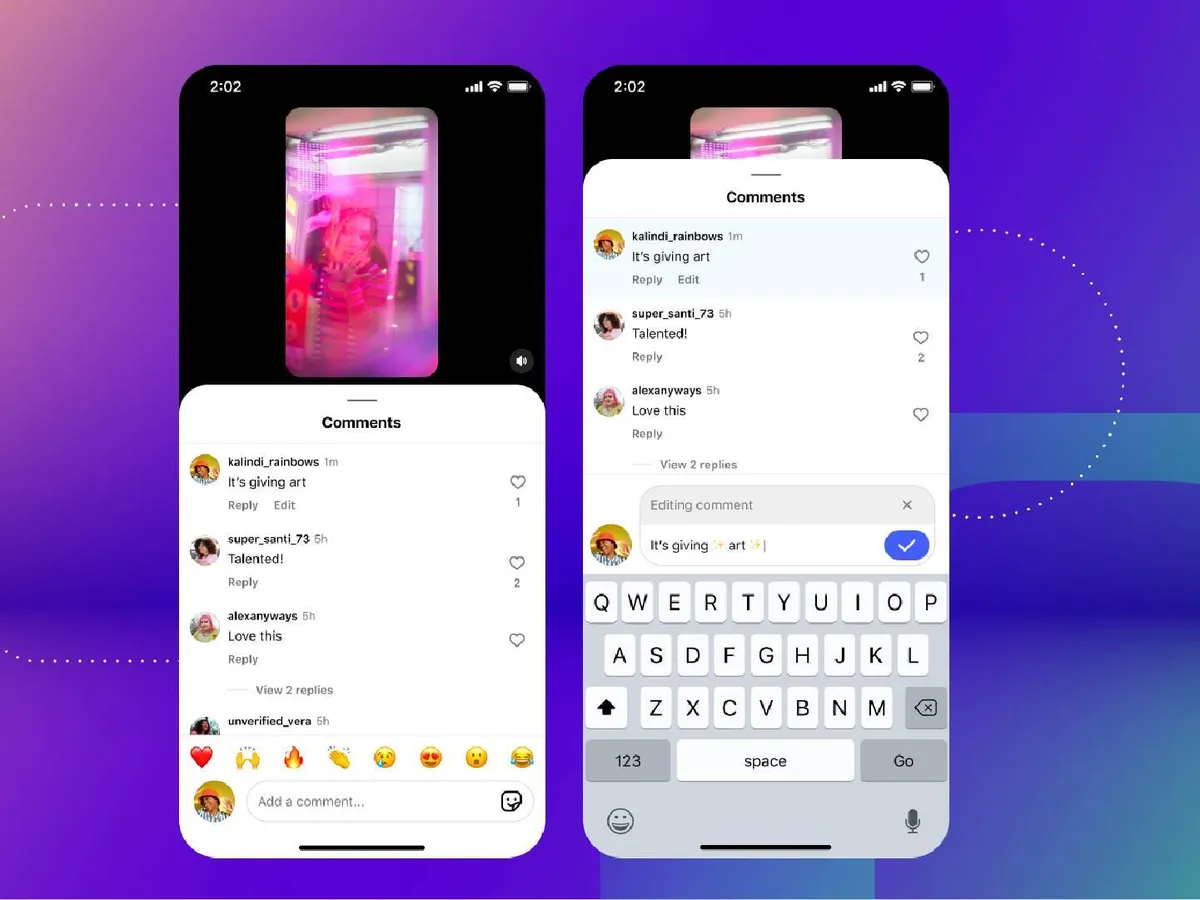
Instagram has rolled out a small but long overdue feature that users have been asking for years. You can now edit your comments after posting them. This simple change solves a very real frustration. Until now, fixing even the smallest typo meant deleting your comment and writing it all over again. That friction is finally gone. But there is a boundary. You get a 15 minute window after posting to make edits. Within that time, you can update your comment as many times as you want. There is also a layer of transparency built in. Once a comment is edited, others will be able to see that it has been modified. However, unlike platforms such as iMessage, Instagram does not show the edit history. What was originally written stays hidden.
Competition is making both products better faster than either would improve alone. That is the actual headline here.
OpenAI's latest subscription offering represents its most aggressive move yet to reclaim market share in the rapidly expanding AI-powered coding assistant sector
The artificial intelligence industry is entering a new phase of competition, one that extends far beyond the development of advanced language models and neural networks. Companies are now engaged in an intense struggle to secure the computational infrastructure necessary to train and deploy their AI systems. In this context, Anthropic has reportedly begun exploring the possibility of designing and manufacturing its own specialized processors to power Claude, its flagship conversational AI platform, along with its broader suite of artificial intelligence technologies. This strategic consideration emerges at a critical moment in the global AI sector. The exponential growth in model complexity and capability has created unprecedented demand for high-performance computing resources. Sources familiar with the matter indicate that Anthropic is conducting feasibility studies to determine whether developing proprietary semiconductor technology could reduce its dependence on external hardware vendors while ensuring reliable access to the computing power required for its operations.