
The reshoots adding a new ending for around $50 million is a jaw-dropping number for post-production work. Something significant clearly had to change in the third act.
6
Sign up to see more
SignupAlready a member?
LoginBy continuing, you agree to Sociomix's Terms of Service, Privacy Policy

The reshoots adding a new ending for around $50 million is a jaw-dropping number for post-production work. Something significant clearly had to change in the third act.
The communal viewing experience is real and it matters. A film like this in a sold out theater full of fans hits completely differently than watching it alone at home three weeks later.
Is Jaafar Jackson a good actor or is he mostly just a good dancer who resembles his uncle? Genuinely asking because it matters for whether the dramatic scenes work.
There is always a bonus layer when you come in with context. But Kim is careful never to make that context required.
That detail hit me too. This is not a disorganized killer. The ultra-wealthy buyers suggest infrastructure, logistics, connections. Suchan going up against that with nothing but a guestbook is actually terrifying when you think about it clearly.
The Michael movie review verdict is in, and it is more complicated than the 26% Rotten Tomatoes score suggests. Antoine Fuqua's long-delayed Michael Jackson biopic, simply titled Michael, hit theaters this weekend with Jaafar Jackson playing his late uncle, and the critical response has been brutal. The BBC gave it one star. Roger Ebert's site called it a filmed playlist in search of a story. Yet early audience reactions on social media have been warmer, ticket pre-sales suggest an $80 million opening, and Variety thought it worked as an engrossing middle-of-the-road biopic. After tracking coverage across more than a dozen outlets over the past 48 hours, I think the honest answer to "should you watch this?" depends almost entirely on what you want from a music biopic, and this guide breaks down exactly what the film delivers, what it skips, and who will actually enjoy sitting through its two-hour-and-nine-minute runtime.

It launched with 10 free chapters on April 14 and updates every Wednesday. New chapters after the initial batch will likely go into the Daily Pass rotation eventually, so I would catch up now while everything is accessible.
The thing the article gets most right is that the educational content would reach broader audiences through animation. Seeing a building actually constructed in a montage hits differently than reading panels.
The article describes Kim Dokja as resonating with anyone who ever felt like a side character in their own life and honestly that hit different than expected.
Fair point, but execution still matters. Rough-on-purpose is a harder pitch than it sounds.
The determinism question raised in the article is the thing keeping me most invested. Can he actually change the outcome or is the demon invasion a fixed point regardless of what he does?
Counterpoint: for anyone who already knows Premiere Pro or Final Cut, the learning curve is actually reversed. You have to unlearn instincts and stop reaching for timeline tools that are not the point anymore. Took me a few weeks to fully switch over.
Hard disagree that this fixes the designer-developer relationship. Tools do not fix relationships. Communication, mutual respect, and shared goals fix relationships. v0 is a productivity accelerator, not a culture intervention.
Forty million dollars in annual recurring revenue. Six months. One browser-based platform. Those numbers would be impressive for any software company, but for Bolt.new, they represent something more significant: the moment when development environments moved permanently into the cloud and never looked back. Traditional software development has always required setup. Install Node.js, configure your environment, manage dependencies, set up local servers, troubleshoot version conflicts. Before writing a single line of code, developers spend hours or even days preparing their machines. Junior developers often spend their first week just getting their environment working. Bolt.new eliminated all of that with WebContainers technology.
The social media clip automation described here is accurate but the article makes it sound more automatic than it is. The AI surfaces candidates well but you still spend meaningful time selecting and trimming. Calling it fully automated is generous.
As someone who produces online courses for a living, text-based editing completely changed my economics. I used to budget 3 hours of editing for every hour of content. Now it is closer to 45 minutes.
Not sure why the article keeps saying 140 languages when Synthesia now advertises 160 plus. Minor point but details matter in a post about a $200M raise.
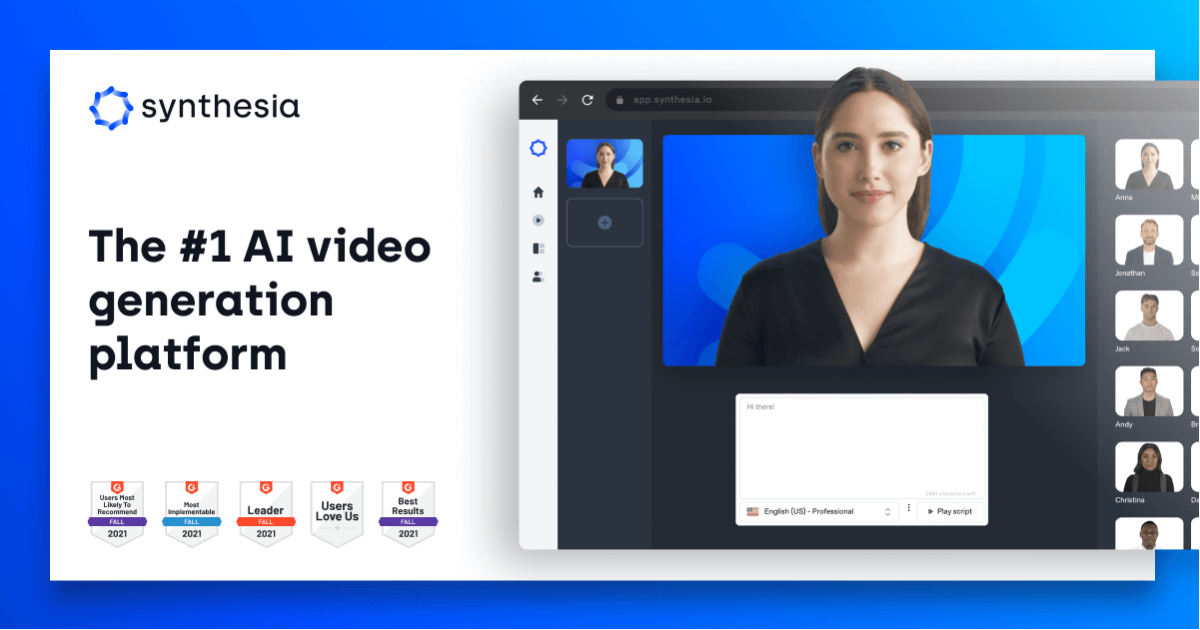
When a company raises $200 million in Series E funding during January 2026, investors are betting on more than potential. They're backing proven market demand and sustainable growth. Synthesia's funding round came alongside a 44% year-over-year increase in headcount to 706 employees, signaling aggressive expansion in a category the company essentially created: AI avatar-based video generation for enterprise training and communications. Corporate training videos have been expensive and slow to produce for decades. Recording a single 10-minute training module traditionally required booking a studio, hiring a presenter, scheduling a videographer, managing multiple takes, and editing everything together. If you needed to update information or translate content, you essentially started over. Synthesia eliminated this entire production workflow by replacing human presenters with AI avatars.
While Synthesia leads in revenue, HeyGen leads in customer acquisition momentum with 152% year-over-year growth in mid-market adoption. That explosive growth rate allowed HeyGen to close much of the customer count gap by late 2025. The company is winning by making avatar video accessible to smaller teams and individual creators who cannot afford enterprise contracts but need professional video capabilities. HeyGen positioned itself for small and medium businesses, marketing teams, content creators, and solo entrepreneurs rather than enterprise learning and development departments. This market segment values affordability, ease of use, and creative flexibility over governance features and advanced integrations. Average contract values are roughly one-third of Synthesia's, reflecting this different customer profile.

Something worth noting that the article did not cover is how Anthropic briefly topped the App Store on Claude downloads after the Pentagon blacklisting situation. The AI app rankings right now are almost more of a news cycle indicator than a product quality indicator.