If your intuition has been trained by years of late-night eating and blood sugar swings, it is probably not a reliable guide yet. That is where the timing structure gives you a scaffold until your hunger signals recalibrate.
0
Sign up to see more
SignupAlready a member?
LoginBy continuing, you agree to Sociomix's Terms of Service, Privacy Policy

If your intuition has been trained by years of late-night eating and blood sugar swings, it is probably not a reliable guide yet. That is where the timing structure gives you a scaffold until your hunger signals recalibrate.
Does anyone else think Antoine Fuqua was the wrong director for this? His style tends toward big visceral impact and Michael Jackson's story needed someone with more psychological interiority.
The musical numbers being shot with wide angles that actually show the dancing is such a basic competency and yet so many biopics mess it up. At least they got that right.
The three-way interaction between martial arts, technology, and magic described in this article is what sets it apart. Most series that try genre fusion only blend two elements. Adding a third creates a much more complex flavor.
When Tomb Raider King first exploded onto the manhwa scene, it brought a fresh take on dungeon crawling stories by combining archaeological adventure with ruthless protagonist energy and a treasure-hunting premise that felt genuinely different from typical gate and dungeon narratives. The series built a dedicated fanbase through its satisfying blend of historical artifact powers, strategic relic acquisition, and a protagonist who wasn't afraid to be morally gray in pursuit of his goals. Now, with the anime adaptation confirmed for 2026 as one of the most anticipated manhwa-to-anime projects, Tomb Raider King is experiencing a resurgence. New readers are discovering the series while longtime fans eagerly await seeing Jooheon Suh's relic-hunting adventures brought to life with animation. The timing couldn't be better, as the series has built enough content to support a substantial adaptation while maintaining momentum in its ongoing storyline.

Honestly the most compelling part of the setup is knowing Bigang has intimate personal knowledge of the demon commanders. Imagine encountering someone as a stranger who you know is going to become your greatest enemy in a future that hasn't happened yet.
Regressor Instruction Manual is essentially a story about what happens when the smartest person in the room refuses to be a hero but also refuses to die. That framing makes it one of the freshest takes on the trope.
Tomb Raider King's artifact lore being described as dense is an understatement. The relic system in that manhwa is as intricate as a JRPG's lore bible. Studio EEK has a serious challenge ahead with pacing.
Hot take: the agency model is not dead but agencies that do not adapt to become AI orchestrators and quality assurance layers will absolutely be gone within five years.
Anyone else think the explosion of system manhwa since Solo Leveling blew up has produced way too many low-quality clones? For every ORV there are fifty forgettable ones with identical blue stat screens.
While Synthesia leads in revenue, HeyGen leads in customer acquisition momentum with 152% year-over-year growth in mid-market adoption. That explosive growth rate allowed HeyGen to close much of the customer count gap by late 2025. The company is winning by making avatar video accessible to smaller teams and individual creators who cannot afford enterprise contracts but need professional video capabilities. HeyGen positioned itself for small and medium businesses, marketing teams, content creators, and solo entrepreneurs rather than enterprise learning and development departments. This market segment values affordability, ease of use, and creative flexibility over governance features and advanced integrations. Average contract values are roughly one-third of Synthesia's, reflecting this different customer profile.

The article mentions Act-One for character performance capture and glosses over it way too quickly. That feature is basically DIY motion capture. For indie animators this is a huge deal.
The article frames the Super Bowl ads as Anthropic being aggressive but honestly using the words betrayal and deception about ads in ChatGPT is a bit much. OpenAI putting ads in a free tier is not a moral failing, it's a normal business decision.
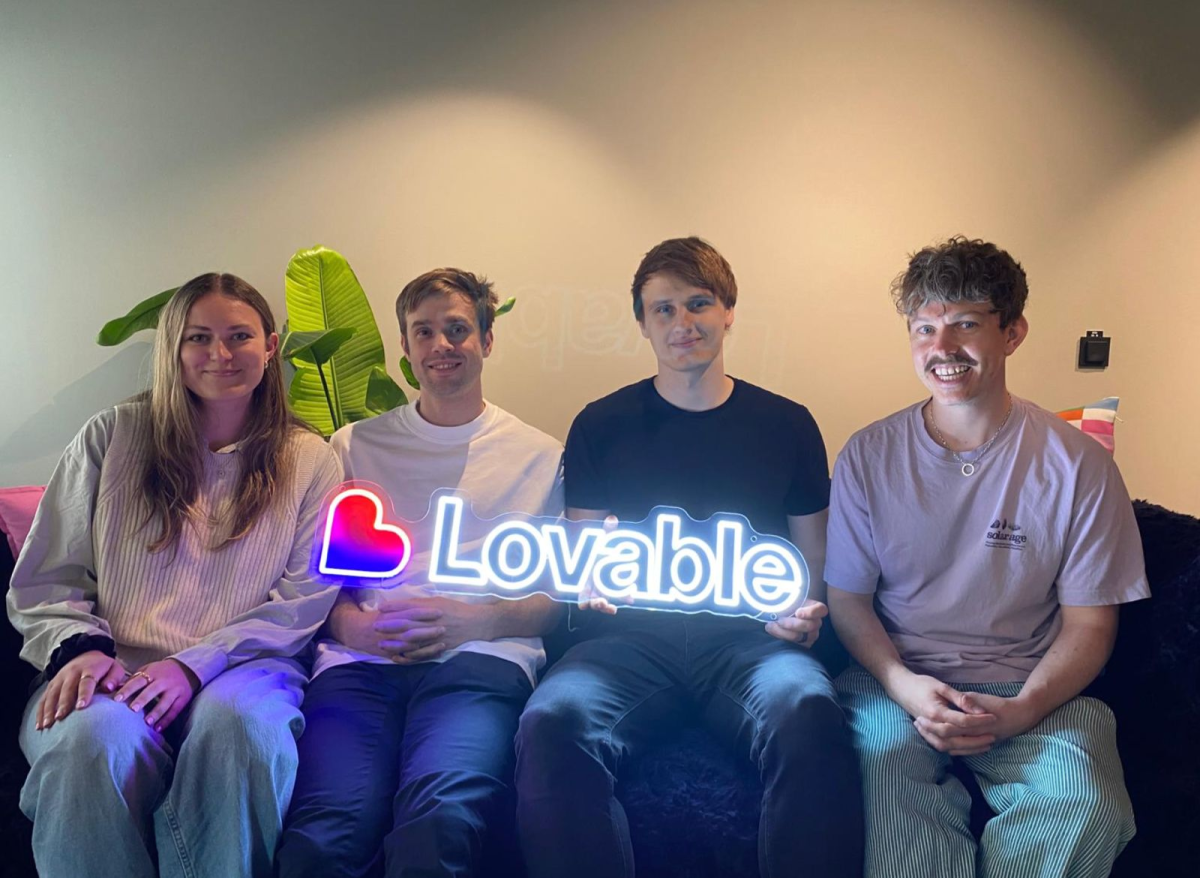
The software development world just witnessed something unprecedented. A European startup called Lovable reached $20 million in annual recurring revenue in just two months, making it potentially the fastest-growing startup in European history. But here's the twist that's making traditional software agencies nervous: they did it by giving non-technical founders the power to build full-stack applications without writing a single line of code. For years, the promise of no-code tools has been the same: anyone can build an app. But the reality has always been different. You'd create a beautiful frontend, get excited about your progress, and then hit the technical cliff. Suddenly you needed to configure databases, set up authentication, manage API keys, and deploy to servers. The "no-code" dream became a "hire-a-developer-anyway" nightmare.
Practical question for anyone following this closely, does Anthropic plan to publish a report on what Glasswing found after the initial 90-day phase? They said they would report publicly on what they learned. Holding them to that.
The article says Bitcoin briefly touched $73K before consolidating around $72K. That's actually a fairly significant rejection at the $73K level and probably deserves more scrutiny than the bullish framing suggests.
The competitive dynamics right now are intense. Anthropic apparently released something called Mythos the same week that was so powerful they are only letting a handful of companies access it initially. Meta's moment got big headlines but the frontier is moving extremely fast.
The global cryptocurrency market capitalization has climbed back above the $2.5 trillion threshold, fueled by a massive liquidation of short positions and renewed institutional interest. Geopolitical developments and shifting investor sentiment combined to create a powerful rally that caught bearish traders off guard, resulting in substantial losses for those betting against the market. According to data from CoinGecko, the total market capitalization of all cryptocurrencies combined increased 1.4% to reach $2.52 trillion on Friday, April 10. Bitcoin experienced a notable surge of over 3%, briefly touching the $73,000 mark before consolidating around $72,000 at the time of writing. Ethereum demonstrated equally impressive strength, pushing past the $2,200 level, while the majority of top 10 cryptocurrencies by market capitalization also posted significant gains.

As someone who does penetration testing professionally, the phrase that what took months will now take minutes is not hyperbole. We have been watching smaller versions of this capability creep up for two years. Mythos is a step change.
Meta has just had one of its most important AI moments yet and the early signals are hard to ignore. Following the launch of its newest AI model Muse Spark, the company’s standalone Meta AI app surged dramatically in popularity, hinting at a much larger shift that is beginning to take shape. The release is particularly significant because it marks the first major AI model rollout under Alexandr Wang, who joined Meta to reboot its AI strategy. This is not just another incremental update. It represents a more aggressive and focused push into the AI race. According to data from Appfigures, Meta AI jumped from number 57 to number 5 on the U.S. App Store within a day of the launch. That kind of movement rarely happens without a strong underlying pull from users. It signals not curiosity but intent.