
First time I read a mature rated webtoon was Sweet Home and I went in too casually. Copycat deserves the same heads up. This is thoughtfully crafted darkness, but it is genuinely dark.
4
Sign up to see more
SignupAlready a member?
LoginBy continuing, you agree to Sociomix's Terms of Service, Privacy Policy

First time I read a mature rated webtoon was Sweet Home and I went in too casually. Copycat deserves the same heads up. This is thoughtfully crafted darkness, but it is genuinely dark.
The article mentions the skills gap but honestly undersells how wide it is. Over half of datacenter operators globally say they cannot find qualified candidates for open roles. That is not a niche problem.
My only concern with an anime adaptation is pacing. A lot of the humor lives in facial expression panels and the slow build of a comedic beat. Bad pacing would absolutely kill what makes Lloyd so funny.
As a longtime murim reader the outer space invasion angle sounded ridiculous to me initially. Three chapters in I completely surrendered to it.
In a medium filled with talented artists producing stunning work, making a claim about any series having the "best" art feels bold. Yet Nano Machine consistently delivers combat sequences so fluid, detailed, and visually innovative that even readers who don't typically care about martial arts stories find themselves captivated by the sheer spectacle on display. The series combines traditional murim aesthetics with futuristic sci-fi elements, creating a unique visual identity that stands apart from typical cultivation manhwa. The nano machine implanted in protagonist Cheon Yeo-Woon's body doesn't just give him power. It becomes a storytelling device that allows the artist to visualize techniques, energy flows, and combat analysis in ways other series can't replicate.

Three years ago I would have laughed at paying any monthly fee for a code assistant. Now I genuinely cannot imagine going back to editing without one. The tooling has crossed a real threshold.
The article mentions teams use v0 output for dashboards and data tables. In my experience those are the hardest things to get right manually. If v0 can reliably produce a good data table with sorting and pagination I would use it for that alone.
The Explore Mode unlimited generations thing is genuinely underrated. Not having to agonize over every credit means you actually experiment freely instead of second-guessing every prompt.
Developers have a new anxiety in 2026: token anxiety. You're in the middle of debugging a complex problem, the AI is helping you refactor three files simultaneously, and suddenly you wonder if this session is about to cost you $50. That mental tax slows you down and makes you second-guess using the tool you're paying for. Windsurf eliminated that anxiety with a simple decision: flat monthly pricing with no token limits. Fifteen dollars per month. Unlimited usage. No tracking credits or calculating costs per query. That pricing model sounds almost boring compared to the complex token systems other AI coding tools use, but boring is exactly what professional developers want when it comes to pricing. They want predictable costs and unlimited usage so they can focus on writing code instead of budgeting AI queries.

While Synthesia leads in revenue, HeyGen leads in customer acquisition momentum with 152% year-over-year growth in mid-market adoption. That explosive growth rate allowed HeyGen to close much of the customer count gap by late 2025. The company is winning by making avatar video accessible to smaller teams and individual creators who cannot afford enterprise contracts but need professional video capabilities. HeyGen positioned itself for small and medium businesses, marketing teams, content creators, and solo entrepreneurs rather than enterprise learning and development departments. This market segment values affordability, ease of use, and creative flexibility over governance features and advanced integrations. Average contract values are roughly one-third of Synthesia's, reflecting this different customer profile.

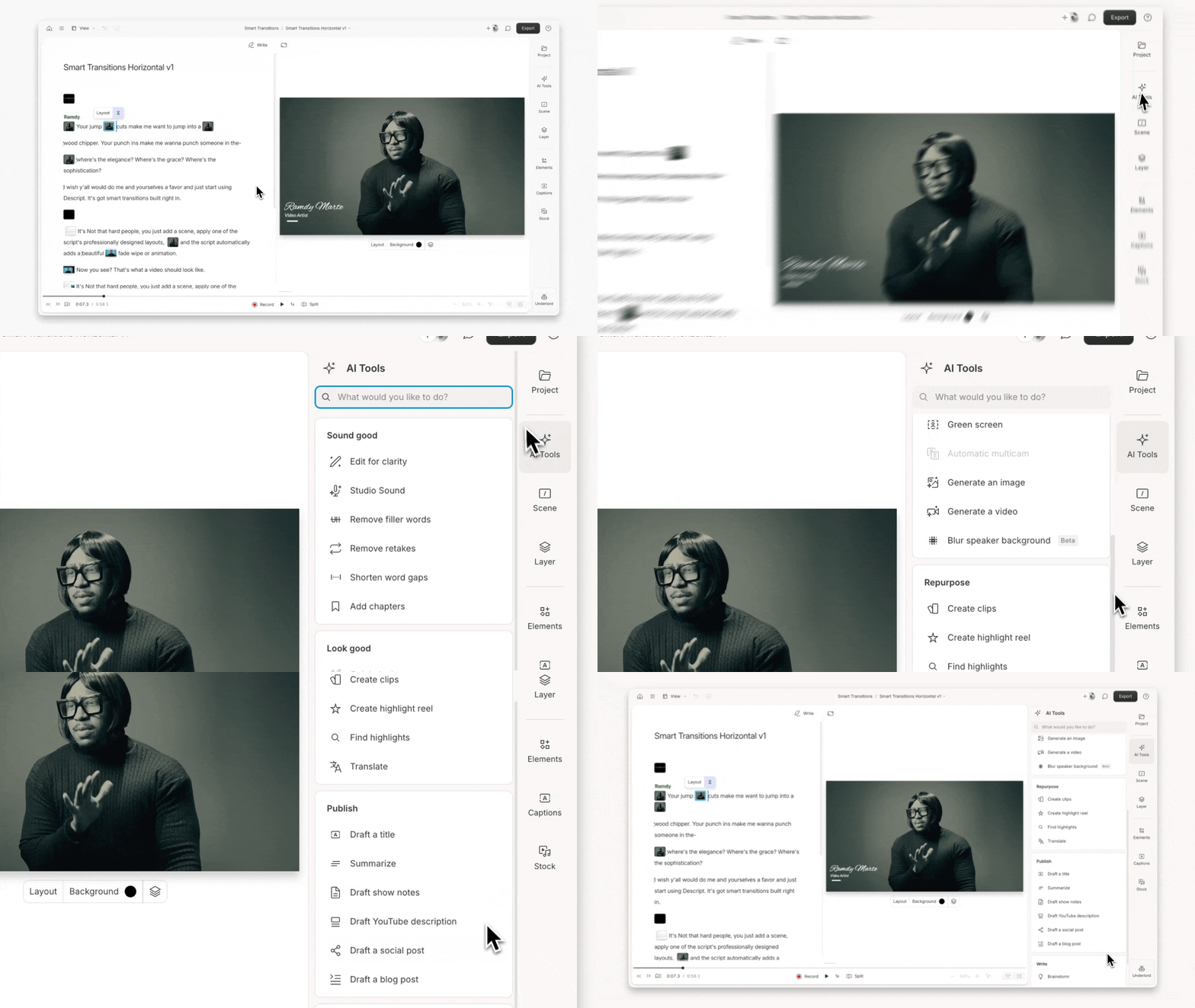
Most people can edit a Google Doc. Delete some words, rearrange sentences, fix typos, add paragraphs. It's intuitive and requires no special training. Now imagine editing video the same way. That's Descript's core innovation, and it transformed video editing from a specialized skill requiring expensive software into something anyone who can edit text can do effectively. Descript started as a transcription tool for podcasters. Record your podcast, upload it to Descript, and get an accurate transcript for show notes. But the founders realized something bigger. If you have a perfect transcript synchronized to audio, you can edit the audio by editing the text. Delete a word from the transcript and that word disappears from the audio. That insight became the foundation for a complete editing platform.
The revenue numbers for Claude Code are extraordinary but they are run-rate estimates not audited financials. Worth keeping in mind before treating $2.5 billion as a settled fact.
Not gonna lie, watching bears explain away every single price spike as a short squeeze with no fundamental backing is getting old. At some point the price is just the price.
Heard this before. Big catalyst, short squeeze, new highs incoming, and then three weeks later we're back at $65K wondering what happened.
Anthropic on Tuesday unveiled an advanced artificial intelligence model designed specifically to identify software vulnerabilities, marking a significant development in the intersection of AI and cybersecurity. The model, named Claude Mythos Preview, will be available exclusively to a carefully selected group of companies as part of Project Glasswing, a new security initiative that aims to strengthen digital defenses while preventing malicious exploitation. The San Francisco based AI company has chosen to severely restrict access to Claude Mythos Preview due to its powerful capability to detect security weaknesses and software flaws. This decision reflects growing concerns about dual use AI technologies that could be weaponized by adversaries if they fell into the wrong hands.

That bag is everything! But I'm wondering if it's big enough for everyday essentials?