
The augmented reality aesthetic layered over traditional murim visuals is such a specific creative choice and it almost should not work. But it does. Completely.
Sign up to see more
SignupAlready a member?
LoginBy continuing, you agree to Sociomix's Terms of Service, Privacy Policy

The augmented reality aesthetic layered over traditional murim visuals is such a specific creative choice and it almost should not work. But it does. Completely.
The opponents Yu faces throughout the series function almost like different philosophical arguments walking into the ring to be tested and destroyed. The series is basically doing battle of ideas through athletic combat.
Suho's self-doubt arc in the early chapters hit harder than expected. The idea of growing up knowing your father is essentially a god and then having to prove yourself worthy of even a fraction of that is genuinely compelling.
The murim regression corner of this genre is genuinely its own ecosystem and it is wild that so many western readers have not touched it yet. Return of the Crazy Demon alone is worth the journey.
The year 2026 marks a pivotal moment in the evolution of manhwa as a medium. What started as a trickle of Korean comics receiving anime adaptations has become a flood, with at least fifteen confirmed projects bringing beloved manhwa to animated life. This explosive growth wasn't accidental but the inevitable result of Solo Leveling's massive success proving that manhwa adaptations can compete with traditional manga anime in quality, popularity, and profitability. Studios across Japan and Korea are investing heavily in manhwa properties, recognizing that Korean storytelling brings fresh perspectives, innovative premises, and built-in fanbases eager to see their favorite series animated. The diversity of genres receiving adaptations demonstrates that manhwa appeal extends far beyond action and fantasy into romance, psychological thriller, sports, and slice-of-life territories.
The QWER opening theme announcement got me more excited than almost anything else. A Korean girl group doing their first Japanese anime tie-up for this show feels like a genuinely cool cultural moment.
A proper anime adaptation needs to nail the background art showing the estate improving over time. That slow visual progression of the land transforming is a huge part of what makes completing each project feel satisfying.
The software development world just witnessed something unprecedented. A European startup called Lovable reached $20 million in annual recurring revenue in just two months, making it potentially the fastest-growing startup in European history. But here's the twist that's making traditional software agencies nervous: they did it by giving non-technical founders the power to build full-stack applications without writing a single line of code. For years, the promise of no-code tools has been the same: anyone can build an app. But the reality has always been different. You'd create a beautiful frontend, get excited about your progress, and then hit the technical cliff. Suddenly you needed to configure databases, set up authentication, manage API keys, and deploy to servers. The "no-code" dream became a "hire-a-developer-anyway" nightmare.
Bigang as an instructor training others is going to be the emotional core of this series and the article correctly identifies it. Watching someone who endured centuries of suffering choose to invest in others is deeply compelling.
In a manhwa landscape dominated by dungeon crawling, regression narratives, and power fantasies, The Greatest Estate Developer stands out by asking a simple question: what if the protagonist's greatest weapon wasn't a sword or magic system, but civil engineering knowledge? This bizarre premise transforms into one of the most entertaining, genuinely funny, and surprisingly heartfelt series currently running, proving that innovation in storytelling comes from unexpected places. The series takes the familiar isekai setup where a modern person finds themselves in a fantasy world and completely subverts expectations. Instead of becoming an adventurer or hero, protagonist Kim Suho uses his engineering knowledge to revolutionize construction, infrastructure, and economic development. What sounds like it should be boring becomes absolutely captivating through sharp writing, excellent comedic timing, and genuine passion for showing how infrastructure improves lives.
The designer-developer relationship has been tense for decades. Designers create pixel-perfect mockups in Figma. Developers translate them to code and somehow everything looks slightly wrong. Fonts don't match. Spacing is inconsistent. Buttons have different corner radiuses. Both sides get frustrated, blame each other, and the product suffers. V0 by Vercel is fixing this problem by generating production-quality React components that look exactly like the designs. The rebrand from v0.dev to v0.app in January 2026 signaled expanded ambitions beyond just UI component generation. Vercel positioned the tool for full-stack web development, though its core strength remains frontend excellence. That strategic clarity matters because trying to be everything often means excelling at nothing. V0 chose to dominate the handoff between design and code before expanding into other areas.
Used ChatGPT to write out detailed app requirements first, then pasted everything into Lovable as the first prompt. Got dramatically better results than starting with a vague description. Preparation matters even with AI tools.
The 300 minute free tier is pretty limiting for any real meeting schedule. If you have more than a couple hours of meetings weekly you will hit the ceiling fast. Pro plan is almost necessary for regular use.
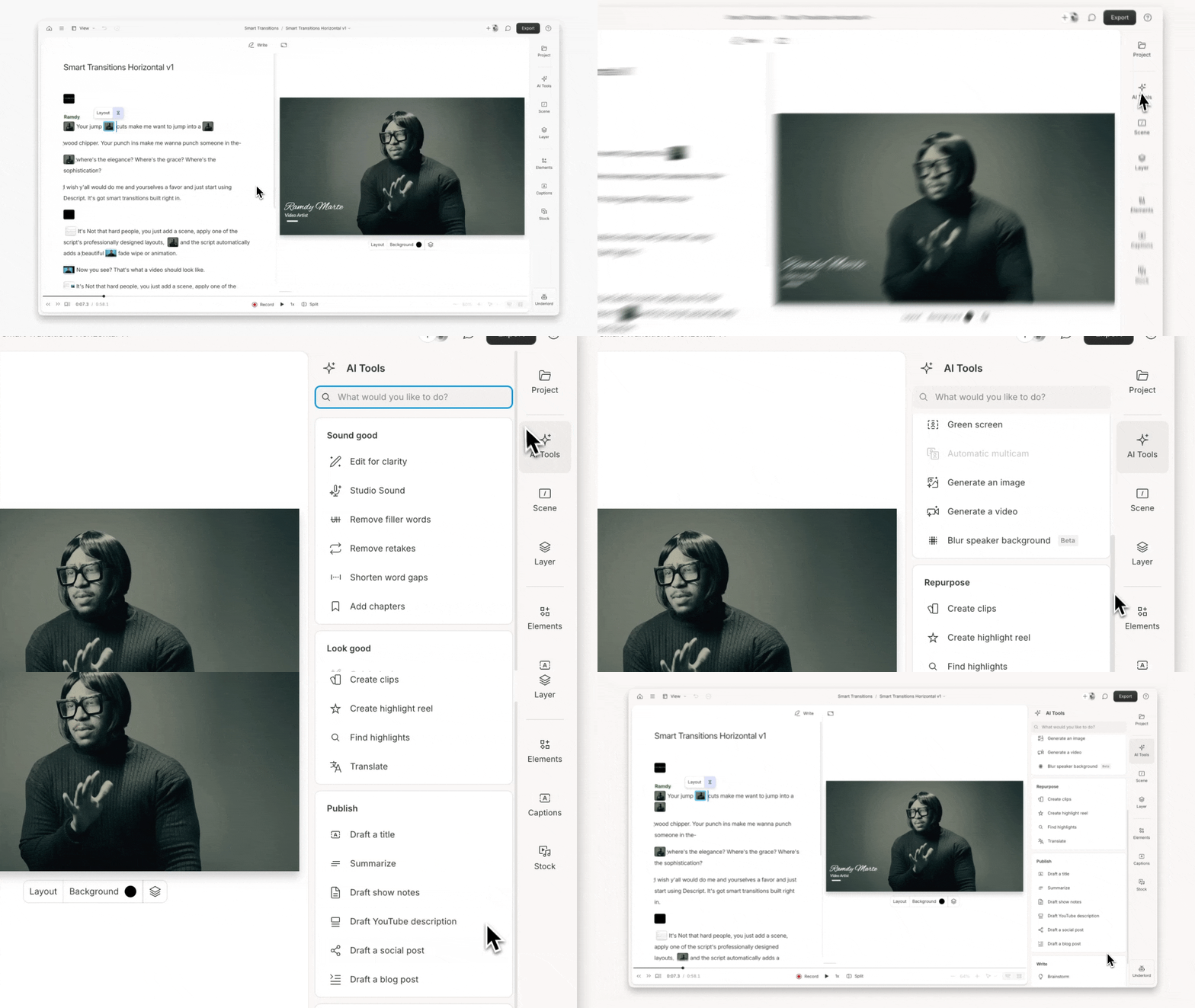
Most people can edit a Google Doc. Delete some words, rearrange sentences, fix typos, add paragraphs. It's intuitive and requires no special training. Now imagine editing video the same way. That's Descript's core innovation, and it transformed video editing from a specialized skill requiring expensive software into something anyone who can edit text can do effectively. Descript started as a transcription tool for podcasters. Record your podcast, upload it to Descript, and get an accurate transcript for show notes. But the founders realized something bigger. If you have a perfect transcript synchronized to audio, you can edit the audio by editing the text. Delete a word from the transcript and that word disappears from the audio. That insight became the foundation for a complete editing platform.
OpenAI releasing this tier the same week Sam Altman posted about 3 million Codex users is very deliberate optics management. They wanted a growth story and a product announcement in the same news cycle.
Meta has just had one of its most important AI moments yet and the early signals are hard to ignore. Following the launch of its newest AI model Muse Spark, the company’s standalone Meta AI app surged dramatically in popularity, hinting at a much larger shift that is beginning to take shape. The release is particularly significant because it marks the first major AI model rollout under Alexandr Wang, who joined Meta to reboot its AI strategy. This is not just another incremental update. It represents a more aggressive and focused push into the AI race. According to data from Appfigures, Meta AI jumped from number 57 to number 5 on the U.S. App Store within a day of the launch. That kind of movement rarely happens without a strong underlying pull from users. It signals not curiosity but intent.
We need to talk about how perfect this would be for a destination wedding weekend! I can see wearing it to the beach party
I bought a similar dress and paired it with pearl earrings it totally elevated the whole look! You should try that with this outfit