
Does anyone actually know who the artist is? The writer gets mentioned constantly but I feel like the artist deserves way more credit for what makes this series special.
Sign up to see more
SignupAlready a member?
LoginBy continuing, you agree to Sociomix's Terms of Service, Privacy Policy

Does anyone actually know who the artist is? The writer gets mentioned constantly but I feel like the artist deserves way more credit for what makes this series special.
In a medium filled with talented artists producing stunning work, making a claim about any series having the "best" art feels bold. Yet Nano Machine consistently delivers combat sequences so fluid, detailed, and visually innovative that even readers who don't typically care about martial arts stories find themselves captivated by the sheer spectacle on display. The series combines traditional murim aesthetics with futuristic sci-fi elements, creating a unique visual identity that stands apart from typical cultivation manhwa. The nano machine implanted in protagonist Cheon Yeo-Woon's body doesn't just give him power. It becomes a storytelling device that allows the artist to visualize techniques, energy flows, and combat analysis in ways other series can't replicate.
Physical volume one is coming out in English in July 2026 through Yen Press. For people who prefer reading in print this is genuinely exciting news.
It maintains it. The later arcs are actually where the emotional payoff lands hardest because you have spent so long with these characters. Trust the process.
read the whole thing in like two days and genuinely didn't know what to do with myself after. felt weirdly hollowed out in the best possible way.
As someone who has read a lot of psychological fiction across different mediums, the way this series handles trauma accumulation is unusually sophisticated. Most stories treat repeated trauma as something you just power through. This one treats it as something that reshapes you whether you want it to or not.
Nano Machine and Peerless Dad are the two series I use to explain to people why murim is worth their time. Different reasons but both completely rewarding.
The Gen-4 Turbo option for rapid iteration is underrated in this writeup. When you are testing a dozen different concept directions, speed matters more than peak quality. Turbo lets you find the right direction before committing to a full render.
The article nails something real with the professional aesthetic point. Tools built for developers should look like they were built by developers. There is a whole visual language around professional IDEs and ignoring it signals misalignment.
Anyone else noticed that the YouTube import feature was quietly turned off? They say it is for compliance reasons but it added a step to the workflow for a lot of creators who were pulling their own content back in for repurposing.
The regression subgenre has exploded in popularity over the past few years, becoming one of the most beloved narrative frameworks in Korean manhwa. The core premise is deceptively simple: a protagonist dies or fails catastrophically, then returns to an earlier point in time with their memories intact. Armed with future knowledge, they get a second chance to change their fate, save loved ones, gain power, or pursue revenge against those who wronged them. What makes regression stories so compelling is the combination of dramatic irony, strategic satisfaction, and emotional depth they provide. Readers know what the protagonist knows, creating tension when other characters make mistakes we can see coming. We feel smart alongside protagonists who use foreknowledge to outmaneuver enemies. And we experience the emotional weight of carrying memories of futures that haven't happened yet, of people who died who are currently alive, of betrayals that haven't occurred.
The enterprise adoption story is the one that should worry traditional SIs and consulting firms most. When Klarna and Deutsche Telekom are using this, it is no longer a founder tool.
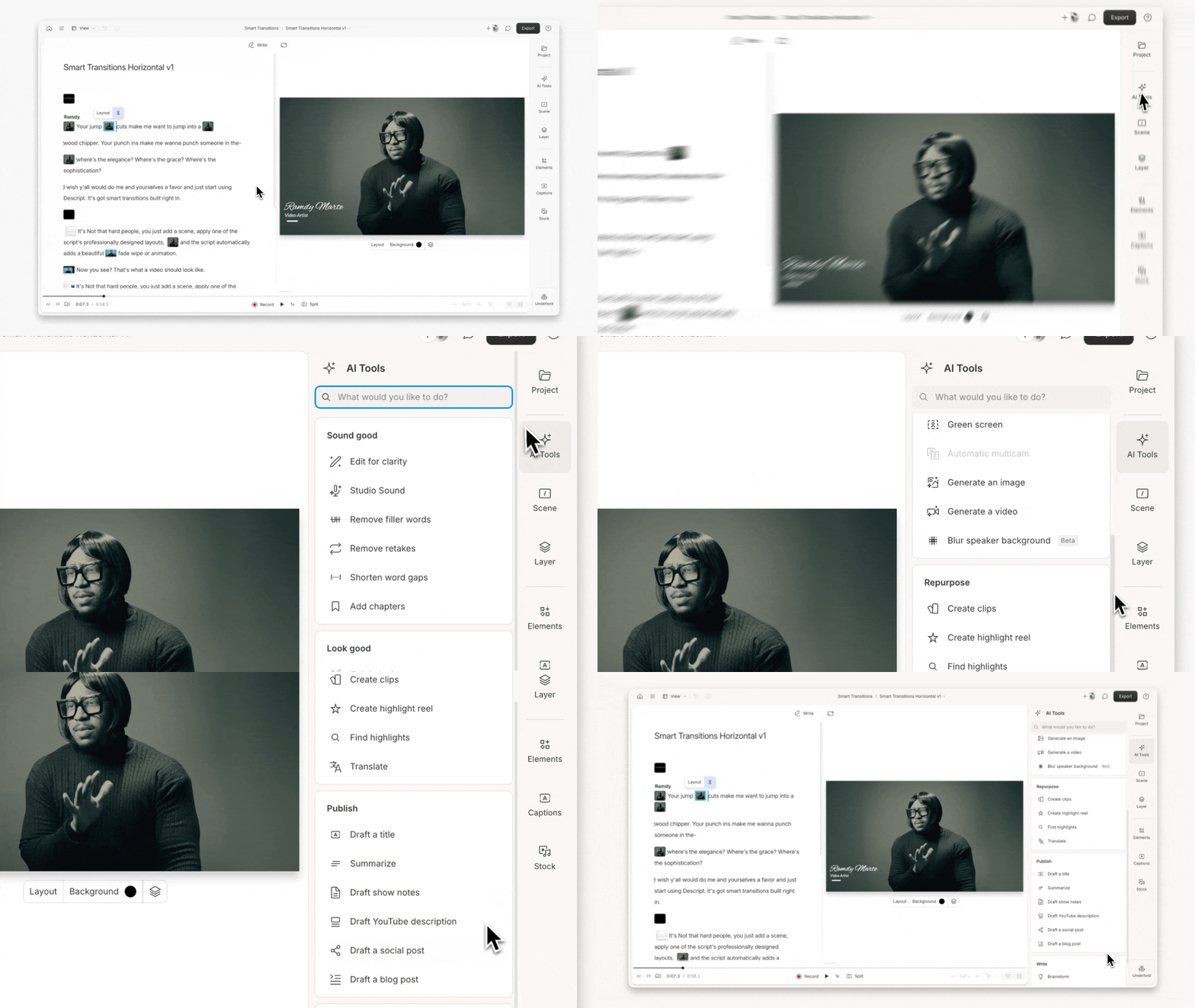
Most people can edit a Google Doc. Delete some words, rearrange sentences, fix typos, add paragraphs. It's intuitive and requires no special training. Now imagine editing video the same way. That's Descript's core innovation, and it transformed video editing from a specialized skill requiring expensive software into something anyone who can edit text can do effectively. Descript started as a transcription tool for podcasters. Record your podcast, upload it to Descript, and get an accurate transcript for show notes. But the founders realized something bigger. If you have a perfect transcript synchronized to audio, you can edit the audio by editing the text. Delete a word from the transcript and that word disappears from the audio. That insight became the foundation for a complete editing platform.
The shopping mode that pulls from your Instagram following and behavior is going to make a lot of money very quietly. Most people will not even register it as advertising.
As someone in product management, the real tell will be the week two and week four retention numbers. App Store climbs driven by launch hype are common. Sustained daily active usage driven by genuine utility is rare. Meta needs the second thing, not the first.
Every major platform eventually gets breached. If your messages are not encrypted and a breach happens, every DM you ever sent is just sitting there in plain text. That is the actual risk people are not talking about enough.
every time these kinds of emergency high-level meetings happen, the actual policy output takes eighteen months and arrives after the threat has evolved past what was discussed. The pace of governance versus the pace of capability is the fundamental problem.