It launched with 10 free chapters on April 14 and updates every Wednesday. New chapters after the initial batch will likely go into the Daily Pass rotation eventually, so I would catch up now while everything is accessible.
22
Sign up to see more
SignupAlready a member?
LoginBy continuing, you agree to Sociomix's Terms of Service, Privacy Policy
It launched with 10 free chapters on April 14 and updates every Wednesday. New chapters after the initial batch will likely go into the Daily Pass rotation eventually, so I would catch up now while everything is accessible.
The post describes the 32-person guestbook as the investigation structure and I just want to say that detail from Suchan's failed exhibition is such a perfect piece of narrative engineering. The pandemic attendance failure becomes the killer's origin and the detective's only lead simultaneously.
The article glosses over the art quality which deserves more attention. The visual contrast between traditional murim aesthetics and the demon technology designs is striking.
The article glosses over the fact that the original novel has Arzen killing people including Elliot and treats him as a standard ice prince archetype to be melted. A character who murders the protagonist for a romantic deception is not just emotionally distant. That backstory deserves more scrutiny.
That criticism has merit for the later chapters for sure. But the article is specifically about the art, and the art remains consistently strong even when the story conveniences pile up.
The manhwa world exploded when Solo Leveling first introduced us to Sung Jinwoo's journey from the weakest hunter to humanity's strongest defender. Now, Solo Leveling Ragnarok brings a fresh perspective to this beloved universe, and fans everywhere are asking the same questions. Can the sequel live up to the original? Do you need to read Solo Leveling first? What makes this continuation worth your time? This guide covers everything you need to know about Solo Leveling Ragnarok, whether you're a longtime fan or someone curious about jumping into the series Solo Leveling Ragnarok is not a reboot or alternate timeline. This is a direct sequel that continues the story years after the original series concluded. The protagonist shifts from Sung Jinwoo to his son, Sung Suho, who must forge his own path in a world still recovering from the catastrophic events his father prevented.
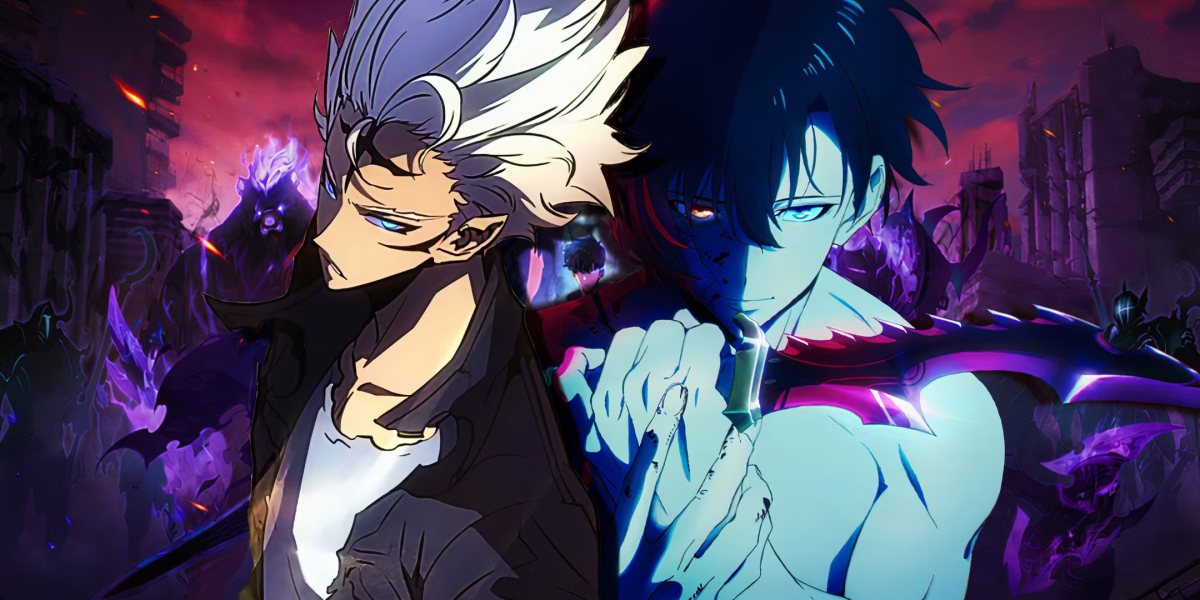
As someone who came to Solo Leveling through the anime and then caught up on everything else, Ragnarok feels like reading a bonus arc that you almost feel guilty for enjoying because you miss Jinwoo so much.
What does everyone think about the Regressor character's role, because the article only touches on it but the dynamic between two people with different kinds of foreknowledge seems like it deserves its own analysis piece.
Every opponent in this series is technically the hero of their own story and Yu is the disaster that ends it. The series running nearly 123 episodes of that structure without it becoming repetitive is an extraordinary achievement.
The regression subgenre has exploded in popularity over the past few years, becoming one of the most beloved narrative frameworks in Korean manhwa. The core premise is deceptively simple: a protagonist dies or fails catastrophically, then returns to an earlier point in time with their memories intact. Armed with future knowledge, they get a second chance to change their fate, save loved ones, gain power, or pursue revenge against those who wronged them. What makes regression stories so compelling is the combination of dramatic irony, strategic satisfaction, and emotional depth they provide. Readers know what the protagonist knows, creating tension when other characters make mistakes we can see coming. We feel smart alongside protagonists who use foreknowledge to outmaneuver enemies. And we experience the emotional weight of carrying memories of futures that haven't happened yet, of people who died who are currently alive, of betrayals that haven't occurred.

If Terror Man is actually the Iron Man of a larger Korean superhero universe like some readers are saying, and they cut those connections in the anime to keep things simple, that is going to frustrate manhwa readers badly.
84 percent of developers are using AI tools now. The debate is no longer whether to adopt but which tool fits which workflow. Pricing clarity is increasingly the tiebreaker.
The CUDA lock-in point is so real. Speaking from experience in ML infrastructure, migrating workloads away from CUDA is genuinely painful even when the alternative hardware is technically superior. It is not a hardware problem, it is a software ecosystem problem.
Wait, what about the software stack that has to run on whatever custom chip Anthropic might build? Designing the silicon is only half the problem. You need compilers, kernel libraries, debugging tools, and a whole ecosystem before engineers can actually use the thing productively.
Respectfully, the article is underselling how competitive the field is at this exact moment. The same week Muse Spark launched, Google, OpenAI, and Anthropic all had major moves. Meta got a good headline but the frontier labs are not standing still.
The article mentions that the Strait of Hormuz handles roughly one fifth of global oil supply. That context is important. If Bitcoin becomes a recognized payment mechanism there, the addressable market argument changes entirely.
The artificial intelligence industry is entering a new phase of competition, one that extends far beyond the development of advanced language models and neural networks. Companies are now engaged in an intense struggle to secure the computational infrastructure necessary to train and deploy their AI systems. In this context, Anthropic has reportedly begun exploring the possibility of designing and manufacturing its own specialized processors to power Claude, its flagship conversational AI platform, along with its broader suite of artificial intelligence technologies. This strategic consideration emerges at a critical moment in the global AI sector. The exponential growth in model complexity and capability has created unprecedented demand for high-performance computing resources. Sources familiar with the matter indicate that Anthropic is conducting feasibility studies to determine whether developing proprietary semiconductor technology could reduce its dependence on external hardware vendors while ensuring reliable access to the computing power required for its operations.

Speaking from experience working adjacent to luxury PR, the fact that Piccioli himself described her attendance as a casual request rather than a formal invite actually makes her look better, not worse. It means the relationship is real.
Could you wear the dress alone for a more casual look? Maybe with sandals and a denim jacket?
Been looking for pants like these forever! The metallic finish is subtle enough for everyday