
Hot take, brain wealth is just biohacking with better branding. The underlying ideas have been around for decades.
20
Sign up to see more
SignupAlready a member?
LoginBy continuing, you agree to Sociomix's Terms of Service, Privacy Policy

Hot take, brain wealth is just biohacking with better branding. The underlying ideas have been around for decades.
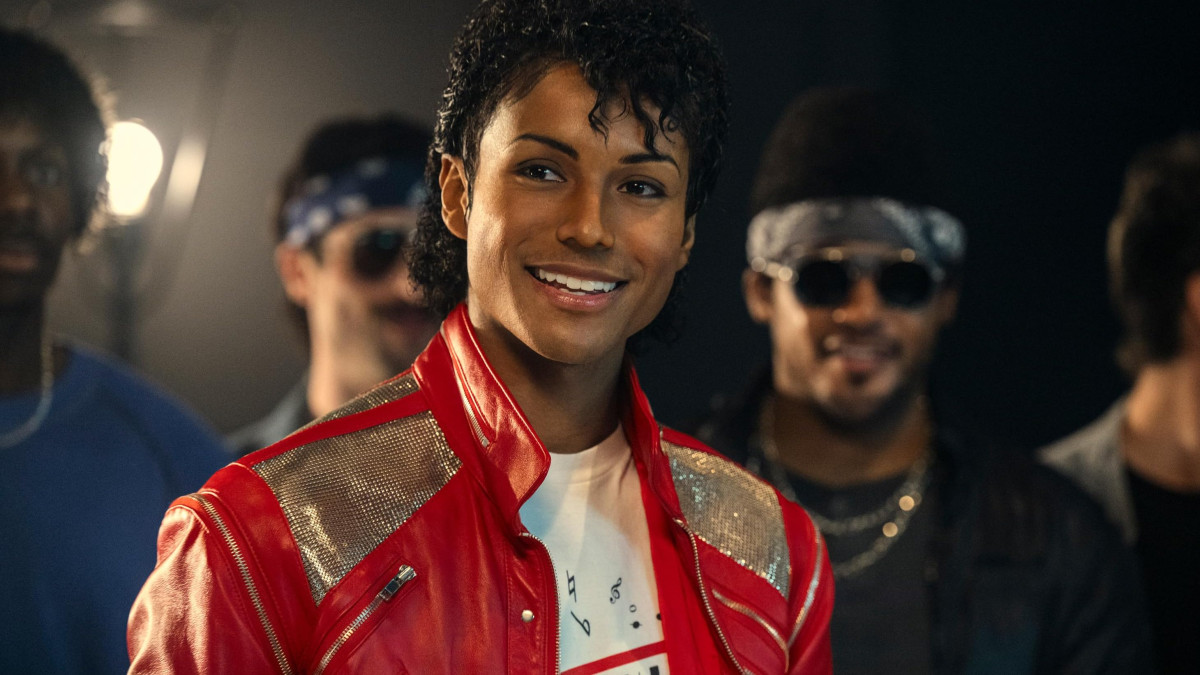
The detail about Jaafar posting Michael's affirmations on his walls during preparation is so specific and so unusual that it could only have come from someone with deep personal access to the subject. That is method acting meeting family devotion.
The Michael movie review verdict is in, and it is more complicated than the 26% Rotten Tomatoes score suggests. Antoine Fuqua's long-delayed Michael Jackson biopic, simply titled Michael, hit theaters this weekend with Jaafar Jackson playing his late uncle, and the critical response has been brutal. The BBC gave it one star. Roger Ebert's site called it a filmed playlist in search of a story. Yet early audience reactions on social media have been warmer, ticket pre-sales suggest an $80 million opening, and Variety thought it worked as an engrossing middle-of-the-road biopic. After tracking coverage across more than a dozen outlets over the past 48 hours, I think the honest answer to "should you watch this?" depends almost entirely on what you want from a music biopic, and this guide breaks down exactly what the film delivers, what it skips, and who will actually enjoy sitting through its two-hour-and-nine-minute runtime.
In a manhwa landscape dominated by dungeon crawling, regression narratives, and power fantasies, The Greatest Estate Developer stands out by asking a simple question: what if the protagonist's greatest weapon wasn't a sword or magic system, but civil engineering knowledge? This bizarre premise transforms into one of the most entertaining, genuinely funny, and surprisingly heartfelt series currently running, proving that innovation in storytelling comes from unexpected places. The series takes the familiar isekai setup where a modern person finds themselves in a fantasy world and completely subverts expectations. Instead of becoming an adventurer or hero, protagonist Kim Suho uses his engineering knowledge to revolutionize construction, infrastructure, and economic development. What sounds like it should be boring becomes absolutely captivating through sharp writing, excellent comedic timing, and genuine passion for showing how infrastructure improves lives.

The article's framing of streaming platforms as accelerators for manhwa anime is correct but undersells how much the Korean government's cultural export strategy has contributed. KOCCA funding and support is behind several of these projects.
To the person asking about The Warrior Returns, the first ten chapters are deliberately paced to establish the culture shock comedy. Around chapter fifteen it shifts gears significantly and the emotional stakes get much heavier. Give it that long.
Sold purely on the panel layout description in this article. Good panel composition is the thing I miss most when manhwa gets adapted to other formats.
Used Descript for the first time last month after years of Final Cut Pro. I felt slightly guilty about how easy it was, like I was cheating somehow. That guilt lasted about five minutes.
The uncanny valley comment is fair but it is improving fast. Avatar IV is noticeably better than Avatar III on micro-expressions. The gap between AI video and human video is closing every few months, not every few years.
Interesting that the article never once mentions Cursor. That is either intentional positioning or a significant blind spot depending on who your audience is.
What worries me about The Greatest Estate Developer adaptation is exactly what the article says. Making construction visually exciting requires creative direction and if the studio plays it safe it becomes a slideshow of blueprint scenes.
The competitive landscape is moving so fast that any article about which model tops the leaderboard has a built-in expiration date of about 90 days. Kling 3.0, Seedance 2.0, and whatever comes next will keep reshuffling the rankings.
My skeptic take is that enterprise adoption numbers from tracking panels of 70 customers is not exactly a massive sample size. That is a niche signal being presented as market dominance.
Speaking from experience building products at a startup, the back-and-forth between design and engineering is not just annoying. It eats two to three weeks on every major feature. If v0 compresses that even by half, the ROI case writes itself.
While Synthesia leads in revenue, HeyGen leads in customer acquisition momentum with 152% year-over-year growth in mid-market adoption. That explosive growth rate allowed HeyGen to close much of the customer count gap by late 2025. The company is winning by making avatar video accessible to smaller teams and individual creators who cannot afford enterprise contracts but need professional video capabilities. HeyGen positioned itself for small and medium businesses, marketing teams, content creators, and solo entrepreneurs rather than enterprise learning and development departments. This market segment values affordability, ease of use, and creative flexibility over governance features and advanced integrations. Average contract values are roughly one-third of Synthesia's, reflecting this different customer profile.
Restricting access to tech giants is not inherently responsible. It is responsible only if those partners actually fix what they find and disclose results publicly. Glad to see they are required to share findings, that part matters enormously.
Speaking as someone with a background in open source development, having the Linux Foundation in the coalition is not just symbolic. They have direct commit access to the most widely deployed codebase in the world. That matters operationally.
The artificial intelligence industry is entering a new phase of competition, one that extends far beyond the development of advanced language models and neural networks. Companies are now engaged in an intense struggle to secure the computational infrastructure necessary to train and deploy their AI systems. In this context, Anthropic has reportedly begun exploring the possibility of designing and manufacturing its own specialized processors to power Claude, its flagship conversational AI platform, along with its broader suite of artificial intelligence technologies. This strategic consideration emerges at a critical moment in the global AI sector. The exponential growth in model complexity and capability has created unprecedented demand for high-performance computing resources. Sources familiar with the matter indicate that Anthropic is conducting feasibility studies to determine whether developing proprietary semiconductor technology could reduce its dependence on external hardware vendors while ensuring reliable access to the computing power required for its operations.