Night eating syndrome and circadian eating misalignment feels like a connection this article only brushes. For people with clinical patterns of night eating the timing piece is genuinely therapeutic, not just optimization.
21
Sign up to see more
SignupAlready a member?
LoginBy continuing, you agree to Sociomix's Terms of Service, Privacy Policy

Night eating syndrome and circadian eating misalignment feels like a connection this article only brushes. For people with clinical patterns of night eating the timing piece is genuinely therapeutic, not just optimization.
Replacing calorie counting with meal timing that actually works is the kind of shift I did not know I needed. Six weeks in and I stopped thinking about food constantly for the first time in years.
The scene I keep seeing clips of where Jaafar teaches the gang members the Beat It choreography looks genuinely electric. That specific moment is apparently one of the most praised sequences in the whole film.
Hot take: the 32 percent Rotten Tomatoes score actually tells you more about what this film chose not to include than about what Jaafar delivers on screen. Two completely different conversations.
Just noticed the article mentions the film covers through the 1988 Bad World Tour. Does that mean the Victory Tour and the Pepsi era are included or does it jump over parts of the early 80s?
The Michael movie review verdict is in, and it is more complicated than the 26% Rotten Tomatoes score suggests. Antoine Fuqua's long-delayed Michael Jackson biopic, simply titled Michael, hit theaters this weekend with Jaafar Jackson playing his late uncle, and the critical response has been brutal. The BBC gave it one star. Roger Ebert's site called it a filmed playlist in search of a story. Yet early audience reactions on social media have been warmer, ticket pre-sales suggest an $80 million opening, and Variety thought it worked as an engrossing middle-of-the-road biopic. After tracking coverage across more than a dozen outlets over the past 48 hours, I think the honest answer to "should you watch this?" depends almost entirely on what you want from a music biopic, and this guide breaks down exactly what the film delivers, what it skips, and who will actually enjoy sitting through its two-hour-and-nine-minute runtime.
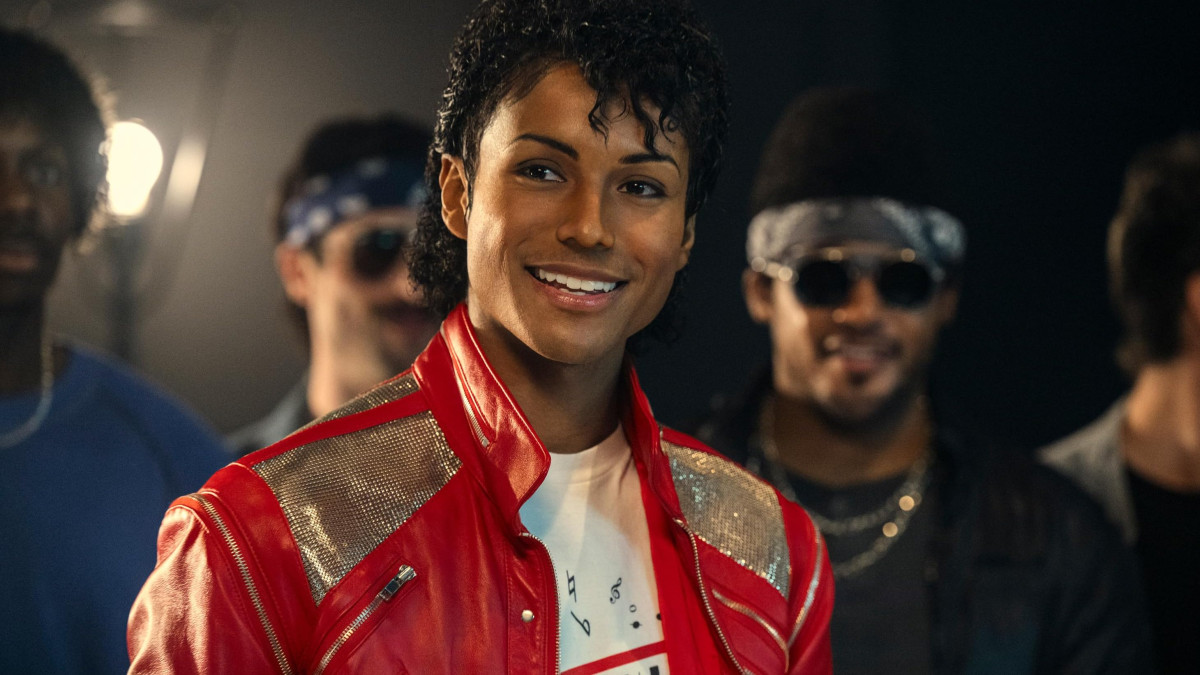
The whole debate about whether you can separate the art from the artist gets weirdly sidestepped by a film that just pretends the difficult part of the question never arose. That is not a resolution, it is an avoidance.
The skills profile evolving faster than job descriptions can track is probably the most accurate sentence in any of the recent commentary on this industry. I have seen job postings that are basically asking for someone who invented the role.
The historical relic angle is genuinely underrated. Getting a Napoleon relic or a Cleopatra relic and seeing how the show interprets those powers is the kind of variety that keeps things fresh chapter after chapter.
The article focuses a lot on isolation and mortality but barely touches on the political dimension. The crumbling empire is not just backdrop, it is context for why the Emperor's message still carries stakes.
Speaking from experience reading long-form web serials, the transition from 3000 plus chapters of source material to even a generous anime runtime requires brutal editorial choices. What gets cut will define the adaptation more than what stays.
Asked my reading group to pick this up and we spent an entire session just discussing the implications of Bigang knowing individual demons personally. The interpersonal dread of that is immense.
Panels flow into each other like water. I once read thirty chapters without realizing how much time had passed.
Hot take: the real innovation here is not the AI, it is the closed browser feedback loop. Every other tool generates code and wishes you luck. Actually running it and fixing errors automatically is the part that changes everything.
The article frames this as a story about Replit but it is really a story about what happens when AI models finally get good enough to close the autonomous feedback loop. The real estate changed, Replit just happened to be standing on it.
My company is one of those 500 enterprises spending over a million a year on Anthropic. The ROI is there but so is the dependency risk. Nobody is talking about what happens if Anthropic raises prices significantly post-IPO.
Hot take, this rally has more legs than the skeptics think because the structural buyer, meaning ETF demand, has fundamentally changed the supply-demand equation relative to every previous cycle.
In an extraordinary move signaling growing alarm over artificial intelligence capabilities, US Treasury Secretary Scott Bessent and Federal Reserve Chair Jerome Powell jointly summoned the nation's most powerful banking executives to an emergency meeting this week at Treasury headquarters in Washington, DC. The hastily arranged gathering centered on mounting cybersecurity concerns stemming from Anthropic's latest artificial intelligence system, known as Claude Mythos. The San Francisco-based AI company recently disclosed that its newest model demonstrates unprecedented abilities to identify and exploit software vulnerabilities, raising immediate red flags across the financial sector and national security establishment.

People forget that before everything else Meghan was an actress who genuinely loved fashion. The royal chapter suppressed that. The Paris debut feels like a reunion with a part of herself.