
The genre has surged so much that publishers are clearly greenlighting anything with a regression premise right now. The signal-to-noise ratio has gotten rough for new readers trying to find quality entries.
Sign up to see more
SignupAlready a member?
LoginBy continuing, you agree to Sociomix's Terms of Service, Privacy Policy

The genre has surged so much that publishers are clearly greenlighting anything with a regression premise right now. The signal-to-noise ratio has gotten rough for new readers trying to find quality entries.
The fact that the Solo Leveling franchise topped charts consistently from 2019 through 2024 on major platforms tells you this isn't a one-hit trend. Ragnarok is a continuation of something with real staying power.
Three separate times while reading this series a minor character I had just started caring about died unfairly with things unresolved and I had to put my phone down and take a walk. The series earns its reputation.
Every manhwa adaptation announcement lately is surrounded by production mystery and delays. At this point I expect at least one year between announcement and any actual footage.
What I appreciate is that the learning curve, while real, is front loaded. The first project takes longer than expected because the interface is genuinely new. By the third project the speed gains kick in hard.
In a manhwa landscape dominated by dungeon crawling, regression narratives, and power fantasies, The Greatest Estate Developer stands out by asking a simple question: what if the protagonist's greatest weapon wasn't a sword or magic system, but civil engineering knowledge? This bizarre premise transforms into one of the most entertaining, genuinely funny, and surprisingly heartfelt series currently running, proving that innovation in storytelling comes from unexpected places. The series takes the familiar isekai setup where a modern person finds themselves in a fantasy world and completely subverts expectations. Instead of becoming an adventurer or hero, protagonist Kim Suho uses his engineering knowledge to revolutionize construction, infrastructure, and economic development. What sounds like it should be boring becomes absolutely captivating through sharp writing, excellent comedic timing, and genuine passion for showing how infrastructure improves lives.
The manhwa has over 1.6 billion cumulative views worldwide according to some reports. This is not a niche property hoping for an audience. The audience already exists and it is enormous.
Terror Man is the one on this list I keep telling people to pay attention to. The concept of a guy who becomes a terrorist to save lives is so much more morally complex than the standard hero setup.
That searchable archive feature is genuinely overlooked. For research, for finding past quotes, for building compilation clips, having every word of every recording indexed and searchable is something traditional editors simply cannot offer.
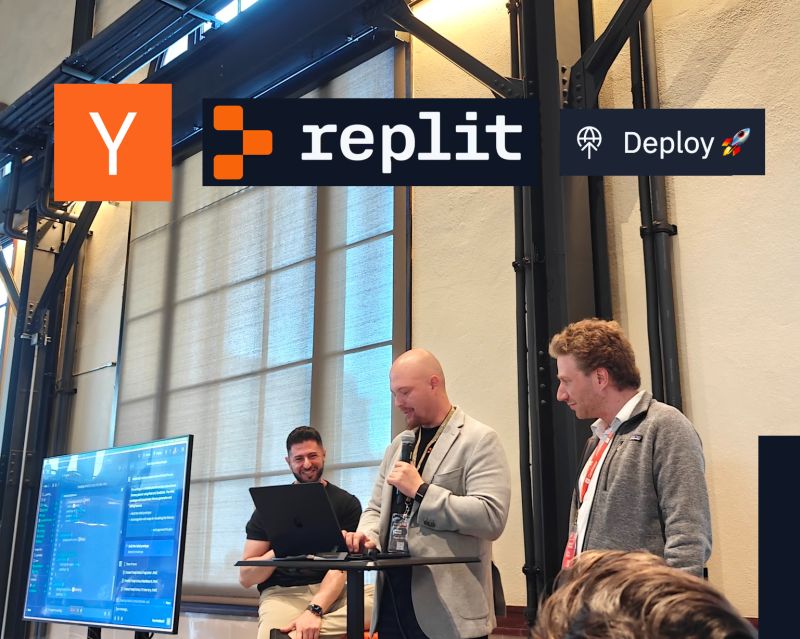
When a company's revenue jumps from $10 million to $100 million in nine months, you pay attention. When that growth comes from an AI agent that builds entire applications autonomously, you realize something fundamental just changed in software development. Replit Agent represents that change, and the numbers prove developers are ready for it. Replit started as a browser-based coding environment for education. Students could write Python or JavaScript without installing anything locally. Teachers loved it because setup time vanished. But the company saw something bigger. If you could run code in the browser, why not let AI write that code? That question led to Agent 3, an AI that doesn't just suggest code completions. It builds entire applications from scratch.
While Synthesia leads in revenue, HeyGen leads in customer acquisition momentum with 152% year-over-year growth in mid-market adoption. That explosive growth rate allowed HeyGen to close much of the customer count gap by late 2025. The company is winning by making avatar video accessible to smaller teams and individual creators who cannot afford enterprise contracts but need professional video capabilities. HeyGen positioned itself for small and medium businesses, marketing teams, content creators, and solo entrepreneurs rather than enterprise learning and development departments. This market segment values affordability, ease of use, and creative flexibility over governance features and advanced integrations. Average contract values are roughly one-third of Synthesia's, reflecting this different customer profile.
Switched to Windsurf six months ago and the productivity difference is noticeable. Not earth-shattering, but noticeable. Refactoring across multiple files without worrying about the meter running is genuinely freeing.
Forty million dollars in annual recurring revenue. Six months. One browser-based platform. Those numbers would be impressive for any software company, but for Bolt.new, they represent something more significant: the moment when development environments moved permanently into the cloud and never looked back. Traditional software development has always required setup. Install Node.js, configure your environment, manage dependencies, set up local servers, troubleshoot version conflicts. Before writing a single line of code, developers spend hours or even days preparing their machines. Junior developers often spend their first week just getting their environment working. Bolt.new eliminated all of that with WebContainers technology.
It explicitly warns you to use Chromium-based browsers. Firefox support is limited. That is a real constraint for enterprise environments with locked-down browser policies.
Labeling an American AI company a supply chain risk when the legal framework for that designation was designed for foreign adversaries is either a policy stretch or a sign that the government is more alarmed than it is saying publicly.
Claude Code went from launch in May 2025 to $1 billion in run-rate revenue by November. No enterprise software product in history has done that. OpenAI needs more than a new tier to respond to that.
OpenAI's latest subscription offering represents its most aggressive move yet to reclaim market share in the rapidly expanding AI-powered coding assistant sector
250 million in short liquidations vs 95 million in long liquidations. That imbalance is massive. This was not a two-sided rally.
Hot take: the real winners in this trend are not the AI labs building chips, it is the chip design services companies and IP licensors who get paid no matter who wins the AI model competition.
The five-tier structure kind of works if you think about it. Go for light use, Plus for daily professional use, the new $100 for heavy daily coding, and $200 for teams who need priority everything. The positioning logic is there.