
Liquid cooling expertise is probably the most undervalued skill in the entire industry right now. Traditional HVAC engineers do not know it, and traditional IT engineers definitely do not. There is a real vacuum there.
Sign up to see more
SignupAlready a member?
LoginBy continuing, you agree to Sociomix's Terms of Service, Privacy Policy

Liquid cooling expertise is probably the most undervalued skill in the entire industry right now. Traditional HVAC engineers do not know it, and traditional IT engineers definitely do not. There is a real vacuum there.
Speaking as a complete non-gamer who started manhwa purely because of the anime, the RPG mechanics are not confusing at all. If anything they make the power scaling more intuitive than most fantasy series.
Finishing the series left me with this strange mix of devastation and peace that I usually only associate with very good literary fiction. It felt like reading a novel that happened to have incredible fight scenes.
Season 4 starting from where season 3 ended is doing things with the established emotional groundwork that feel genuinely earned rather than escalatory for its own sake. The series knows what it is building toward.
God of High School had incredible fight art in its early arcs. Saying Nano Machine is the best right now is not wrong but let us not forget the ceiling that series set.
This series was always going to get an anime. Redice Studio does not produce manhwa that sit quietly.
The AI video generation race just got a clear winner. Runway Gen-4.5 topped the Video Arena leaderboard with a 1,247 Elo score, surpassing both Google Veo 3 and OpenAI Sora 2. For those unfamiliar with Elo ratings, this is the same system used to rank chess players and competitive games. A higher score means more wins in head-to-head comparisons. When real users compare videos side by side without knowing which AI generated them, they consistently choose Runway's output. Runway didn't start as an enterprise video tool. It began as a playground for artists and filmmakers who wanted to experiment with AI-generated visuals. The early versions produced fascinating but inconsistent results. Sometimes you'd get stunning cinematic footage. Other times you'd get distorted motion and unrealistic physics. Gen-4.5 changed that equation by achieving breakthrough consistency in motion quality and physical accuracy.
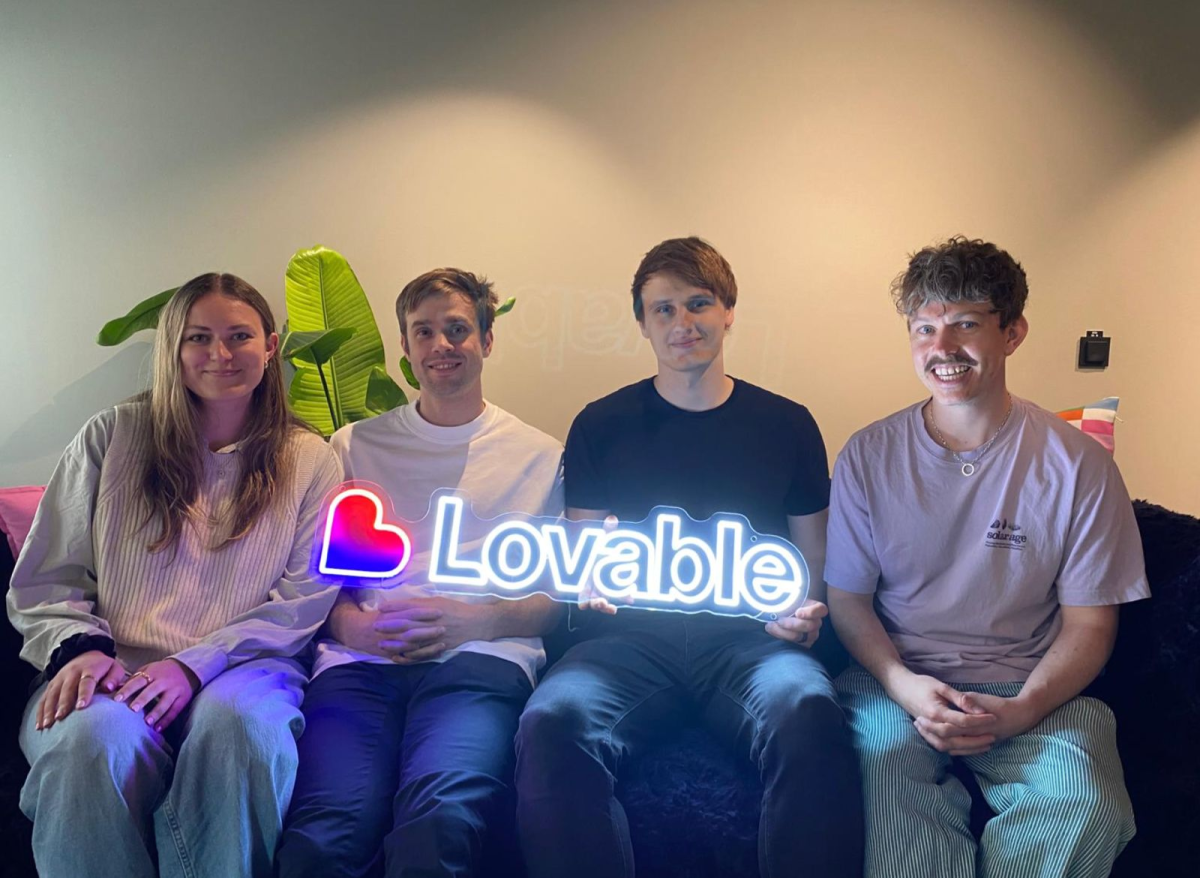
The software development world just witnessed something unprecedented. A European startup called Lovable reached $20 million in annual recurring revenue in just two months, making it potentially the fastest-growing startup in European history. But here's the twist that's making traditional software agencies nervous: they did it by giving non-technical founders the power to build full-stack applications without writing a single line of code. For years, the promise of no-code tools has been the same: anyone can build an app. But the reality has always been different. You'd create a beautiful frontend, get excited about your progress, and then hit the technical cliff. Suddenly you needed to configure databases, set up authentication, manage API keys, and deploy to servers. The "no-code" dream became a "hire-a-developer-anyway" nightmare.
Hot take, Altman's 421-word X post accusing Anthropic of doublespeak after the Super Bowl ads was the least strategic thing any CEO has done this year. Responding at length to your competitor's ad proves the ad landed.
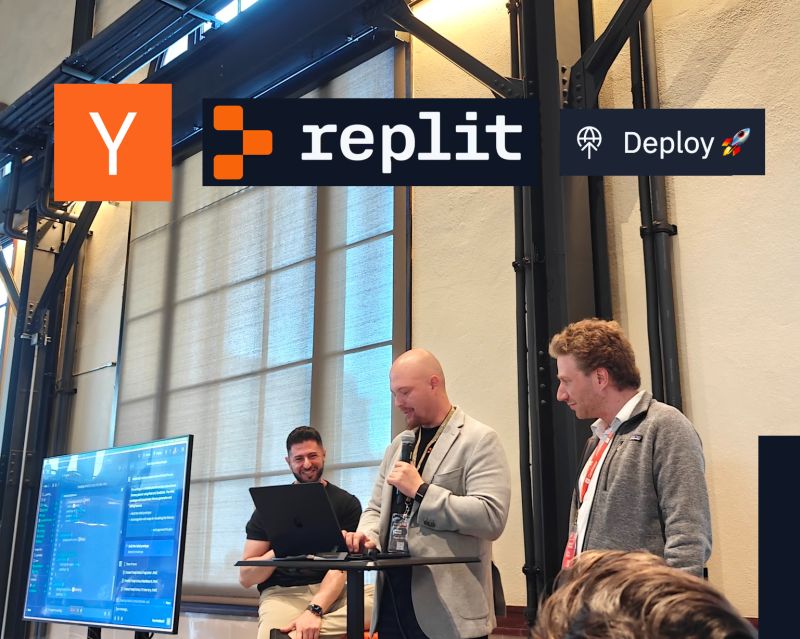
When a company's revenue jumps from $10 million to $100 million in nine months, you pay attention. When that growth comes from an AI agent that builds entire applications autonomously, you realize something fundamental just changed in software development. Replit Agent represents that change, and the numbers prove developers are ready for it. Replit started as a browser-based coding environment for education. Students could write Python or JavaScript without installing anything locally. Teachers loved it because setup time vanished. But the company saw something bigger. If you could run code in the browser, why not let AI write that code? That question led to Agent 3, an AI that doesn't just suggest code completions. It builds entire applications from scratch.
The part about persistent inflation complicating Federal Reserve policy is buried too deep in this article. A 0.4% core PCE reading is not a small number and it deserves more weight than a brief mention at the end.
Meta has just had one of its most important AI moments yet and the early signals are hard to ignore. Following the launch of its newest AI model Muse Spark, the company’s standalone Meta AI app surged dramatically in popularity, hinting at a much larger shift that is beginning to take shape. The release is particularly significant because it marks the first major AI model rollout under Alexandr Wang, who joined Meta to reboot its AI strategy. This is not just another incremental update. It represents a more aggressive and focused push into the AI race. According to data from Appfigures, Meta AI jumped from number 57 to number 5 on the U.S. App Store within a day of the launch. That kind of movement rarely happens without a strong underlying pull from users. It signals not curiosity but intent.
The window between vulnerability discovery and active exploitation has collapsed from months to minutes. That single sentence from the Mythos disclosure should be on the front page of every financial regulator's briefing book.
In a rare divergence from industry norms, TikTok has confirmed it will not adopt end-to-end encryption (E2EE) for direct messages, breaking with nearly every major social media platform and reigniting one of the tech industry's most contentious debates. The Chinese-owned video platform told the BBC exclusively that it believes the privacy technology championed by Meta, Apple, and others as essential for user protection actually makes users less safe by creating "dark spaces" where harmful content can flourish beyond the reach of safety teams and law enforcement. The decision puts TikTok in direct opposition to its competitors while potentially exposing the company to fresh criticism over data protection, particularly given ongoing concerns about its ties to Beijing.