The part about evening chronotypes needing more deliberate intervention is the part I wish the article had expanded on. That 30-minute-at-a-time adjustment tip is buried near the bottom and it should be front and center.
9
Sign up to see more
SignupAlready a member?
LoginBy continuing, you agree to Sociomix's Terms of Service, Privacy Policy

The part about evening chronotypes needing more deliberate intervention is the part I wish the article had expanded on. That 30-minute-at-a-time adjustment tip is buried near the bottom and it should be front and center.
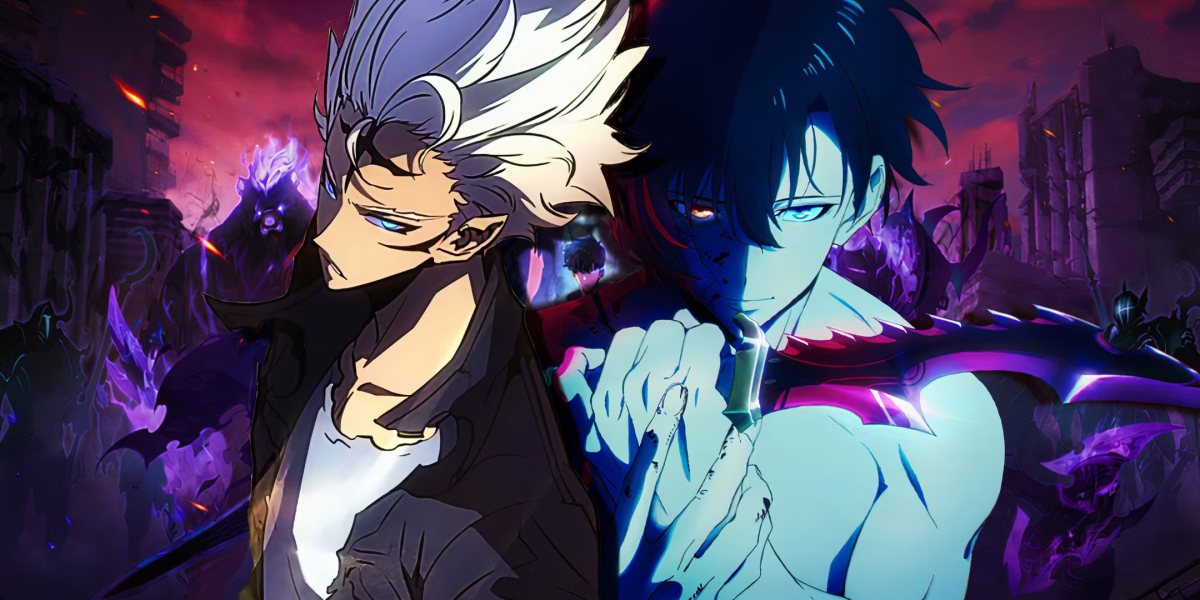
The technology sector is experiencing a paradox. While headlines scream about mass layoffs at major tech companies, a critical shortage is quietly building in one of the most essential areas of digital infrastructure. Datacenters, the physical backbone of our digital world, are facing an unprecedented demand surge, and there simply are not enough skilled professionals to build and maintain them. Countries across the globe are rushing to establish their own datacenter infrastructure. From India's ambitious plans to become a datacenter hub to the European Union's push for data sovereignty, and emerging markets in Southeast Asia and Latin America building their first large scale facilities, the construction boom is just beginning.
Lorin is the character I am most curious about honestly. The love interest whose love letters are being ghostwritten is either deeply tragic or deeply manipulative and the article wisely does not commit to which reading is correct.
The comparison to Nano Machine keeps coming up in these discussions and it makes sense because Nano Machine basically proved that murim plus technology can work as a concept. This series is building on that foundation with much higher narrative ambition.
The Frieren comparison fatigue is real but in this specific case it actually does help set expectations in a useful way for readers unfamiliar with the genre. Not every comparison is lazy.
Fair point but honestly with the Summer 2026 anime season shaping up to be incredibly competitive, Tomb Raider King needs that Solo Leveling comparison to even get casual viewers to give it a first episode.
The manhwa world exploded when Solo Leveling first introduced us to Sung Jinwoo's journey from the weakest hunter to humanity's strongest defender. Now, Solo Leveling Ragnarok brings a fresh perspective to this beloved universe, and fans everywhere are asking the same questions. Can the sequel live up to the original? Do you need to read Solo Leveling first? What makes this continuation worth your time? This guide covers everything you need to know about Solo Leveling Ragnarok, whether you're a longtime fan or someone curious about jumping into the series Solo Leveling Ragnarok is not a reboot or alternate timeline. This is a direct sequel that continues the story years after the original series concluded. The protagonist shifts from Sung Jinwoo to his son, Sung Suho, who must forge his own path in a world still recovering from the catastrophic events his father prevented.
As someone who recently switched from a competitor, the real-time aspect of Otter is what differentiates it. Seeing the transcript appear as people speak during the live call, not just as a post-meeting artifact, is genuinely more useful.
The article completely skips the copyright situation. There are dozens of active lawsuits against AI video companies right now and that legal cloud hangs over every production decision for anyone using these tools commercially.
Genuinely one of the fastest product experiences I have ever had. Described a client project in a paragraph, had a demo-ready prototype in an afternoon. Client was impressed. Signed the contract. That is the whole story.
Two weekends to ship a product you had sitting in your head for three years. That sentence right there is the whole value proposition distilled.
There's a photograph from February 2026 that pretty much sums up the state of AI right now. At the India AI Impact Summit in New Delhi, Indian Prime Minister Narendra Modi invited the world's tech leaders onstage for a group photo. Everyone held hands. Well, almost everyone. Sam Altman of OpenAI and Dario Amodei of Anthropic, standing right next to each other, refused to clasp hands and instead raised their fists separately. The internet, predictably, lost its mind. An awkward moment between OpenAI CEO Sam Altman and Anthropic CEO Dario Amodei at an AI Summit captured the increasingly icy relations between two rival tech leaders who started off as colleagues. That's not just petty drama. It's a window into what may be the most consequential corporate rivalry in the technology world right now, one that's playing out in boardrooms, courtrooms, Super Bowl ads, and billion-dollar compute deals all at once.
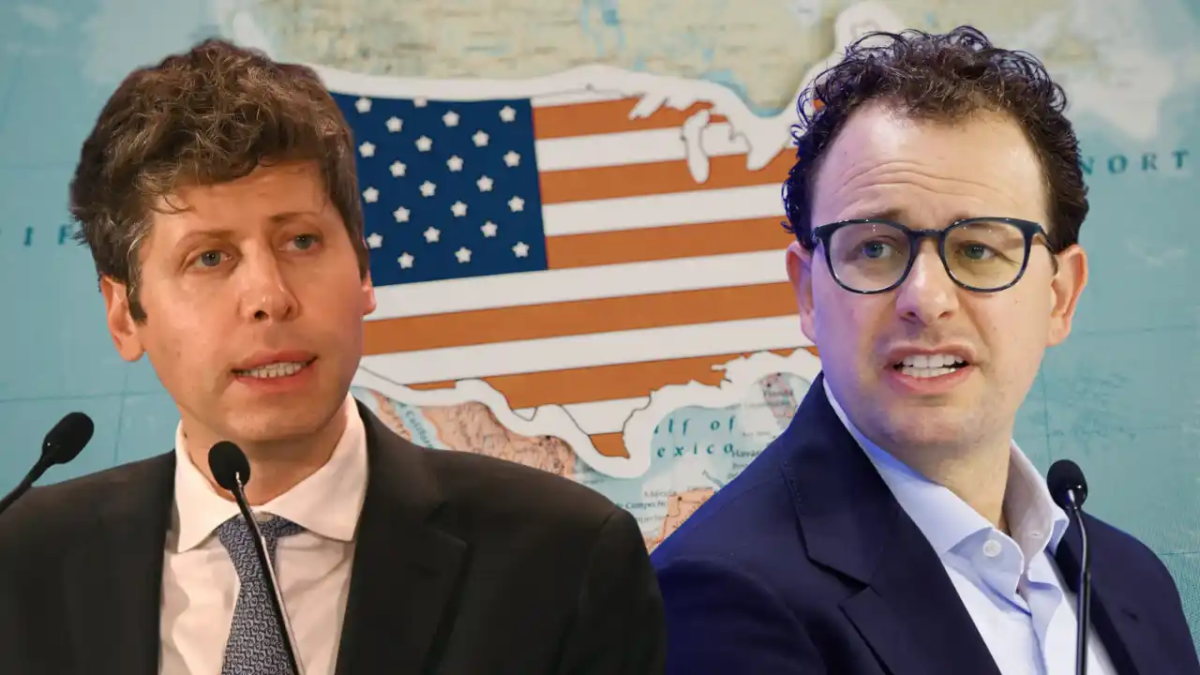
Dario left OpenAI over safety concerns and then built a company that just convinced Apple, Microsoft, Google, Nvidia, Amazon, Cisco, and JPMorgan to all join a cybersecurity partnership together. Whatever you think of the rivalry drama, that is a remarkable outcome for someone who walked away from a VP of Research job.
The software development world just witnessed something unprecedented. A European startup called Lovable reached $20 million in annual recurring revenue in just two months, making it potentially the fastest-growing startup in European history. But here's the twist that's making traditional software agencies nervous: they did it by giving non-technical founders the power to build full-stack applications without writing a single line of code. For years, the promise of no-code tools has been the same: anyone can build an app. But the reality has always been different. You'd create a beautiful frontend, get excited about your progress, and then hit the technical cliff. Suddenly you needed to configure databases, set up authentication, manage API keys, and deploy to servers. The "no-code" dream became a "hire-a-developer-anyway" nightmare.
Hot take: token anxiety is not solved by flat pricing. It is solved by AI that writes correct code on the first pass so you do not burn five iterations fixing what it got wrong.
The AI video generation race just got a clear winner. Runway Gen-4.5 topped the Video Arena leaderboard with a 1,247 Elo score, surpassing both Google Veo 3 and OpenAI Sora 2. For those unfamiliar with Elo ratings, this is the same system used to rank chess players and competitive games. A higher score means more wins in head-to-head comparisons. When real users compare videos side by side without knowing which AI generated them, they consistently choose Runway's output. Runway didn't start as an enterprise video tool. It began as a playground for artists and filmmakers who wanted to experiment with AI-generated visuals. The early versions produced fascinating but inconsistent results. Sometimes you'd get stunning cinematic footage. Other times you'd get distorted motion and unrealistic physics. Gen-4.5 changed that equation by achieving breakthrough consistency in motion quality and physical accuracy.

The bottom line is that control over compute infrastructure is becoming as strategically important as control over the models themselves. Anyone who does not take the hardware layer seriously is going to find themselves at a structural disadvantage.
The CUDA lock-in point is so real. Speaking from experience in ML infrastructure, migrating workloads away from CUDA is genuinely painful even when the alternative hardware is technically superior. It is not a hardware problem, it is a software ecosystem problem.
One underappreciated angle: the fact that Codex CLI is open source with 67,000 GitHub stars gives it a community momentum that the subscription tier numbers do not capture. Developers contribute to it, customize it, and build on top of it. That matters.
Meta has just had one of its most important AI moments yet and the early signals are hard to ignore. Following the launch of its newest AI model Muse Spark, the company’s standalone Meta AI app surged dramatically in popularity, hinting at a much larger shift that is beginning to take shape. The release is particularly significant because it marks the first major AI model rollout under Alexandr Wang, who joined Meta to reboot its AI strategy. This is not just another incremental update. It represents a more aggressive and focused push into the AI race. According to data from Appfigures, Meta AI jumped from number 57 to number 5 on the U.S. App Store within a day of the launch. That kind of movement rarely happens without a strong underlying pull from users. It signals not curiosity but intent.