The skills profile evolving faster than job descriptions can track is probably the most accurate sentence in any of the recent commentary on this industry. I have seen job postings that are basically asking for someone who invented the role.
Sign up to see more
SignupAlready a member?
LoginBy continuing, you agree to Sociomix's Terms of Service, Privacy Policy

The skills profile evolving faster than job descriptions can track is probably the most accurate sentence in any of the recent commentary on this industry. I have seen job postings that are basically asking for someone who invented the role.
When Tomb Raider King first exploded onto the manhwa scene, it brought a fresh take on dungeon crawling stories by combining archaeological adventure with ruthless protagonist energy and a treasure-hunting premise that felt genuinely different from typical gate and dungeon narratives. The series built a dedicated fanbase through its satisfying blend of historical artifact powers, strategic relic acquisition, and a protagonist who wasn't afraid to be morally gray in pursuit of his goals. Now, with the anime adaptation confirmed for 2026 as one of the most anticipated manhwa-to-anime projects, Tomb Raider King is experiencing a resurgence. New readers are discovering the series while longtime fans eagerly await seeing Jooheon Suh's relic-hunting adventures brought to life with animation. The timing couldn't be better, as the series has built enough content to support a substantial adaptation while maintaining momentum in its ongoing storyline.
The Regressor character is doing more interesting narrative work than most time-loop protagonists in the entire genre. The difference between reliving events and holding knowledge about events that have not happened yet is a distinction the series explores carefully.
The manhwa community has been buzzing with anticipation ever since MAPPA Studio announced their adaptation of Omniscient Reader's Viewpoint. With a spring 2026 release date confirmed and 24 episodes planned for the first season, this adaptation represents one of the most ambitious manhwa-to-anime projects ever undertaken. But what makes this series so special that it warranted such a massive production commitment? If you're hearing about Omniscient Reader's Viewpoint for the first time or wondering whether the hype is justified, this guide will prepare you for what promises to be one of the biggest anime releases of the year. We'll cover the story premise, why it's captured millions of readers worldwide, what MAPPA's involvement means, and everything else you need to know before the first episode airs
In a manhwa landscape dominated by dungeon crawling, regression narratives, and power fantasies, The Greatest Estate Developer stands out by asking a simple question: what if the protagonist's greatest weapon wasn't a sword or magic system, but civil engineering knowledge? This bizarre premise transforms into one of the most entertaining, genuinely funny, and surprisingly heartfelt series currently running, proving that innovation in storytelling comes from unexpected places. The series takes the familiar isekai setup where a modern person finds themselves in a fantasy world and completely subverts expectations. Instead of becoming an adventurer or hero, protagonist Kim Suho uses his engineering knowledge to revolutionize construction, infrastructure, and economic development. What sounds like it should be boring becomes absolutely captivating through sharp writing, excellent comedic timing, and genuine passion for showing how infrastructure improves lives.
True but impractical. You cannot fix your company's meeting culture alone. Tools that let you adapt while culture slowly changes are genuinely useful in the meantime.
Speaking from experience building MVPs for clients, the bottleneck has never been writing code. It has been scoping, integrating APIs, and deploying without breaking things. If Agent 3 actually handles all three, that is a serious unlock.
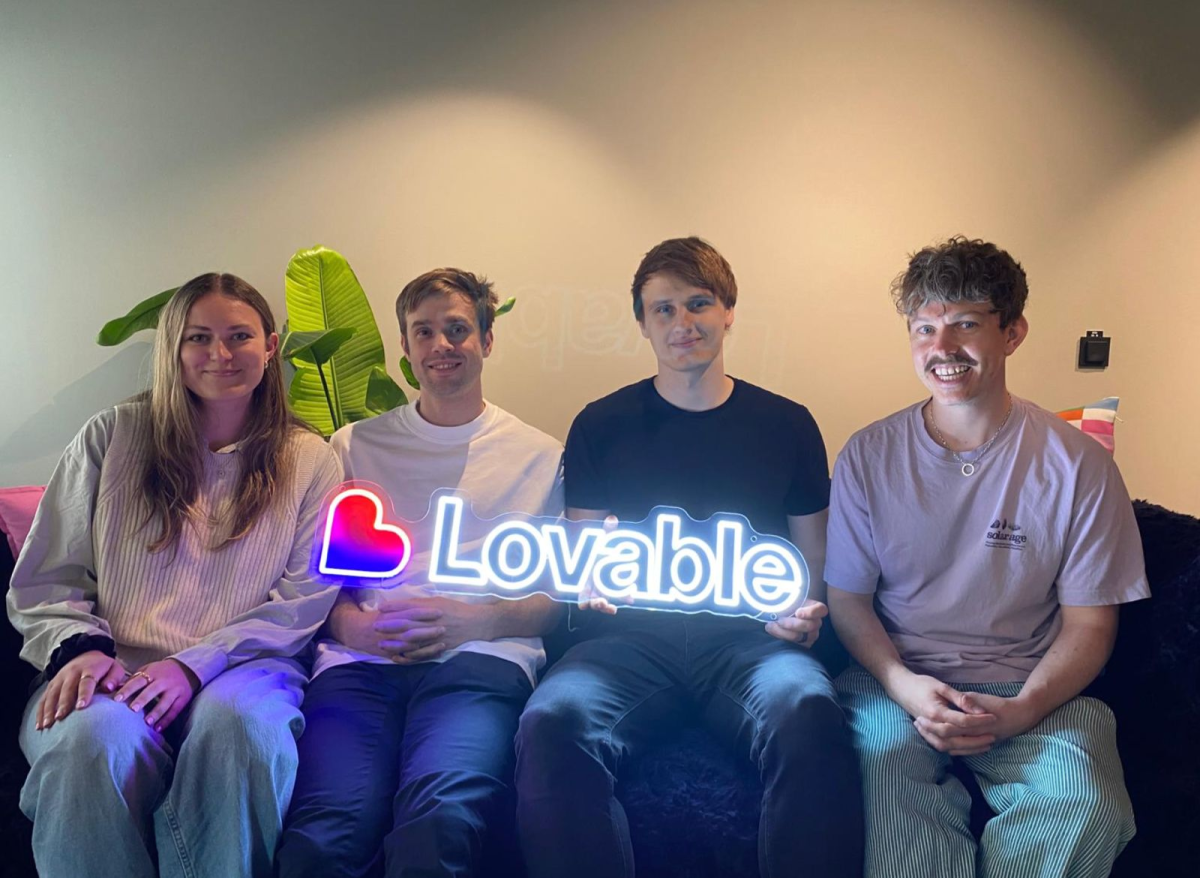
The software development world just witnessed something unprecedented. A European startup called Lovable reached $20 million in annual recurring revenue in just two months, making it potentially the fastest-growing startup in European history. But here's the twist that's making traditional software agencies nervous: they did it by giving non-technical founders the power to build full-stack applications without writing a single line of code. For years, the promise of no-code tools has been the same: anyone can build an app. But the reality has always been different. You'd create a beautiful frontend, get excited about your progress, and then hit the technical cliff. Suddenly you needed to configure databases, set up authentication, manage API keys, and deploy to servers. The "no-code" dream became a "hire-a-developer-anyway" nightmare.
When a company raises $200 million in Series E funding during January 2026, investors are betting on more than potential. They're backing proven market demand and sustainable growth. Synthesia's funding round came alongside a 44% year-over-year increase in headcount to 706 employees, signaling aggressive expansion in a category the company essentially created: AI avatar-based video generation for enterprise training and communications. Corporate training videos have been expensive and slow to produce for decades. Recording a single 10-minute training module traditionally required booking a studio, hiring a presenter, scheduling a videographer, managing multiple takes, and editing everything together. If you needed to update information or translate content, you essentially started over. Synthesia eliminated this entire production workflow by replacing human presenters with AI avatars.
Nobody is talking about what happens to mid-tier videographers and on-camera talent in this scenario. The post celebrates efficiency but there are real livelihoods on the other side of that efficiency gain.
Both companies losing billions while generating tens of billions in revenue is the defining financial paradox of the AI era. Every legacy tech company would kill for those growth rates and every rational CFO would be horrified by those burn rates simultaneously.
Anyone else notice the Replit pivot story buried in this post? They laid off half their staff, nearly collapsed, and then launched the agent that generated $150M in revenue within about a year. That is a founder story for the ages.
The article glosses over the token pricing model a bit too charitably. Tokens run out faster than you expect, especially when the AI makes mistakes and you go back and forth trying to fix them. The economics get less friendly once you are in a complex project.
Real talk, $343 million in spot ETF inflows in a single day after two days of outflows is not a blip. Institutional money is watching every dip and deploying on weakness.
Demna built Balenciaga into a cultural juggernaut through chaos and provocation. Piccioli is coming in with quiet elegance. Whether that works commercially is the real question nobody is asking.