How do I know if a brain health supplement is actually evidence based versus just marketing? The claims all start to sound the same.
11
Sign up to see more
SignupAlready a member?
LoginBy continuing, you agree to Sociomix's Terms of Service, Privacy Policy

How do I know if a brain health supplement is actually evidence based versus just marketing? The claims all start to sound the same.
Thinking about how the article describes Suchan investigating without police help because going to them would make him look guilty, and that isolation is such a classic thriller engine that Copycat refreshes completely by tying it to something as mundane as artistic credit.
Having spent a lot of time studying how live performance translates to film, I can say that the Talauega brothers choreographing those sequences with someone who actually understands the movement vocabulary made a genuine difference. Those scenes will hold up.
Word of mouth has been the whole engine for this series from the start. No massive marketing push, just people reading it and immediately wanting to tell someone.
Still think Nano Machine peaked around chapter one fifty and has been on a slow plateau since. Peak was extraordinary. Recent chapters are very good. Best in the medium right now is debatable.
Wait, is Omniscient Reader even on this list? Because that is the adaptation I thought was supposed to arrive this year and the article does not seem to mention it directly.
The BL manhwa market has genuinely exploded recently and search interest hit an all time high around January 2026, so this series dropped at a moment when reader appetite for new quality entries is at its peak. Good timing for a series with this much ambition.
The Cha Hae-in reveal in chapter 65 broke me. Been waiting since the start of Ragnarok for answers about where she went and the payoff was worth every single week of waiting.
The regression subgenre has exploded in popularity over the past few years, becoming one of the most beloved narrative frameworks in Korean manhwa. The core premise is deceptively simple: a protagonist dies or fails catastrophically, then returns to an earlier point in time with their memories intact. Armed with future knowledge, they get a second chance to change their fate, save loved ones, gain power, or pursue revenge against those who wronged them. What makes regression stories so compelling is the combination of dramatic irony, strategic satisfaction, and emotional depth they provide. Readers know what the protagonist knows, creating tension when other characters make mistakes we can see coming. We feel smart alongside protagonists who use foreknowledge to outmaneuver enemies. And we experience the emotional weight of carrying memories of futures that haven't happened yet, of people who died who are currently alive, of betrayals that haven't occurred.

Windsurf bumped Pro to $20 after the March 2026 pricing overhaul. The $15 headline in this post is no longer current for new subscribers.
As someone who came from a heavy Cursor background, the Cascade agentic flow is a genuine step up for certain workloads. Not for everything, but for the right tasks it is noticeably better.
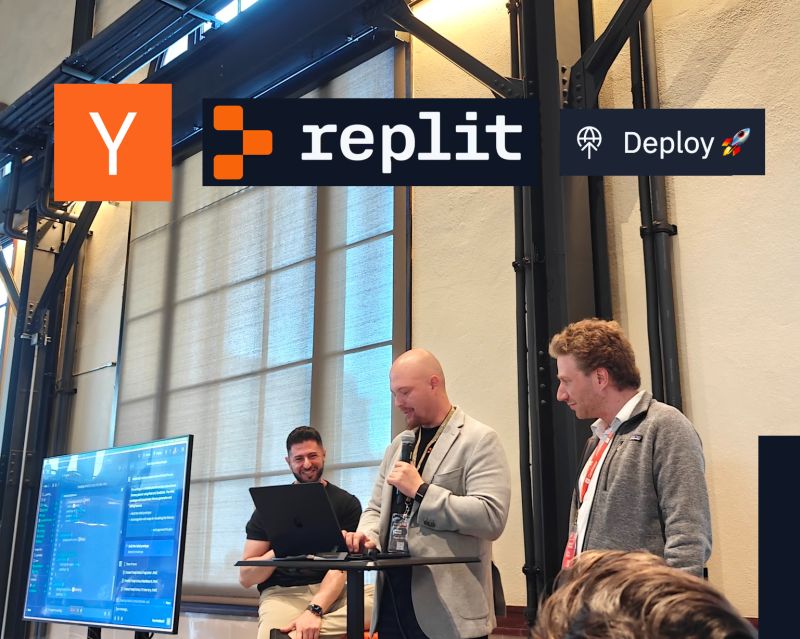
When a company's revenue jumps from $10 million to $100 million in nine months, you pay attention. When that growth comes from an AI agent that builds entire applications autonomously, you realize something fundamental just changed in software development. Replit Agent represents that change, and the numbers prove developers are ready for it. Replit started as a browser-based coding environment for education. Students could write Python or JavaScript without installing anything locally. Teachers loved it because setup time vanished. But the company saw something bigger. If you could run code in the browser, why not let AI write that code? That question led to Agent 3, an AI that doesn't just suggest code completions. It builds entire applications from scratch.
Forty million dollars in annual recurring revenue. Six months. One browser-based platform. Those numbers would be impressive for any software company, but for Bolt.new, they represent something more significant: the moment when development environments moved permanently into the cloud and never looked back. Traditional software development has always required setup. Install Node.js, configure your environment, manage dependencies, set up local servers, troubleshoot version conflicts. Before writing a single line of code, developers spend hours or even days preparing their machines. Junior developers often spend their first week just getting their environment working. Bolt.new eliminated all of that with WebContainers technology.
There's a photograph from February 2026 that pretty much sums up the state of AI right now. At the India AI Impact Summit in New Delhi, Indian Prime Minister Narendra Modi invited the world's tech leaders onstage for a group photo. Everyone held hands. Well, almost everyone. Sam Altman of OpenAI and Dario Amodei of Anthropic, standing right next to each other, refused to clasp hands and instead raised their fists separately. The internet, predictably, lost its mind. An awkward moment between OpenAI CEO Sam Altman and Anthropic CEO Dario Amodei at an AI Summit captured the increasingly icy relations between two rival tech leaders who started off as colleagues. That's not just petty drama. It's a window into what may be the most consequential corporate rivalry in the technology world right now, one that's playing out in boardrooms, courtrooms, Super Bowl ads, and billion-dollar compute deals all at once.

This whole story is really about the fact that the AI industry is maturing. The early phase was about who could build the best models. The current phase is about who controls the infrastructure those models run on. These are very different competitions.
In a rare divergence from industry norms, TikTok has confirmed it will not adopt end-to-end encryption (E2EE) for direct messages, breaking with nearly every major social media platform and reigniting one of the tech industry's most contentious debates. The Chinese-owned video platform told the BBC exclusively that it believes the privacy technology championed by Meta, Apple, and others as essential for user protection actually makes users less safe by creating "dark spaces" where harmful content can flourish beyond the reach of safety teams and law enforcement. The decision puts TikTok in direct opposition to its competitors while potentially exposing the company to fresh criticism over data protection, particularly given ongoing concerns about its ties to Beijing.
Institutional money is patient. They were buying the dip during two consecutive days of outflows and now the market is validating that positioning. That is a completely different dynamic from 2021 retail mania.
The Llama 4 failure context matters a lot here. That model was widely considered a disappointment and it was the reason Zuckerberg brought Wang in and blew up the AI strategy entirely. Muse Spark is not just a product launch, it is proof that the restructuring worked.
Anyone else thinking this would be perfect for engagement photos? The color photographs beautifully.