
Does this approach have any specific guidance for people over 60? Circadian rhythms and sleep patterns change with age and I wonder if the same window timing applies.
19
Sign up to see more
SignupAlready a member?
LoginBy continuing, you agree to Sociomix's Terms of Service, Privacy Policy

Does this approach have any specific guidance for people over 60? Circadian rhythms and sleep patterns change with age and I wonder if the same window timing applies.
Will the Michael Jackson biopic sequel actually address the 1993 allegations or will it dodge them too?
Does Nia Long get much screen time as Katherine Jackson? She is such a strong performer and I would hate for her to be wasted in a nothing role.
Does Copycat require you to have read Sweet Home or Bastard first, or is it a standalone entry point for new readers?
Pure unfiltered genre chaos that somehow holds together. Manhwa is the best right now and this series is part of why.
In a medium filled with talented artists producing stunning work, making a claim about any series having the "best" art feels bold. Yet Nano Machine consistently delivers combat sequences so fluid, detailed, and visually innovative that even readers who don't typically care about martial arts stories find themselves captivated by the sheer spectacle on display. The series combines traditional murim aesthetics with futuristic sci-fi elements, creating a unique visual identity that stands apart from typical cultivation manhwa. The nano machine implanted in protagonist Cheon Yeo-Woon's body doesn't just give him power. It becomes a storytelling device that allows the artist to visualize techniques, energy flows, and combat analysis in ways other series can't replicate.

160 million views and most of the people in my anime circles have never even heard of it. The manhwa to anime pipeline is genuinely changing the visibility of these titles.
Hot take: the real innovation here is not the technology, it is the interaction design. Dozens of tools had decent transcription before Descript. Nobody made editing the actual interface until Descript did.
The software development world just witnessed something unprecedented. A European startup called Lovable reached $20 million in annual recurring revenue in just two months, making it potentially the fastest-growing startup in European history. But here's the twist that's making traditional software agencies nervous: they did it by giving non-technical founders the power to build full-stack applications without writing a single line of code. For years, the promise of no-code tools has been the same: anyone can build an app. But the reality has always been different. You'd create a beautiful frontend, get excited about your progress, and then hit the technical cliff. Suddenly you needed to configure databases, set up authentication, manage API keys, and deploy to servers. The "no-code" dream became a "hire-a-developer-anyway" nightmare.
The data governance question is the one I keep coming back to. Your meeting transcripts are now on a third-party server, subject to that company's data practices, potentially used to train their models, and potentially discoverable in any future litigation. That is a non-trivial thing you are signing up for.
Forty million dollars in annual recurring revenue. Six months. One browser-based platform. Those numbers would be impressive for any software company, but for Bolt.new, they represent something more significant: the moment when development environments moved permanently into the cloud and never looked back. Traditional software development has always required setup. Install Node.js, configure your environment, manage dependencies, set up local servers, troubleshoot version conflicts. Before writing a single line of code, developers spend hours or even days preparing their machines. Junior developers often spend their first week just getting their environment working. Bolt.new eliminated all of that with WebContainers technology.
As someone who works in legal services, the discovery risk here is not theoretical. Permanent searchable records of internal business discussions are exactly what opposing counsel subpoenas. Your candid meeting conversations become a liability.
While Synthesia leads in revenue, HeyGen leads in customer acquisition momentum with 152% year-over-year growth in mid-market adoption. That explosive growth rate allowed HeyGen to close much of the customer count gap by late 2025. The company is winning by making avatar video accessible to smaller teams and individual creators who cannot afford enterprise contracts but need professional video capabilities. HeyGen positioned itself for small and medium businesses, marketing teams, content creators, and solo entrepreneurs rather than enterprise learning and development departments. This market segment values affordability, ease of use, and creative flexibility over governance features and advanced integrations. Average contract values are roughly one-third of Synthesia's, reflecting this different customer profile.

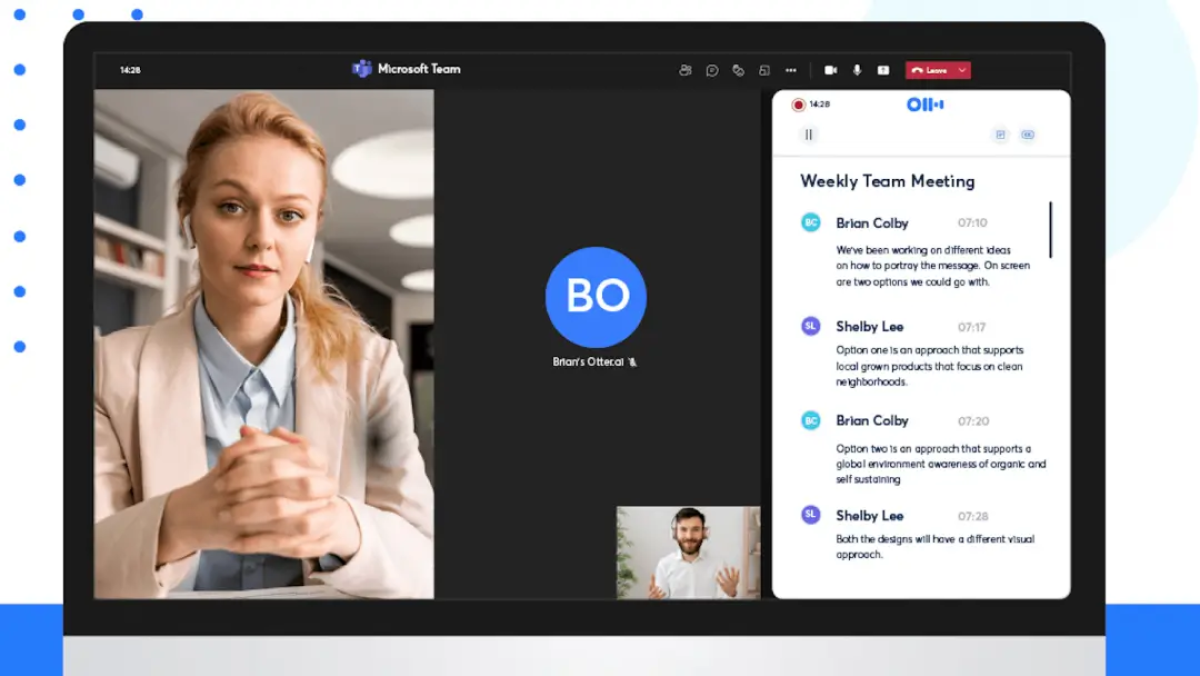
Knowledge workers spend an average of 18 hours per week in meetings. Much of that time involves routine status updates, recurring check-ins, and informational sessions where your physical presence adds minimal value. Otter.ai introduced a provocative concept called OtterPilot: an AI assistant that joins meetings autonomously when you can't attend, records everything, generates summaries, and answers questions about what happened. Connect Otter.ai to your calendar. The system monitors your scheduled meetings and automatically joins Zoom, Google Meet, or Microsoft Teams calls when they start. OtterPilot records audio, generates real-time transcripts, identifies speakers, and creates AI summaries with action items. You receive a meeting briefing without attending the meeting yourself.
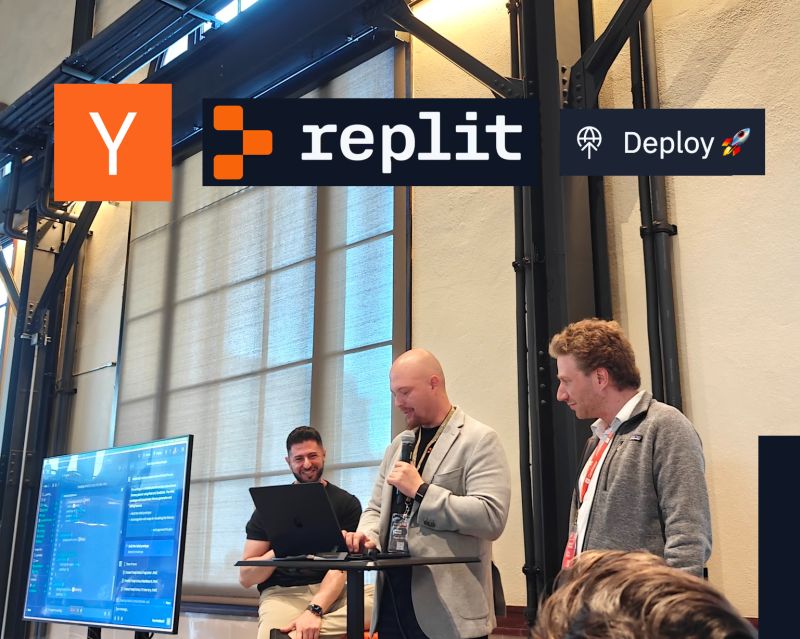
When a company's revenue jumps from $10 million to $100 million in nine months, you pay attention. When that growth comes from an AI agent that builds entire applications autonomously, you realize something fundamental just changed in software development. Replit Agent represents that change, and the numbers prove developers are ready for it. Replit started as a browser-based coding environment for education. Students could write Python or JavaScript without installing anything locally. Teachers loved it because setup time vanished. But the company saw something bigger. If you could run code in the browser, why not let AI write that code? That question led to Agent 3, an AI that doesn't just suggest code completions. It builds entire applications from scratch.
That is such a good point. The delete and repost option also messes up thread position and any replies attached to your comment. Edit in place is so much cleaner for everyone involved.
Small correction to something the article implies: the edited label is a grey tag that appears on the comment, it does not change the layout or alert other users proactively. You only notice it if you look. Which is fine but it is less prominent than some people might assume.
Meta has just had one of its most important AI moments yet and the early signals are hard to ignore. Following the launch of its newest AI model Muse Spark, the company’s standalone Meta AI app surged dramatically in popularity, hinting at a much larger shift that is beginning to take shape. The release is particularly significant because it marks the first major AI model rollout under Alexandr Wang, who joined Meta to reboot its AI strategy. This is not just another incremental update. It represents a more aggressive and focused push into the AI race. According to data from Appfigures, Meta AI jumped from number 57 to number 5 on the U.S. App Store within a day of the launch. That kind of movement rarely happens without a strong underlying pull from users. It signals not curiosity but intent.

As someone who studies fashion history, Piccioli is one of the few designers working today with a genuine mastery of couture technique. His 25 years at Valentino were not just a career, they were a masterclass. Seeing him apply that to Balenciaga's very different DNA is genuinely exciting from a craft perspective.