
Fair pushback above, but the counterpoint is that even with aggressive automation, demand is growing so fast that total headcount is still projected to increase. A shrinking ratio applied to a doubling base still means more jobs.
Sign up to see more
SignupAlready a member?
LoginBy continuing, you agree to Sociomix's Terms of Service, Privacy Policy

Fair pushback above, but the counterpoint is that even with aggressive automation, demand is growing so fast that total headcount is still projected to increase. A shrinking ratio applied to a doubling base still means more jobs.
In a manhwa landscape dominated by dungeon crawling, regression narratives, and power fantasies, The Greatest Estate Developer stands out by asking a simple question: what if the protagonist's greatest weapon wasn't a sword or magic system, but civil engineering knowledge? This bizarre premise transforms into one of the most entertaining, genuinely funny, and surprisingly heartfelt series currently running, proving that innovation in storytelling comes from unexpected places. The series takes the familiar isekai setup where a modern person finds themselves in a fantasy world and completely subverts expectations. Instead of becoming an adventurer or hero, protagonist Kim Suho uses his engineering knowledge to revolutionize construction, infrastructure, and economic development. What sounds like it should be boring becomes absolutely captivating through sharp writing, excellent comedic timing, and genuine passion for showing how infrastructure improves lives.
The article is right that the layered villain structure keeps stakes escalating but I'd add that the Apostle of the Itarim's infiltration of the Hunter Association creates a specific kind of tension that the original never really attempted.
Counter to the pacing concern above, I think the slow explanations are actually part of the charm. It trusts the reader to be interested in the details, which is rare.
As a counterpoint to all the hype, the series does lean heavily on Lloyd being the smartest person in every room. That can get a little exhausting over 180 plus chapters.
The nano machine is genuinely the best power system in manhwa for justifying why the protagonist keeps getting stronger without it feeling arbitrary.
Terror Man is the one on this list I keep telling people to pay attention to. The concept of a guy who becomes a terrorist to save lives is so much more morally complex than the standard hero setup.
Season 4 starting from where season 3 ended is doing things with the established emotional groundwork that feel genuinely earned rather than escalatory for its own sake. The series knows what it is building toward.
The Fortune 100 adoption numbers are impressive but also a little circular. Once enough big companies adopt something it becomes safer for other big companies to adopt it. Network effects in enterprise compliance culture are wild.
Production workflows at agencies using this for client work is the part that shifts the narrative from hype to reality. When actual service businesses stake their client relationships on a tool, that is a different signal than enthusiast usage.
From a broader industry trend perspective, this feels like the moment AI video transitions from being a topic of speculation into being a line item in actual production budgets.
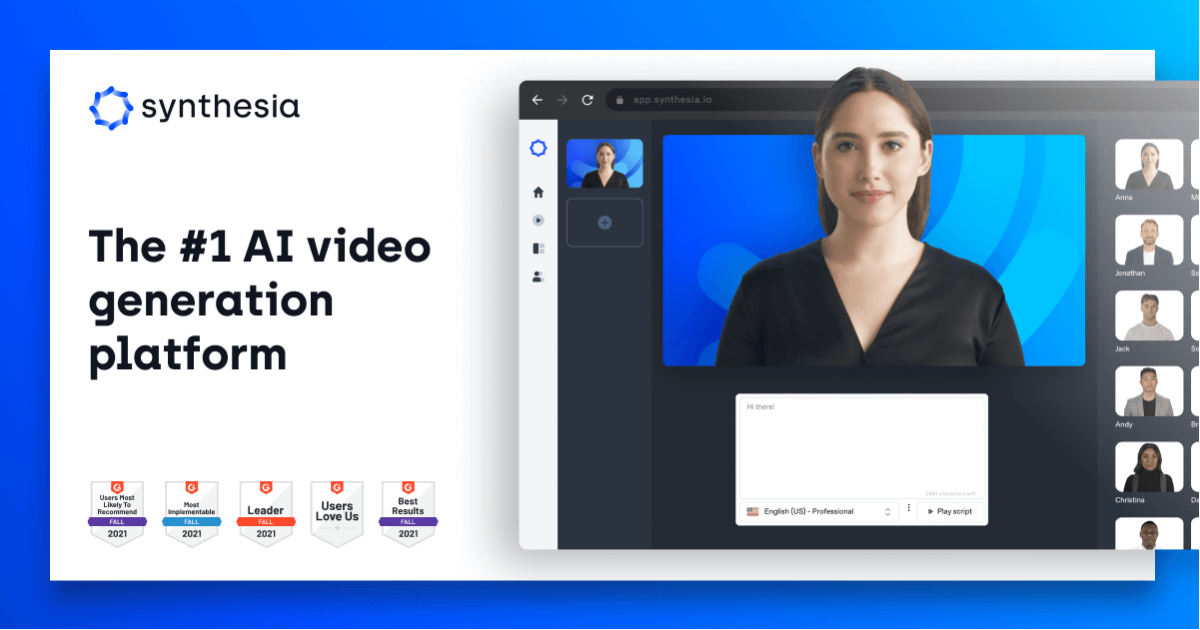
When a company raises $200 million in Series E funding during January 2026, investors are betting on more than potential. They're backing proven market demand and sustainable growth. Synthesia's funding round came alongside a 44% year-over-year increase in headcount to 706 employees, signaling aggressive expansion in a category the company essentially created: AI avatar-based video generation for enterprise training and communications. Corporate training videos have been expensive and slow to produce for decades. Recording a single 10-minute training module traditionally required booking a studio, hiring a presenter, scheduling a videographer, managing multiple takes, and editing everything together. If you needed to update information or translate content, you essentially started over. Synthesia eliminated this entire production workflow by replacing human presenters with AI avatars.
Forty million dollars in annual recurring revenue. Six months. One browser-based platform. Those numbers would be impressive for any software company, but for Bolt.new, they represent something more significant: the moment when development environments moved permanently into the cloud and never looked back. Traditional software development has always required setup. Install Node.js, configure your environment, manage dependencies, set up local servers, troubleshoot version conflicts. Before writing a single line of code, developers spend hours or even days preparing their machines. Junior developers often spend their first week just getting their environment working. Bolt.new eliminated all of that with WebContainers technology.
What happens to the Ray-Ban glasses when this rolls out to the hardware ecosystem? That is where the ambient AI angle gets genuinely interesting and genuinely creepy in equal measure.
Meta has just had one of its most important AI moments yet and the early signals are hard to ignore. Following the launch of its newest AI model Muse Spark, the company’s standalone Meta AI app surged dramatically in popularity, hinting at a much larger shift that is beginning to take shape. The release is particularly significant because it marks the first major AI model rollout under Alexandr Wang, who joined Meta to reboot its AI strategy. This is not just another incremental update. It represents a more aggressive and focused push into the AI race. According to data from Appfigures, Meta AI jumped from number 57 to number 5 on the U.S. App Store within a day of the launch. That kind of movement rarely happens without a strong underlying pull from users. It signals not curiosity but intent.
Claude Code hit $2.5 billion in run-rate revenue by February and more than doubled since January. OpenAI releasing a new tier in response to that is not a competitive move, it is a panic move dressed up as a product announcement.
Instagram has rolled out a small but long overdue feature that users have been asking for years. You can now edit your comments after posting them. This simple change solves a very real frustration. Until now, fixing even the smallest typo meant deleting your comment and writing it all over again. That friction is finally gone. But there is a boundary. You get a 15 minute window after posting to make edits. Within that time, you can update your comment as many times as you want. There is also a layer of transparency built in. Once a comment is edited, others will be able to see that it has been modified. However, unlike platforms such as iMessage, Instagram does not show the edit history. What was originally written stays hidden.
Every cycle people say this one is different because of institutional involvement. And every cycle we still get a 30 to 40 percent correction at some point. Managing expectations accordingly.
Fair point but given that it was her first time in Europe in three years and her first Paris show ever, one appearance carries more weight than it would for someone who goes every season.
When you hear “Paris Fashion Week,” your mind races to haute couture, bold statements, and the world’s most glamorous attendees. But on October 4, 2025, the scene got a surprise guest—Meghan Markle, making what might be her most talked-about entrance yet. To call it a “debut” feels almost too neat, as if she’s stepping into a world she’s never touched. Yet, Meghan’s gradual evolution as a style influencer has been anything but accidental. Her Paris moment isn’t just celebrity spectacle; it’s a statement, a pivot, and a nuanced step into a new chapter. Here’s my take on why this matters.