
The best cognitive health investment for most people is probably boring enough that it would never trend. Sleep. Movement. Real food. Meaningful relationships. The supplement market exists partly to make that boring truth feel insufficient.
Sign up to see more
SignupAlready a member?
LoginBy continuing, you agree to Sociomix's Terms of Service, Privacy Policy
Sign up to see more
SignupAlready a member?
LoginBy continuing, you agree to Sociomix's Terms of Service, Privacy Policy

The best cognitive health investment for most people is probably boring enough that it would never trend. Sleep. Movement. Real food. Meaningful relationships. The supplement market exists partly to make that boring truth feel insufficient.
The skills profile evolving faster than job descriptions can track is probably the most accurate sentence in any of the recent commentary on this industry. I have seen job postings that are basically asking for someone who invented the role.
Every opponent in this series is technically the hero of their own story and Yu is the disaster that ends it. The series running nearly 123 episodes of that structure without it becoming repetitive is an extraordinary achievement.
For people on the fence, chapters one and two are a slow burn but chapter three completely changed my read on everything that came before. Give it at least that far.
Personally I think the genre peaked with a certain arc in Omniscient Reader's Viewpoint that I will not spoil. Nothing before or since has made me feel that specific combination of devastation and triumph simultaneously.
That is a really good point about Studio EEK. The disconnect between Korean source material and Japanese animation teams has caused problems before. Having a Korean studio handle this could genuinely result in a more faithful adaptation.
The multi-file context awareness is actually the strongest argument for Windsurf over simpler tools. Once you are refactoring across a dozen files simultaneously, single-file autocomplete feels like using a notepad.
As someone who manages a five-person engineering team, predictable tooling costs matter more than people realize. Variable AI billing creates real budgeting headaches and awkward conversations with finance every quarter.
Anyone else think the pricing model with credits and tiers is still the biggest barrier to mainstream adoption? Non-technical users do not want to think about generation queues and credit limits.
Shoutout to whoever decided to add the prompt library feature. Having reusable prompts saved me probably two hours last week alone.
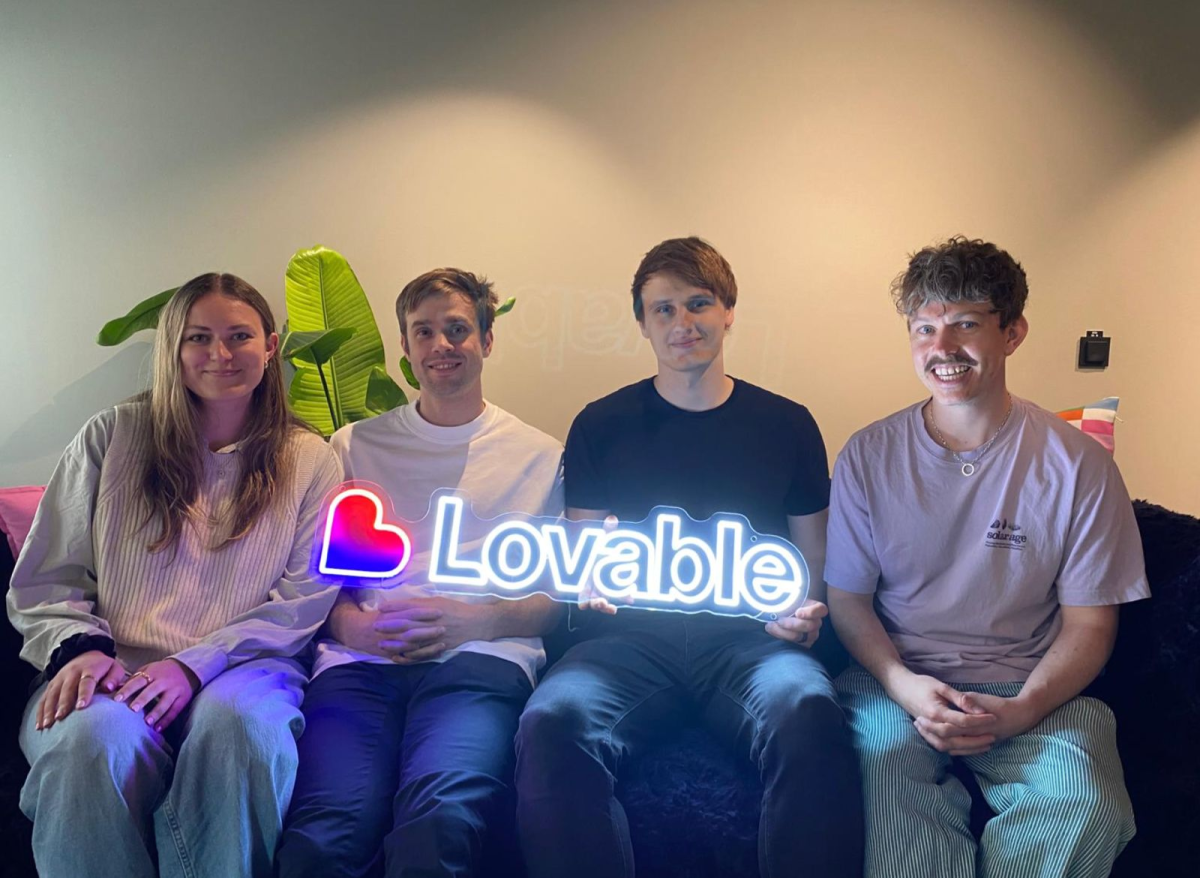
The software development world just witnessed something unprecedented. A European startup called Lovable reached $20 million in annual recurring revenue in just two months, making it potentially the fastest-growing startup in European history. But here's the twist that's making traditional software agencies nervous: they did it by giving non-technical founders the power to build full-stack applications without writing a single line of code. For years, the promise of no-code tools has been the same: anyone can build an app. But the reality has always been different. You'd create a beautiful frontend, get excited about your progress, and then hit the technical cliff. Suddenly you needed to configure databases, set up authentication, manage API keys, and deploy to servers. The "no-code" dream became a "hire-a-developer-anyway" nightmare.
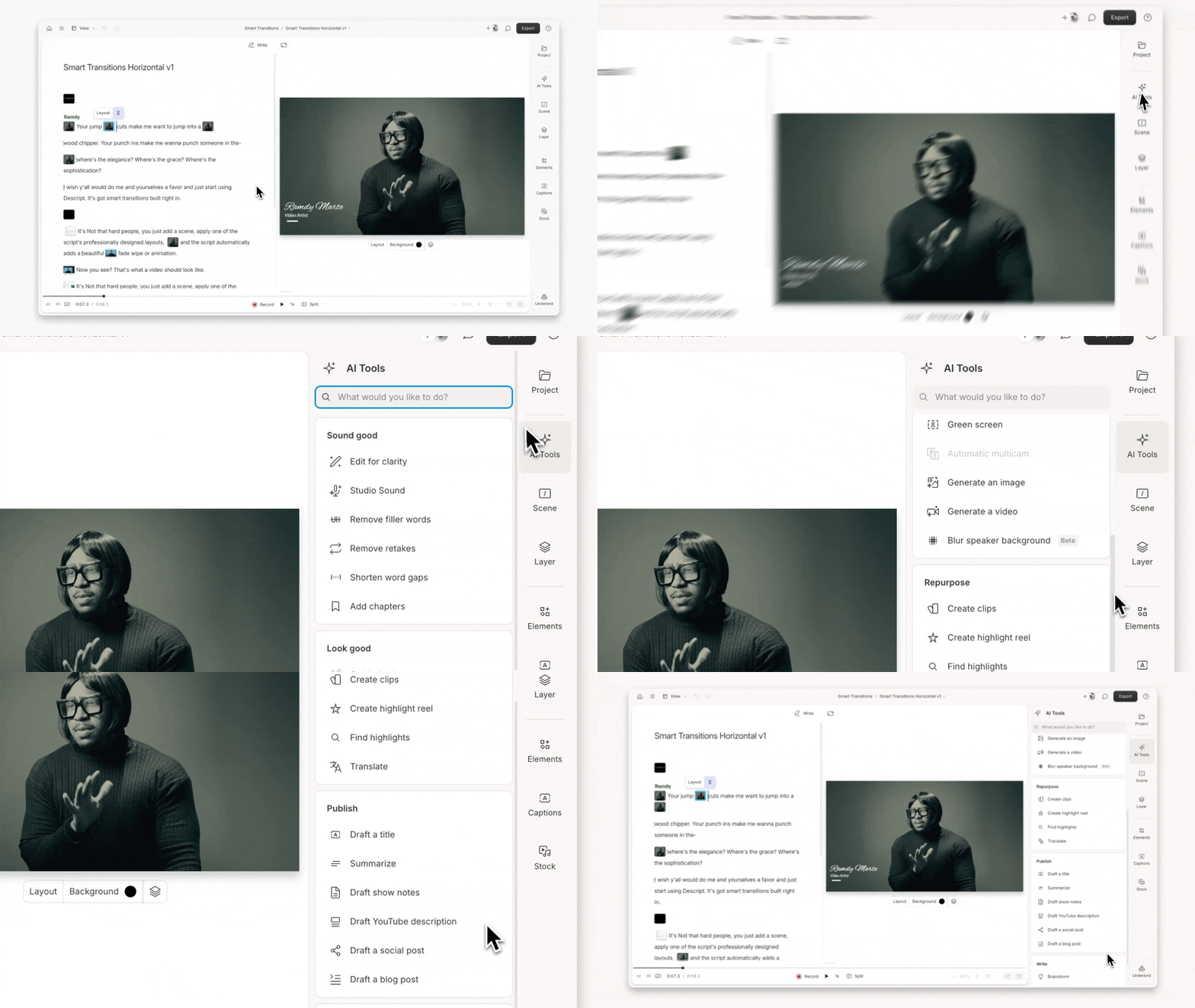
Most people can edit a Google Doc. Delete some words, rearrange sentences, fix typos, add paragraphs. It's intuitive and requires no special training. Now imagine editing video the same way. That's Descript's core innovation, and it transformed video editing from a specialized skill requiring expensive software into something anyone who can edit text can do effectively. Descript started as a transcription tool for podcasters. Record your podcast, upload it to Descript, and get an accurate transcript for show notes. But the founders realized something bigger. If you have a perfect transcript synchronized to audio, you can edit the audio by editing the text. Delete a word from the transcript and that word disappears from the audio. That insight became the foundation for a complete editing platform.
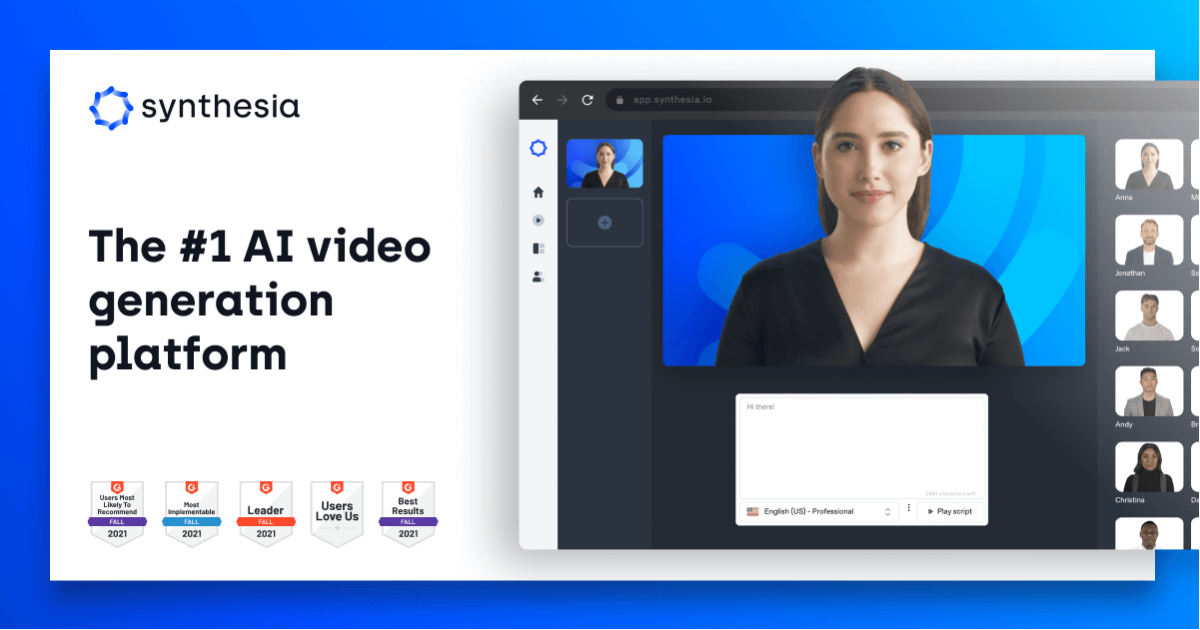
When a company raises $200 million in Series E funding during January 2026, investors are betting on more than potential. They're backing proven market demand and sustainable growth. Synthesia's funding round came alongside a 44% year-over-year increase in headcount to 706 employees, signaling aggressive expansion in a category the company essentially created: AI avatar-based video generation for enterprise training and communications. Corporate training videos have been expensive and slow to produce for decades. Recording a single 10-minute training module traditionally required booking a studio, hiring a presenter, scheduling a videographer, managing multiple takes, and editing everything together. If you needed to update information or translate content, you essentially started over. Synthesia eliminated this entire production workflow by replacing human presenters with AI avatars.
The Overdub voice cloning is impressive but it is not magic. If your original recording has a lot of tonal variation and emotion, the cloned corrections can sound a bit flat by comparison. Worth knowing before you rely on it heavily.
Interesting that the article never once mentions Cursor. That is either intentional positioning or a significant blind spot depending on who your audience is.
From a broader industry trend perspective, this feels like the moment AI video transitions from being a topic of speculation into being a line item in actual production budgets.
That co-design middle path is probably the smartest option. You get meaningful customization without the full organizational overhead and capital exposure of a completely in-house program. It is what Amazon effectively did with its early Trainium chips.
The artificial intelligence industry is entering a new phase of competition, one that extends far beyond the development of advanced language models and neural networks. Companies are now engaged in an intense struggle to secure the computational infrastructure necessary to train and deploy their AI systems. In this context, Anthropic has reportedly begun exploring the possibility of designing and manufacturing its own specialized processors to power Claude, its flagship conversational AI platform, along with its broader suite of artificial intelligence technologies. This strategic consideration emerges at a critical moment in the global AI sector. The exponential growth in model complexity and capability has created unprecedented demand for high-performance computing resources. Sources familiar with the matter indicate that Anthropic is conducting feasibility studies to determine whether developing proprietary semiconductor technology could reduce its dependence on external hardware vendors while ensuring reliable access to the computing power required for its operations.
Meta has just had one of its most important AI moments yet and the early signals are hard to ignore. Following the launch of its newest AI model Muse Spark, the company’s standalone Meta AI app surged dramatically in popularity, hinting at a much larger shift that is beginning to take shape. The release is particularly significant because it marks the first major AI model rollout under Alexandr Wang, who joined Meta to reboot its AI strategy. This is not just another incremental update. It represents a more aggressive and focused push into the AI race. According to data from Appfigures, Meta AI jumped from number 57 to number 5 on the U.S. App Store within a day of the launch. That kind of movement rarely happens without a strong underlying pull from users. It signals not curiosity but intent.
Never thought to pair a whimsical bag with such a sophisticated outfit but it totally works
Join independent creators, thought leaders, and storytellers to share your unique perspectives, and spark meaningful conversations.