That gap is maddening given how much hormonal variation affects hunger patterns in women across a month, not just across a day.
11
Sign up to see more
SignupAlready a member?
LoginBy continuing, you agree to Sociomix's Terms of Service, Privacy Policy

That gap is maddening given how much hormonal variation affects hunger patterns in women across a month, not just across a day.
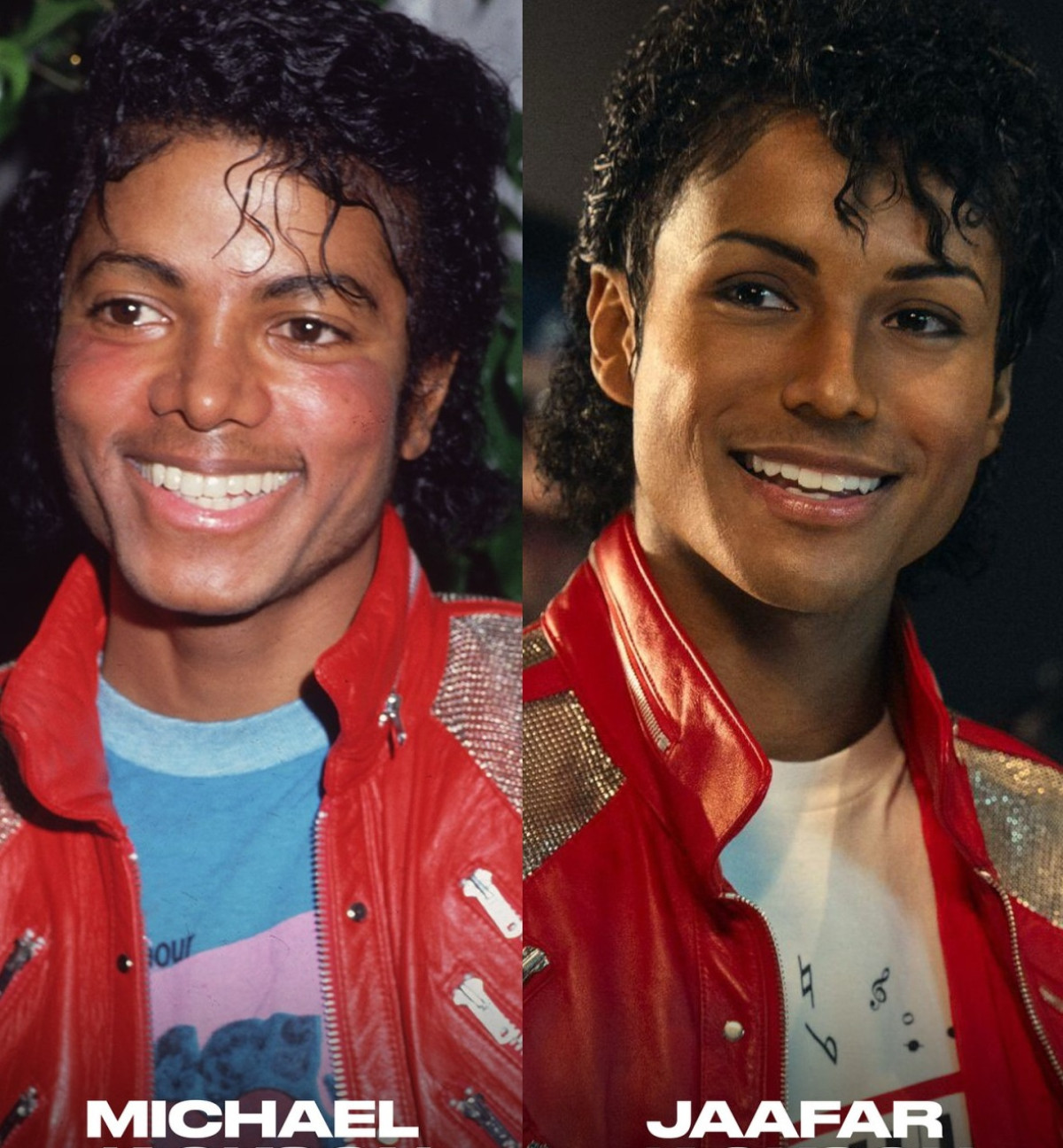
Jaafar Jackson plays Michael Jackson in the 2026 biopic Michael, and the story of how the 29-year-old newcomer landed the role is more interesting than the film itself. It started with a voice note. It involved a two-year global casting search with no formal auditions. It required Jaafar to keep the role secret from his own family for a full year. And it ended with his grandmother Katherine Jackson, the woman who knew Michael longest and loved him most, telling producers that her grandson didn't just resemble her son, he embodied him. After tracking every interview, behind-the-scenes video, and production report released since the film was announced, I can tell you that the choice of Jaafar was not nepotism, not a publicity play, and not the obvious pick everyone assumes it was. It was a hard-earned outcome of the most unusual casting process in recent biopic history, and here is how it actually happened.
Omniscient Reader's Viewpoint made me cry three times. A system manhwa made me cry. Let that sink in.
This was always going to appeal to the Solo Leveling crowd but I think the globe-trotting exploration element has the potential to pull in a completely different audience who would not normally watch dungeon fantasy.
Civil engineering student here. The series is not perfectly accurate on technical details but it gets the mindset right. The satisfaction of solving a structural problem is captured really well.
Three separate times while reading this series a minor character I had just started caring about died unfairly with things unresolved and I had to put my phone down and take a walk. The series earns its reputation.
The fact that this started as a simple podcast transcription tool and evolved into a platform with Sora 2 generative video integration is honestly one of the better product evolution stories in creator tech.
Enterprise momentum is real but there is a legitimate question about what happens when Google decides to bundle Veo into Workspace at a price that makes standalone Runway subscriptions hard to justify.
Accessibility angle deserves way more attention than it gets. Real-time transcription for deaf and hard-of-hearing participants is not a nice-to-have feature, it is a genuine equity tool.
The productivity stat that 62% of users reclaim four or more hours per week sounds like it came from a survey Otter ran about its own users. Should be taken as directional rather than independent evidence.
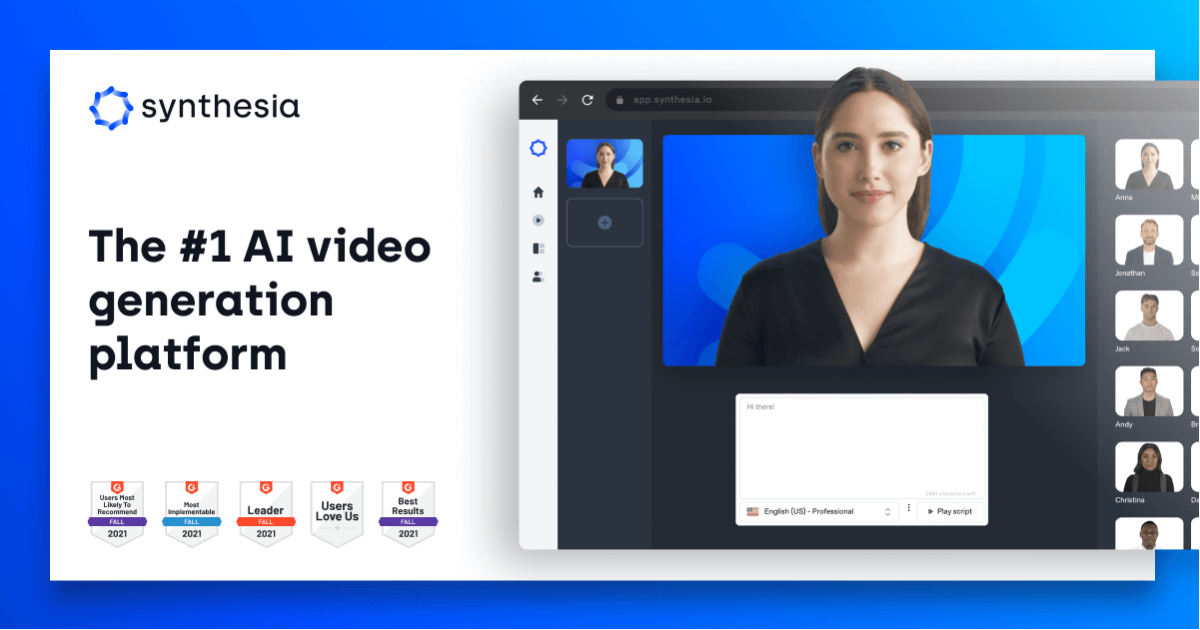
When a company raises $200 million in Series E funding during January 2026, investors are betting on more than potential. They're backing proven market demand and sustainable growth. Synthesia's funding round came alongside a 44% year-over-year increase in headcount to 706 employees, signaling aggressive expansion in a category the company essentially created: AI avatar-based video generation for enterprise training and communications. Corporate training videos have been expensive and slow to produce for decades. Recording a single 10-minute training module traditionally required booking a studio, hiring a presenter, scheduling a videographer, managing multiple takes, and editing everything together. If you needed to update information or translate content, you essentially started over. Synthesia eliminated this entire production workflow by replacing human presenters with AI avatars.
As someone who runs a small agency, the ability to show clients a working prototype that looks production-grade within an hour of a briefing call has changed how we win business. That is real money.
Competition is making both products better faster than either would improve alone. That is the actual headline here.
The part about controlling the full technology stack from silicon to user application is where this becomes something more than just a chip story. That is really a description of what every major tech platform company eventually becomes.
The artificial intelligence industry is entering a new phase of competition, one that extends far beyond the development of advanced language models and neural networks. Companies are now engaged in an intense struggle to secure the computational infrastructure necessary to train and deploy their AI systems. In this context, Anthropic has reportedly begun exploring the possibility of designing and manufacturing its own specialized processors to power Claude, its flagship conversational AI platform, along with its broader suite of artificial intelligence technologies. This strategic consideration emerges at a critical moment in the global AI sector. The exponential growth in model complexity and capability has created unprecedented demand for high-performance computing resources. Sources familiar with the matter indicate that Anthropic is conducting feasibility studies to determine whether developing proprietary semiconductor technology could reduce its dependence on external hardware vendors while ensuring reliable access to the computing power required for its operations.
I actually found a similar floral top at H&M last week for such a good price! The quality is surprisingly nice too
I'm obsessed with how the lace umbrella adds this unexpected romantic element to such a geometric outfit.
Those brown sandals look comfy but I think some leather gladiator sandals would elevate the whole look
Summer outfit featuring navy floral palazzo pants, brown crop top, tortoise accessories, block heels, and coffee-inspired accessories