
That is a fair point but it also means we got a film where the Thriller video shoot scene apparently slaps, so there are tradeoffs.
10
Sign up to see more
SignupAlready a member?
LoginBy continuing, you agree to Sociomix's Terms of Service, Privacy Policy

That is a fair point but it also means we got a film where the Thriller video shoot scene apparently slaps, so there are tradeoffs.
Having spent a lot of time studying how live performance translates to film, I can say that the Talauega brothers choreographing those sequences with someone who actually understands the movement vocabulary made a genuine difference. Those scenes will hold up.
The point about AI cost being higher than human cost for moderate scale operations is the most interesting and underappreciated argument in this whole article. The economics of AI replacement are way messier than the headlines suggest.
The technology sector is experiencing a paradox. While headlines scream about mass layoffs at major tech companies, a critical shortage is quietly building in one of the most essential areas of digital infrastructure. Datacenters, the physical backbone of our digital world, are facing an unprecedented demand surge, and there simply are not enough skilled professionals to build and maintain them. Countries across the globe are rushing to establish their own datacenter infrastructure. From India's ambitious plans to become a datacenter hub to the European Union's push for data sovereignty, and emerging markets in Southeast Asia and Latin America building their first large scale facilities, the construction boom is just beginning.

The infrastructure arc where Lloyd redesigns the entire estate layout for maximum economic efficiency is the chapter where I went from liking this to being fully obsessed.
The question the article raises about whether isolation constitutes wisdom or resignation is going to live in my head for a while.
I have been following Korean webtoon fandom spaces and the original Korean readership is intensely devoted to this series. That kind of grassroots enthusiasm usually means something.
The demonic versus orthodox visual coding is so ingrained now that when Cheon Yeo-Woon uses orthodox-adjacent techniques the color confusion reads as intentional character development. That is artist and writer working in perfect sync.
The manhwa world exploded when Solo Leveling first introduced us to Sung Jinwoo's journey from the weakest hunter to humanity's strongest defender. Now, Solo Leveling Ragnarok brings a fresh perspective to this beloved universe, and fans everywhere are asking the same questions. Can the sequel live up to the original? Do you need to read Solo Leveling first? What makes this continuation worth your time? This guide covers everything you need to know about Solo Leveling Ragnarok, whether you're a longtime fan or someone curious about jumping into the series Solo Leveling Ragnarok is not a reboot or alternate timeline. This is a direct sequel that continues the story years after the original series concluded. The protagonist shifts from Sung Jinwoo to his son, Sung Suho, who must forge his own path in a world still recovering from the catastrophic events his father prevented.

The magic system feels like it's still being established in the earlier chapters. From what I can tell it operates through external formulas rather than internal energy refinement, which is a meaningful distinction that becomes important later.
While Synthesia leads in revenue, HeyGen leads in customer acquisition momentum with 152% year-over-year growth in mid-market adoption. That explosive growth rate allowed HeyGen to close much of the customer count gap by late 2025. The company is winning by making avatar video accessible to smaller teams and individual creators who cannot afford enterprise contracts but need professional video capabilities. HeyGen positioned itself for small and medium businesses, marketing teams, content creators, and solo entrepreneurs rather than enterprise learning and development departments. This market segment values affordability, ease of use, and creative flexibility over governance features and advanced integrations. Average contract values are roughly one-third of Synthesia's, reflecting this different customer profile.

Sports anime and manga have delivered countless memorable series over the decades, from Slam Dunk's basketball brilliance to Haikyuu's volleyball excellence. These stories typically follow familiar patterns: talented but inexperienced protagonist joins a team, forms bonds with teammates, faces rivals, grows through competition, and ultimately pursues championship glory. The formula works because it taps into universal themes about effort, teamwork, and self-improvement. The Boxer, created by JH, takes everything you expect from sports stories and systematically deconstructs it. The protagonist doesn't love boxing. He doesn't form deep bonds with teammates. He doesn't overcome challenges through friendship and determination. Instead, the manhwa presents one of the darkest, most psychologically complex examinations of combat sports ever created, wrapped in stunningly minimalist artwork that elevates the narrative to something approaching high art.

The pricing structure is sneakier than the article implies. Starter plan gives you 10 video minutes per month, which sounds fine until you realize one training module eats half that. You hit enterprise pricing faster than you expect.
The fact that early customers are using both Synthesia and HeyGen for different purposes rather than picking one is actually a bullish signal for the whole category. It means the market is expanding rather than consolidating around a winner takes all dynamic.
The multilingual reach of this series is wild. It has official translations in so many languages, which shows the global appetite is clearly there.
One thing I wish the article covered more is the international creator dynamic. HeyGen supporting over 140 languages is a massive story in markets like Southeast Asia, Latin America, and sub-Saharan Africa where local creator ecosystems are booming but production costs were historically prohibitive.
Honestly the uncanny valley problem has mostly been solved for internal corporate use. Nobody expects a training video presenter to have the warmth of a live teacher. The standard is just professional and clear.
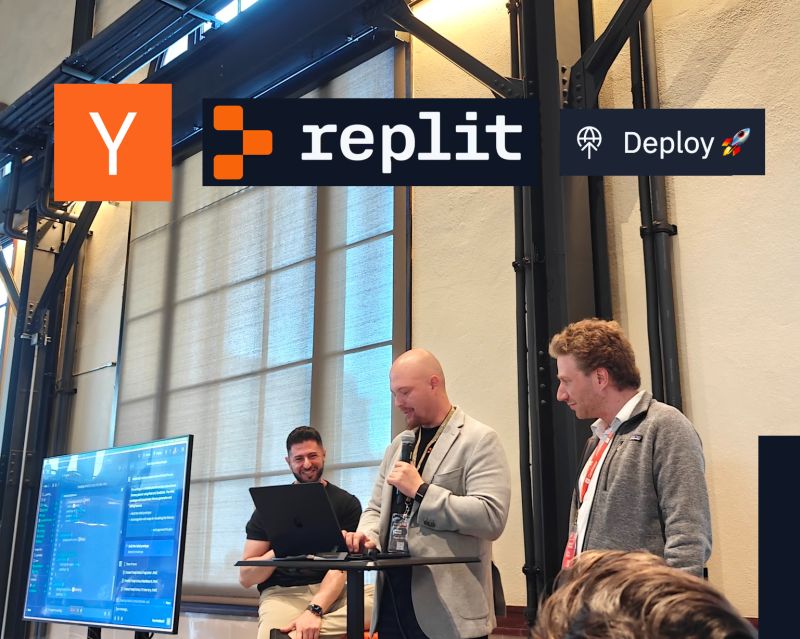
When a company's revenue jumps from $10 million to $100 million in nine months, you pay attention. When that growth comes from an AI agent that builds entire applications autonomously, you realize something fundamental just changed in software development. Replit Agent represents that change, and the numbers prove developers are ready for it. Replit started as a browser-based coding environment for education. Students could write Python or JavaScript without installing anything locally. Teachers loved it because setup time vanished. But the company saw something bigger. If you could run code in the browser, why not let AI write that code? That question led to Agent 3, an AI that doesn't just suggest code completions. It builds entire applications from scratch.
The collaboration workspace is genuinely where Runway separates from tools that are just generation engines. Iteration and feedback loops between team members is where production time actually lives.
The AI video generation race just got a clear winner. Runway Gen-4.5 topped the Video Arena leaderboard with a 1,247 Elo score, surpassing both Google Veo 3 and OpenAI Sora 2. For those unfamiliar with Elo ratings, this is the same system used to rank chess players and competitive games. A higher score means more wins in head-to-head comparisons. When real users compare videos side by side without knowing which AI generated them, they consistently choose Runway's output. Runway didn't start as an enterprise video tool. It began as a playground for artists and filmmakers who wanted to experiment with AI-generated visuals. The early versions produced fascinating but inconsistent results. Sometimes you'd get stunning cinematic footage. Other times you'd get distorted motion and unrealistic physics. Gen-4.5 changed that equation by achieving breakthrough consistency in motion quality and physical accuracy.