Slay_Season



Tomb Raider King Returns With Even More Dungeon Crawling Action
When Tomb Raider King first exploded onto the manhwa scene, it brought a fresh take on dungeon crawling stories by combining archaeological adventure with ruthless protagonist energy and a treasure-hunting premise that felt genuinely different from typical gate and dungeon narratives. The series built a dedicated fanbase through its satisfying blend of historical artifact powers, strategic relic acquisition, and a protagonist who wasn't afraid to be morally gray in pursuit of his goals. Now, with the anime adaptation confirmed for 2026 as one of the most anticipated manhwa-to-anime projects, Tomb Raider King is experiencing a resurgence. New readers are discovering the series while longtime fans eagerly await seeing Jooheon Suh's relic-hunting adventures brought to life with animation. The timing couldn't be better, as the series has built enough content to support a substantial adaptation while maintaining momentum in its ongoing storyline.

401
Save
Honestly the genre-hopping that some readers flag as a flaw is something I see as a feature. Each arc testing the story in a different genre mode keeps both the characters and the reader off balance in productive ways.
11

The fact that the Solo Leveling franchise topped charts consistently from 2019 through 2024 on major platforms tells you this isn't a one-hit trend. Ragnarok is a continuation of something with real staying power.
21
The ufotable rumor has been floating around for a while but nothing official confirms it. Demon Slayer level visual quality applied to ORV action scenes though, just thinking about it.
23

Speaking from experience reading manhwa before adaptations, the series that adapts worst are always the ones with the strongest visual identity in the webtoon. Gosu's line work is so distinctive it will be hard to translate.
17

ORV anime being handled by Aniplex means the production quality ceiling is already set very high. Whether it actually reaches that ceiling is another question entirely but the potential is genuinely exciting.
20

Nano Machine Has The Best Combat Art In Manhwa Right Now
In a medium filled with talented artists producing stunning work, making a claim about any series having the "best" art feels bold. Yet Nano Machine consistently delivers combat sequences so fluid, detailed, and visually innovative that even readers who don't typically care about martial arts stories find themselves captivated by the sheer spectacle on display. The series combines traditional murim aesthetics with futuristic sci-fi elements, creating a unique visual identity that stands apart from typical cultivation manhwa. The nano machine implanted in protagonist Cheon Yeo-Woon's body doesn't just give him power. It becomes a storytelling device that allows the artist to visualize techniques, energy flows, and combat analysis in ways other series can't replicate.

491
Save

Hot take: the real innovation here is not the technology, it is the interaction design. Dozens of tools had decent transcription before Descript. Nobody made editing the actual interface until Descript did.
18
For anyone in healthcare, the HIPAA compliance Otter achieved last year matters enormously. Clinical teams that were locked out of these tools for compliance reasons now have a path to use them for documentation and care coordination.
0

That token burn issue gets better with experience. Learning to be precise in your prompts and understanding when to lock certain files makes a massive difference. Treat it like prompting a contractor, not a magic wand.
15
Honestly the uncanny valley problem has mostly been solved for internal corporate use. Nobody expects a training video presenter to have the warmth of a live teacher. The standard is just professional and clear.
19

The article mentions Act-One for character performance capture and glosses over it way too quickly. That feature is basically DIY motion capture. For indie animators this is a huge deal.
7
The Mythos name is such a choice. Very much not a subtle signal about what they think they've built.
7
The Browser Tab That Replaced Your Entire Development Team
Forty million dollars in annual recurring revenue. Six months. One browser-based platform. Those numbers would be impressive for any software company, but for Bolt.new, they represent something more significant: the moment when development environments moved permanently into the cloud and never looked back. Traditional software development has always required setup. Install Node.js, configure your environment, manage dependencies, set up local servers, troubleshoot version conflicts. Before writing a single line of code, developers spend hours or even days preparing their machines. Junior developers often spend their first week just getting their environment working. Bolt.new eliminated all of that with WebContainers technology.
306
Save
The OpenAI Vs Anthropic Rivalry In 2026 Is Getting Personal And Very Expensive
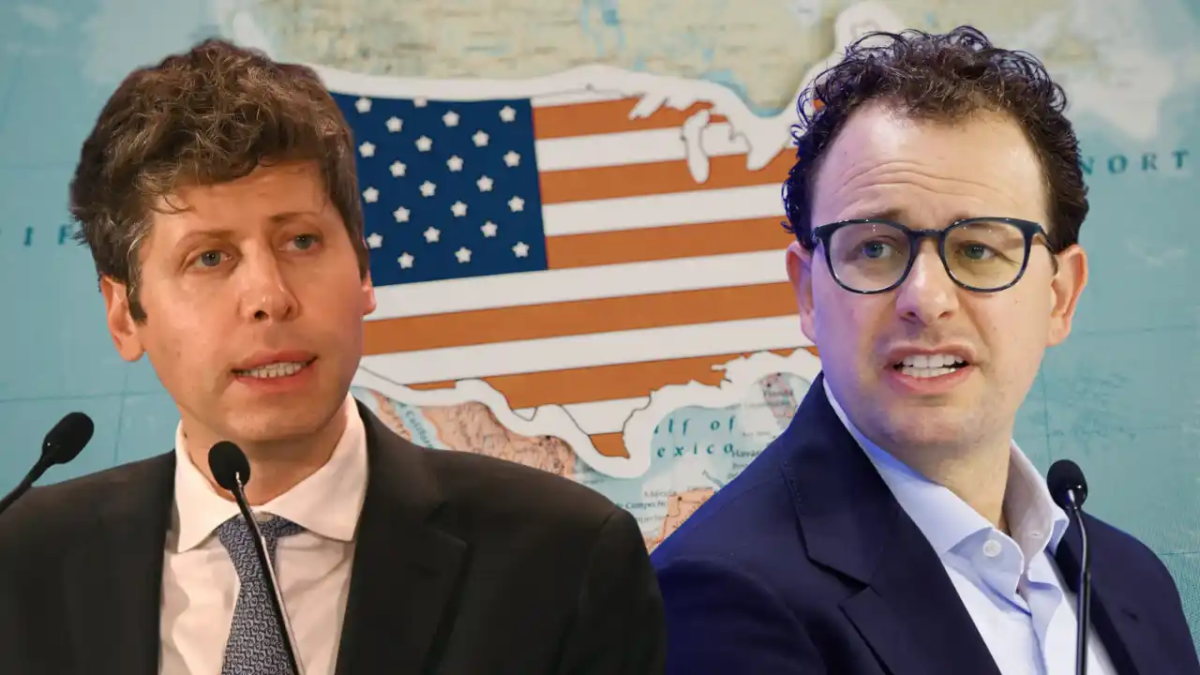
There's a photograph from February 2026 that pretty much sums up the state of AI right now. At the India AI Impact Summit in New Delhi, Indian Prime Minister Narendra Modi invited the world's tech leaders onstage for a group photo. Everyone held hands. Well, almost everyone. Sam Altman of OpenAI and Dario Amodei of Anthropic, standing right next to each other, refused to clasp hands and instead raised their fists separately. The internet, predictably, lost its mind. An awkward moment between OpenAI CEO Sam Altman and Anthropic CEO Dario Amodei at an AI Summit captured the increasingly icy relations between two rival tech leaders who started off as colleagues. That's not just petty drama. It's a window into what may be the most consequential corporate rivalry in the technology world right now, one that's playing out in boardrooms, courtrooms, Super Bowl ads, and billion-dollar compute deals all at once.
291
Save

AWS already applying Mythos to critical internal codebases and finding additional opportunities even in well-tested environments tells you something important. These are codebases with dedicated security teams doing continuous review. And there were still more vulnerabilities.
24

Crypto Market Surges Past $2.5 Trillion As Short Squeeze Propels Bitcoin Toward $73,000
The global cryptocurrency market capitalization has climbed back above the $2.5 trillion threshold, fueled by a massive liquidation of short positions and renewed institutional interest. Geopolitical developments and shifting investor sentiment combined to create a powerful rally that caught bearish traders off guard, resulting in substantial losses for those betting against the market. According to data from CoinGecko, the total market capitalization of all cryptocurrencies combined increased 1.4% to reach $2.52 trillion on Friday, April 10. Bitcoin experienced a notable surge of over 3%, briefly touching the $73,000 mark before consolidating around $72,000 at the time of writing. Ethereum demonstrated equally impressive strength, pushing past the $2,200 level, while the majority of top 10 cryptocurrencies by market capitalization also posted significant gains.

424
Save
Not gonna lie, I added to my position around $68K last week purely because the funding rates were screaming short squeeze incoming. Nice when the thesis plays out.
1

OpenAI Intensifies AI Coding War With New $100 ChatGPT Pro Tier Targeting Anthropic's Dominance
OpenAI's latest subscription offering represents its most aggressive move yet to reclaim market share in the rapidly expanding AI-powered coding assistant sector
257
Save