Genuinely curious whether the how to align meals with circadian rhythms approach works differently for women vs men. Hormonal cycles seem like they would shift things considerably.
0
Sign up to see more
SignupAlready a member?
LoginBy continuing, you agree to Sociomix's Terms of Service, Privacy Policy

Genuinely curious whether the how to align meals with circadian rhythms approach works differently for women vs men. Hormonal cycles seem like they would shift things considerably.
I keep seeing people online ask whether Jaafar Jackson is a good actor or just a skilled impersonator. The article addresses this honestly and I think the answer is both, depending on which scenes you are watching.
My big question before starting was whether Copycat manhwa is better than Bastard, and honestly after 10 chapters I still cannot decide. They feel like completely different kinds of disturbing.
The question the article raises about whether isolation constitutes wisdom or resignation is going to live in my head for a while.
Nano Machine and Peerless Dad are the two series I use to explain to people why murim is worth their time. Different reasons but both completely rewarding.
Every manhwa on this list is worth reading but they all share one flaw. Once you've read enough of them the stat screen reveals and level up moments stop feeling surprising because the formula is so predictable.
In a manhwa landscape dominated by dungeon crawling, regression narratives, and power fantasies, The Greatest Estate Developer stands out by asking a simple question: what if the protagonist's greatest weapon wasn't a sword or magic system, but civil engineering knowledge? This bizarre premise transforms into one of the most entertaining, genuinely funny, and surprisingly heartfelt series currently running, proving that innovation in storytelling comes from unexpected places. The series takes the familiar isekai setup where a modern person finds themselves in a fantasy world and completely subverts expectations. Instead of becoming an adventurer or hero, protagonist Kim Suho uses his engineering knowledge to revolutionize construction, infrastructure, and economic development. What sounds like it should be boring becomes absolutely captivating through sharp writing, excellent comedic timing, and genuine passion for showing how infrastructure improves lives.

The psychological dimension of this series is what the article nails perfectly. Regression doesn't erase trauma. Bigang has centuries of memories of things that technically haven't happened yet but are completely real to him. That's a heavy psychological burden most manhwa just ignores.
When Tomb Raider King first exploded onto the manhwa scene, it brought a fresh take on dungeon crawling stories by combining archaeological adventure with ruthless protagonist energy and a treasure-hunting premise that felt genuinely different from typical gate and dungeon narratives. The series built a dedicated fanbase through its satisfying blend of historical artifact powers, strategic relic acquisition, and a protagonist who wasn't afraid to be morally gray in pursuit of his goals. Now, with the anime adaptation confirmed for 2026 as one of the most anticipated manhwa-to-anime projects, Tomb Raider King is experiencing a resurgence. New readers are discovering the series while longtime fans eagerly await seeing Jooheon Suh's relic-hunting adventures brought to life with animation. The timing couldn't be better, as the series has built enough content to support a substantial adaptation while maintaining momentum in its ongoing storyline.

In a medium filled with talented artists producing stunning work, making a claim about any series having the "best" art feels bold. Yet Nano Machine consistently delivers combat sequences so fluid, detailed, and visually innovative that even readers who don't typically care about martial arts stories find themselves captivated by the sheer spectacle on display. The series combines traditional murim aesthetics with futuristic sci-fi elements, creating a unique visual identity that stands apart from typical cultivation manhwa. The nano machine implanted in protagonist Cheon Yeo-Woon's body doesn't just give him power. It becomes a storytelling device that allows the artist to visualize techniques, energy flows, and combat analysis in ways other series can't replicate.

I picked this up expecting a power fantasy and ended up crying at 2am. Not what I planned for a Tuesday.
The GitHub integration is a game changer for hybrid workflows. Start a prototype in Bolt, hand it off to a GitHub repo when it gets complex, continue in your normal dev environment. That handoff being smooth is what makes it actually useful for teams.
Watching the anime industry catch up to what manhwa readers have known for years is a specific kind of satisfaction. These stories have always been this good. The infrastructure to reach global audiences just finally caught up.
As a newcomer who just finished the manhwa last week, the ending destroyed me. If the anime gets that far I genuinely do not know how I will cope watching it animated.
Teams with consistent participants get better speaker attribution over time according to the article. That is genuinely useful for recurring standups where you want to track who said what across weeks.
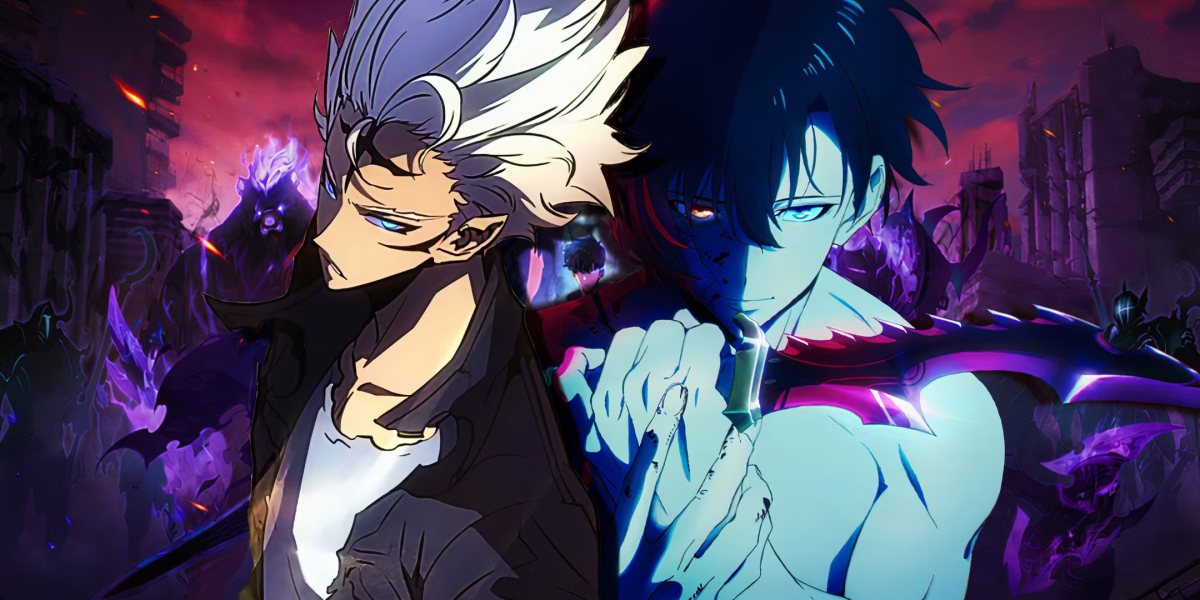
The manhwa world exploded when Solo Leveling first introduced us to Sung Jinwoo's journey from the weakest hunter to humanity's strongest defender. Now, Solo Leveling Ragnarok brings a fresh perspective to this beloved universe, and fans everywhere are asking the same questions. Can the sequel live up to the original? Do you need to read Solo Leveling first? What makes this continuation worth your time? This guide covers everything you need to know about Solo Leveling Ragnarok, whether you're a longtime fan or someone curious about jumping into the series Solo Leveling Ragnarok is not a reboot or alternate timeline. This is a direct sequel that continues the story years after the original series concluded. The protagonist shifts from Sung Jinwoo to his son, Sung Suho, who must forge his own path in a world still recovering from the catastrophic events his father prevented.
Still not convinced the 70 percent time savings claim holds up for complex multi-guest interview content where you are making a lot of editorial decisions about structure. Simple cleanup, yes. Complex restructuring, that number feels inflated.
Enterprise margins at 80% on some accounts is wild. For a company that spent years unable to monetize millions of users, that flip in revenue quality is just as impressive as the top line growth.
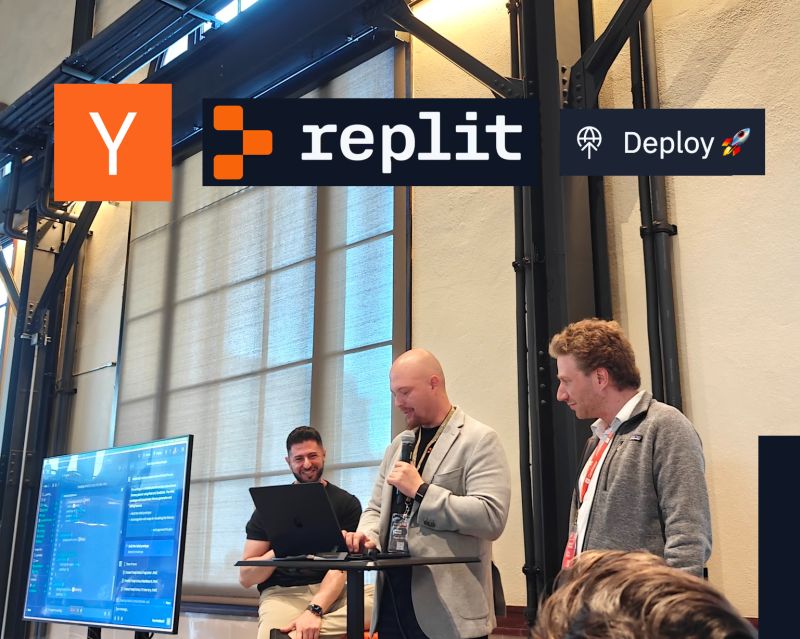
When a company's revenue jumps from $10 million to $100 million in nine months, you pay attention. When that growth comes from an AI agent that builds entire applications autonomously, you realize something fundamental just changed in software development. Replit Agent represents that change, and the numbers prove developers are ready for it. Replit started as a browser-based coding environment for education. Students could write Python or JavaScript without installing anything locally. Teachers loved it because setup time vanished. But the company saw something bigger. If you could run code in the browser, why not let AI write that code? That question led to Agent 3, an AI that doesn't just suggest code completions. It builds entire applications from scratch.
What no one is discussing is the environmental cost of running these AI generation models at scale for millions of projects. Every prompt runs through massive compute infrastructure. That is not free in any meaningful sense.