Retirements are a massive factor that the article mentions but does not emphasize enough. There are roughly twice as many datacenter workers over 60 as there are under 30. That knowledge transfer problem is coming fast.
18
Sign up to see more
SignupAlready a member?
LoginBy continuing, you agree to Sociomix's Terms of Service, Privacy Policy

Retirements are a massive factor that the article mentions but does not emphasize enough. There are roughly twice as many datacenter workers over 60 as there are under 30. That knowledge transfer problem is coming fast.
Muted color palette mention in the article is underselling it. The way the colors shift subtly depending on the emotional content of a scene is the kind of detail you only notice on a reread.
The comedy and drama balance in this is better than shows that try to be prestige dramas, which is a wild thing to say about a manhwa where the protagonist gets excited about proper road grading.
The main difference is some dialogue tweaks and the Peace Land arc has reworked character motivations in the published novel version. For most readers the manhwa is fine as an anime source. The bones are the same.
Genuinely think the regression genre has had more narrative innovation in the past two years than any other manhwa subgenre. The murim regression scene in particular keeps finding new angles on a formula that should feel exhausted by now.
The comparison between Gongja's heroism and the traditional heroism characters feels relevant to a broader shift happening in fiction right now. Readers are increasingly skeptical of the effortless charismatic hero type. This series gives you something more honest.
Every regression manhwa eventually runs into the knowledge problem. Your protagonist knows too much and outcomes become predictable. The alien invasion context helps because the demon world is complex enough that Bigang's knowledge has genuine limits.
Does the novel go further into Gongja's psychological state after hundreds of deaths, or does the manhwa cover that sufficiently? Curious whether the source material is worth seeking out separately.
Suho's self-doubt arc in the early chapters hit harder than expected. The idea of growing up knowing your father is essentially a god and then having to prove yourself worthy of even a fraction of that is genuinely compelling.
The year 2026 marks a pivotal moment in the evolution of manhwa as a medium. What started as a trickle of Korean comics receiving anime adaptations has become a flood, with at least fifteen confirmed projects bringing beloved manhwa to animated life. This explosive growth wasn't accidental but the inevitable result of Solo Leveling's massive success proving that manhwa adaptations can compete with traditional manga anime in quality, popularity, and profitability. Studios across Japan and Korea are investing heavily in manhwa properties, recognizing that Korean storytelling brings fresh perspectives, innovative premises, and built-in fanbases eager to see their favorite series animated. The diversity of genres receiving adaptations demonstrates that manhwa appeal extends far beyond action and fantasy into romance, psychological thriller, sports, and slice-of-life territories.

The psychological scars from brainwashing angle needs more pages dedicated to it. The article touches on it, the manhwa touches on it, but it deserves much deeper exploration as the series continues.
Does the free plan actually work for normal use, or is the 300 minutes monthly limit a constant wall? Asking because that is less than one hour per week for a single person.
Tried building a complex form with conditional logic and multi-step validation. v0 got 80 percent of the way there on the first prompt and the remaining 20 percent took maybe 30 minutes of manual work. That is still a massive win over starting cold.
Honestly the uncanny valley problem has mostly been solved for internal corporate use. Nobody expects a training video presenter to have the warmth of a live teacher. The standard is just professional and clear.
Tried HeyGen for a product demo series for a SaaS I help run. Honest review: the lip sync on Avatar III is still a bit off on certain consonant sounds, but Avatar IV is noticeably sharper. For anything over two minutes the quality difference becomes obvious.
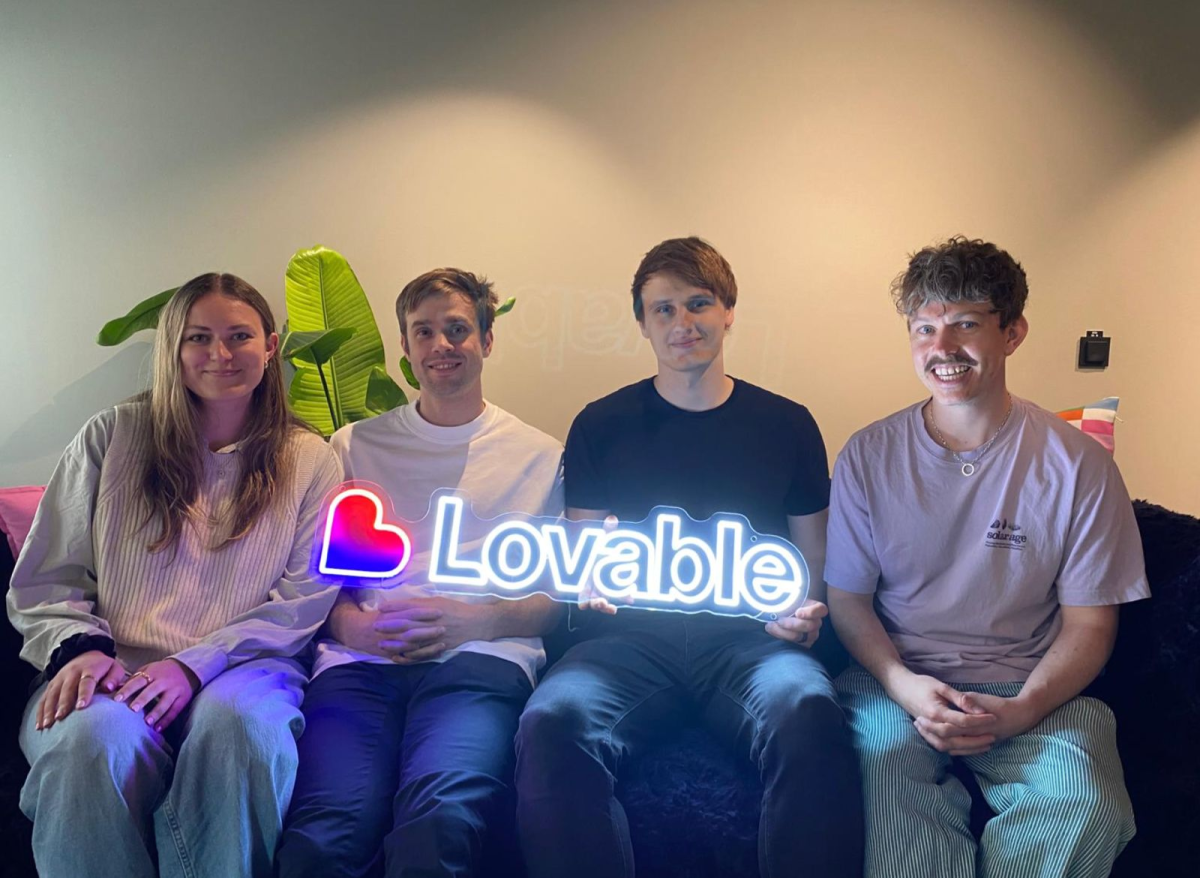
The software development world just witnessed something unprecedented. A European startup called Lovable reached $20 million in annual recurring revenue in just two months, making it potentially the fastest-growing startup in European history. But here's the twist that's making traditional software agencies nervous: they did it by giving non-technical founders the power to build full-stack applications without writing a single line of code. For years, the promise of no-code tools has been the same: anyone can build an app. But the reality has always been different. You'd create a beautiful frontend, get excited about your progress, and then hit the technical cliff. Suddenly you needed to configure databases, set up authentication, manage API keys, and deploy to servers. The "no-code" dream became a "hire-a-developer-anyway" nightmare.
Eight of the Fortune 10 are Anthropic customers. I keep rereading that because it doesn't fully compute. A company that was essentially pre-revenue in 2024 is now embedded in the largest corporations on earth.
Honestly the 15 minute window is fine for fixing typos but it feels a little arbitrary. Why not 30? Why not an hour? Did someone at Meta just spin a wheel?
Yes, they committed explicitly to publishing within 90 days. Between the public disclosure requirement and the findings-sharing mandate for partners, there is actually more transparency baked into this than most enterprise security programs deliver.
The cloud-versus-local architecture difference has real implications for security-conscious developers that both marketing departments gloss over. Your code going into OpenAI's cloud sandboxes versus being processed locally by Claude is a fundamentally different trust model.