YA rating threw me off too. The emotional content is definitely heavier than most YA I have read. Maybe the absence of graphic violence or explicit content keeps it in that category technically.
21
Sign up to see more
SignupAlready a member?
LoginBy continuing, you agree to Sociomix's Terms of Service, Privacy Policy

YA rating threw me off too. The emotional content is definitely heavier than most YA I have read. Maybe the absence of graphic violence or explicit content keeps it in that category technically.
As someone who got into manhwa specifically because of Solo Leveling's anime, this list is both exciting and overwhelming. Where do you even start when fifteen series are launching in one year.
The article is well researched but it slightly overcredits Solo Leveling for the manhwa adaptation boom. Tower of God and Noblesse got anime years earlier. Solo Leveling accelerated the momentum but did not create it alone.
In a medium filled with talented artists producing stunning work, making a claim about any series having the "best" art feels bold. Yet Nano Machine consistently delivers combat sequences so fluid, detailed, and visually innovative that even readers who don't typically care about martial arts stories find themselves captivated by the sheer spectacle on display. The series combines traditional murim aesthetics with futuristic sci-fi elements, creating a unique visual identity that stands apart from typical cultivation manhwa. The nano machine implanted in protagonist Cheon Yeo-Woon's body doesn't just give him power. It becomes a storytelling device that allows the artist to visualize techniques, energy flows, and combat analysis in ways other series can't replicate.

Vibe editing is a fun framing but I hope people stay skeptical about handing full creative judgment to AI assistants. The editorial decisions that make content actually compelling are still human decisions. The AI speeds up the mechanical work.
The fact that the article casually mentions video extension up to 40 additional seconds like that is obvious should not be overlooked. Early AI video was 4 seconds of chaos. 40 seconds of coherent extension is a completely different product category.
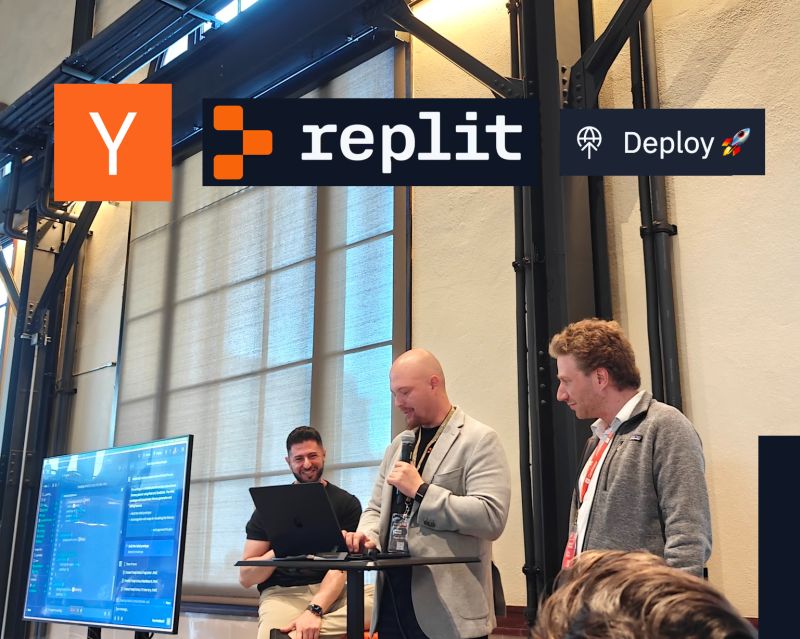
When a company's revenue jumps from $10 million to $100 million in nine months, you pay attention. When that growth comes from an AI agent that builds entire applications autonomously, you realize something fundamental just changed in software development. Replit Agent represents that change, and the numbers prove developers are ready for it. Replit started as a browser-based coding environment for education. Students could write Python or JavaScript without installing anything locally. Teachers loved it because setup time vanished. But the company saw something bigger. If you could run code in the browser, why not let AI write that code? That question led to Agent 3, an AI that doesn't just suggest code completions. It builds entire applications from scratch.
Hands are still not great in Gen-4.5, better than before, but if the camera lingers on hands doing detailed tasks you will still see artifacts. Close-up hand work is the benchmark I use for all models and none have fully cracked it.
Genuinely curious, does anyone know if Anthropic's safety focus actually influences which enterprise customers choose them, or is it mostly just Claude Code being better at coding tasks? Because those are very different stories about why they're winning.
As someone who reviewed vendor options for an L&D tech stack refresh last year, the SOC 2 Type II compliance is not optional for enterprise procurement. A lot of competing tools in this space cannot clear that bar. That alone narrows the field significantly.
While Synthesia leads in revenue, HeyGen leads in customer acquisition momentum with 152% year-over-year growth in mid-market adoption. That explosive growth rate allowed HeyGen to close much of the customer count gap by late 2025. The company is winning by making avatar video accessible to smaller teams and individual creators who cannot afford enterprise contracts but need professional video capabilities. HeyGen positioned itself for small and medium businesses, marketing teams, content creators, and solo entrepreneurs rather than enterprise learning and development departments. This market segment values affordability, ease of use, and creative flexibility over governance features and advanced integrations. Average contract values are roughly one-third of Synthesia's, reflecting this different customer profile.
The article buries what might be the most important line, that over 99 percent of the vulnerabilities found have not yet been patched. That is the live exposure number everyone should be asking about.
The artificial intelligence industry is entering a new phase of competition, one that extends far beyond the development of advanced language models and neural networks. Companies are now engaged in an intense struggle to secure the computational infrastructure necessary to train and deploy their AI systems. In this context, Anthropic has reportedly begun exploring the possibility of designing and manufacturing its own specialized processors to power Claude, its flagship conversational AI platform, along with its broader suite of artificial intelligence technologies. This strategic consideration emerges at a critical moment in the global AI sector. The exponential growth in model complexity and capability has created unprecedented demand for high-performance computing resources. Sources familiar with the matter indicate that Anthropic is conducting feasibility studies to determine whether developing proprietary semiconductor technology could reduce its dependence on external hardware vendors while ensuring reliable access to the computing power required for its operations.

My honest read on this is that Anthropic is doing exactly what a well-run company should do at this stage. They are studying their options while they still have financial breathing room rather than waiting until they are desperate. That is just good strategic planning.
The problem is that who gets to define what counts as harmful content is always a political question. Giving any platform that level of message access hands them the power to make those definitions however they like.
She and Anne Hathaway in the front row together is honestly a fun image. Two people who understand the power of a considered outfit.
Not sure about mixing the pink perfume bottle with this color scheme. A more neutral scent packaging would work better