Ancestrally this all makes total sense. Humans evolved eating mostly during daylight and fasting through the night. We did not evolve with refrigerators and overhead lighting making midnight snacks effortless.
7
Sign up to see more
SignupAlready a member?
LoginBy continuing, you agree to Sociomix's Terms of Service, Privacy Policy

Ancestrally this all makes total sense. Humans evolved eating mostly during daylight and fasting through the night. We did not evolve with refrigerators and overhead lighting making midnight snacks effortless.
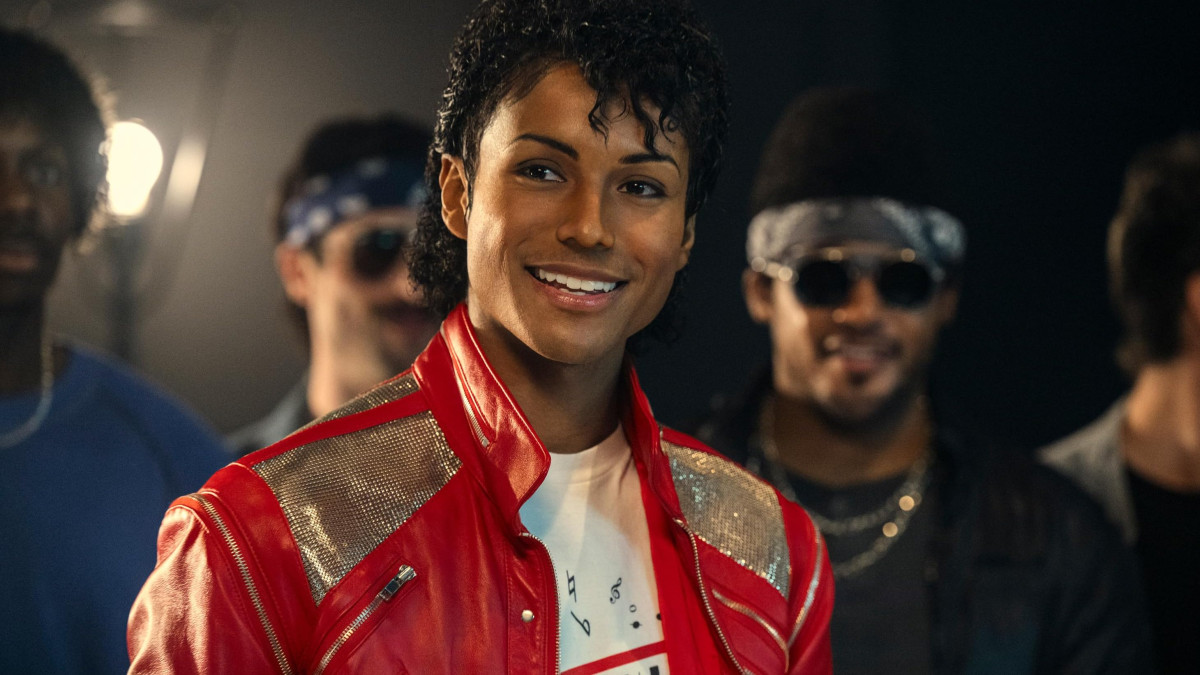
The Michael movie review verdict is in, and it is more complicated than the 26% Rotten Tomatoes score suggests. Antoine Fuqua's long-delayed Michael Jackson biopic, simply titled Michael, hit theaters this weekend with Jaafar Jackson playing his late uncle, and the critical response has been brutal. The BBC gave it one star. Roger Ebert's site called it a filmed playlist in search of a story. Yet early audience reactions on social media have been warmer, ticket pre-sales suggest an $80 million opening, and Variety thought it worked as an engrossing middle-of-the-road biopic. After tracking coverage across more than a dozen outlets over the past 48 hours, I think the honest answer to "should you watch this?" depends almost entirely on what you want from a music biopic, and this guide breaks down exactly what the film delivers, what it skips, and who will actually enjoy sitting through its two-hour-and-nine-minute runtime.
Can someone explain the Itarim and outer gods situation without huge spoilers? The article teases it but doesn't really explain the threat level.
Unpopular opinion but the story itself is pretty formulaic and the art is doing heavy lifting that the writing sometimes does not deserve.
The opponents Yu faces throughout the series function almost like different philosophical arguments walking into the ring to be tested and destroyed. The series is basically doing battle of ideas through athletic combat.
It is interesting that this is rated Young Adult on Webtoon because the themes feel very much like adult literary fiction dressed in fantasy clothing.
The manhwa community has been buzzing with anticipation ever since MAPPA Studio announced their adaptation of Omniscient Reader's Viewpoint. With a spring 2026 release date confirmed and 24 episodes planned for the first season, this adaptation represents one of the most ambitious manhwa-to-anime projects ever undertaken. But what makes this series so special that it warranted such a massive production commitment? If you're hearing about Omniscient Reader's Viewpoint for the first time or wondering whether the hype is justified, this guide will prepare you for what promises to be one of the biggest anime releases of the year. We'll cover the story premise, why it's captured millions of readers worldwide, what MAPPA's involvement means, and everything else you need to know before the first episode airs

In a medium filled with talented artists producing stunning work, making a claim about any series having the "best" art feels bold. Yet Nano Machine consistently delivers combat sequences so fluid, detailed, and visually innovative that even readers who don't typically care about martial arts stories find themselves captivated by the sheer spectacle on display. The series combines traditional murim aesthetics with futuristic sci-fi elements, creating a unique visual identity that stands apart from typical cultivation manhwa. The nano machine implanted in protagonist Cheon Yeo-Woon's body doesn't just give him power. It becomes a storytelling device that allows the artist to visualize techniques, energy flows, and combat analysis in ways other series can't replicate.

The part of the article about how supporting characters die messily and unfairly with regrets and things left unsaid rather than heroically is the most accurate description of what makes this emotionally different from standard fare.
The claim that this builds trust because people reference transcripts in legal contexts is doing a lot of work given the active litigation currently challenging whether this tool violated recording laws. Trust is complicated.
Forty million dollars in annual recurring revenue. Six months. One browser-based platform. Those numbers would be impressive for any software company, but for Bolt.new, they represent something more significant: the moment when development environments moved permanently into the cloud and never looked back. Traditional software development has always required setup. Install Node.js, configure your environment, manage dependencies, set up local servers, troubleshoot version conflicts. Before writing a single line of code, developers spend hours or even days preparing their machines. Junior developers often spend their first week just getting their environment working. Bolt.new eliminated all of that with WebContainers technology.
Hot take: HeyGen is not a video tool. It is a leverage machine for one-person businesses. The implications of that have barely been understood yet.
The Overdub voice cloning is impressive but it is not magic. If your original recording has a lot of tonal variation and emotion, the cloned corrections can sound a bit flat by comparison. Worth knowing before you rely on it heavily.
The post mentions LMS integration was added. For anyone running employee training or online education that is a meaningful feature. Getting video content directly into the learning environment where learners already are removes a whole distribution headache.
Video Agents that auto-generate content based on triggers and data sources sounds incredible on paper. New hire paperwork triggering a personalized onboarding video is genuinely useful. The part that makes me nervous is who audits the output before it reaches the employee.
The designer-developer relationship has been tense for decades. Designers create pixel-perfect mockups in Figma. Developers translate them to code and somehow everything looks slightly wrong. Fonts don't match. Spacing is inconsistent. Buttons have different corner radiuses. Both sides get frustrated, blame each other, and the product suffers. V0 by Vercel is fixing this problem by generating production-quality React components that look exactly like the designs. The rebrand from v0.dev to v0.app in January 2026 signaled expanded ambitions beyond just UI component generation. Vercel positioned the tool for full-stack web development, though its core strength remains frontend excellence. That strategic clarity matters because trying to be everything often means excelling at nothing. V0 chose to dominate the handoff between design and code before expanding into other areas.

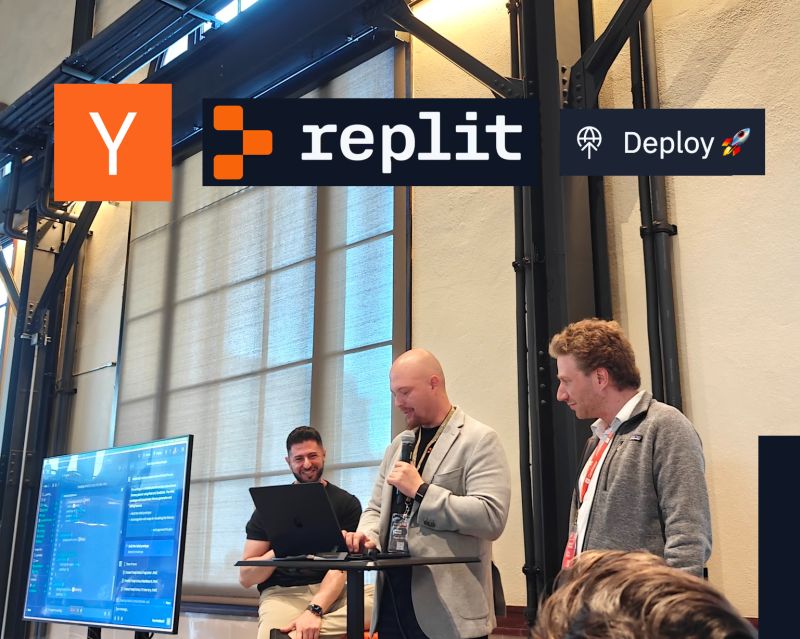
When a company's revenue jumps from $10 million to $100 million in nine months, you pay attention. When that growth comes from an AI agent that builds entire applications autonomously, you realize something fundamental just changed in software development. Replit Agent represents that change, and the numbers prove developers are ready for it. Replit started as a browser-based coding environment for education. Students could write Python or JavaScript without installing anything locally. Teachers loved it because setup time vanished. But the company saw something bigger. If you could run code in the browser, why not let AI write that code? That question led to Agent 3, an AI that doesn't just suggest code completions. It builds entire applications from scratch.
The fact that Mythos saturated their existing cybersecurity benchmarks and they had to pivot to real-world zero-day discovery as a measure of capability should terrify everyone. The benchmarks broke before the model did.
I work in digital safety for a nonprofit and the Internet Watch Foundation angle is important. Child protection organizations have genuinely been begging platforms to find solutions that allow content scanning without full E2EE. TikTok is not inventing this concern.
In a rare divergence from industry norms, TikTok has confirmed it will not adopt end-to-end encryption (E2EE) for direct messages, breaking with nearly every major social media platform and reigniting one of the tech industry's most contentious debates. The Chinese-owned video platform told the BBC exclusively that it believes the privacy technology championed by Meta, Apple, and others as essential for user protection actually makes users less safe by creating "dark spaces" where harmful content can flourish beyond the reach of safety teams and law enforcement. The decision puts TikTok in direct opposition to its competitors while potentially exposing the company to fresh criticism over data protection, particularly given ongoing concerns about its ties to Beijing.