Every time a new wave of manhwa adaptations gets announced, someone asks if this is the bubble bursting. But as long as the platform subscriber numbers hold and streaming rights are competitive, the economics support expansion.
Sign up to see more
SignupAlready a member?
LoginBy continuing, you agree to Sociomix's Terms of Service, Privacy Policy

Every time a new wave of manhwa adaptations gets announced, someone asks if this is the bubble bursting. But as long as the platform subscriber numbers hold and streaming rights are competitive, the economics support expansion.
The Dokja and Joonghyuk dynamic is what got me completely hooked. The idea of someone knowing everything about a person before even meeting them, and then that person slowly realizing it, is such good dramatic tension.
Omniscient Reader is the correct answer for beginners who actually want a complete, satisfying story. Solo Leveling is better as spectacle but ORV is better as literature.
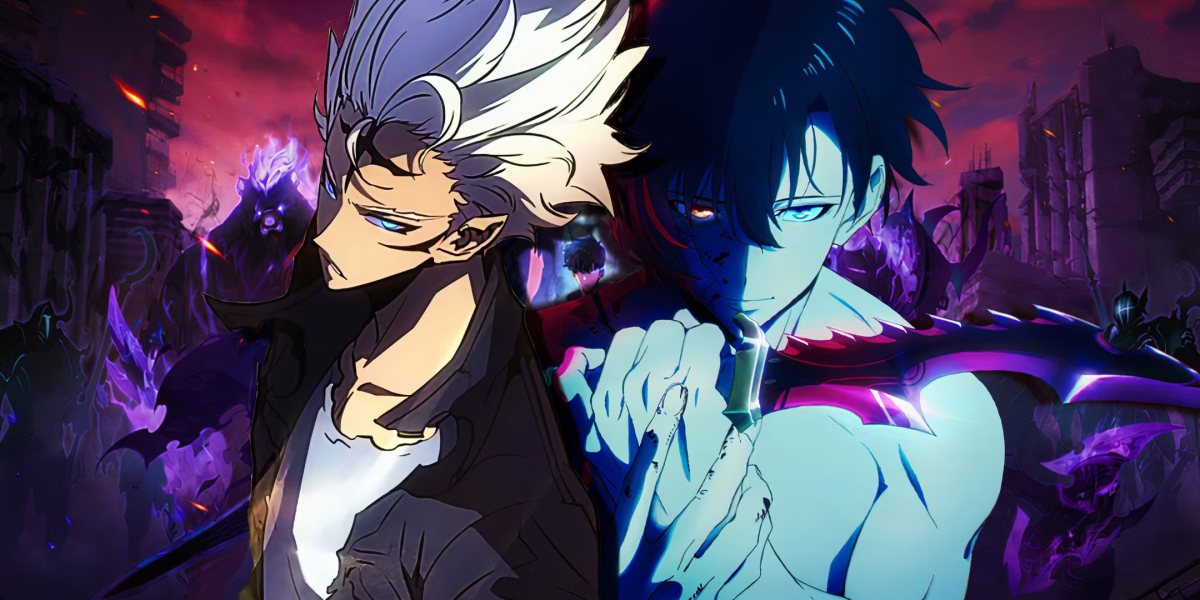
The manhwa world exploded when Solo Leveling first introduced us to Sung Jinwoo's journey from the weakest hunter to humanity's strongest defender. Now, Solo Leveling Ragnarok brings a fresh perspective to this beloved universe, and fans everywhere are asking the same questions. Can the sequel live up to the original? Do you need to read Solo Leveling first? What makes this continuation worth your time? This guide covers everything you need to know about Solo Leveling Ragnarok, whether you're a longtime fan or someone curious about jumping into the series Solo Leveling Ragnarok is not a reboot or alternate timeline. This is a direct sequel that continues the story years after the original series concluded. The protagonist shifts from Sung Jinwoo to his son, Sung Suho, who must forge his own path in a world still recovering from the catastrophic events his father prevented.
Hot take: the real innovation here is not the technology, it is the interaction design. Dozens of tools had decent transcription before Descript. Nobody made editing the actual interface until Descript did.
Jooheon collecting relics that everyone else dismissed as broken or useless and then repairing them into weapons is such a satisfying power fantasy. It rewards preparation and knowledge over brute strength.
The post mentions LMS integration was added. For anyone running employee training or online education that is a meaningful feature. Getting video content directly into the learning environment where learners already are removes a whole distribution headache.
The AI video generation race just got a clear winner. Runway Gen-4.5 topped the Video Arena leaderboard with a 1,247 Elo score, surpassing both Google Veo 3 and OpenAI Sora 2. For those unfamiliar with Elo ratings, this is the same system used to rank chess players and competitive games. A higher score means more wins in head-to-head comparisons. When real users compare videos side by side without knowing which AI generated them, they consistently choose Runway's output. Runway didn't start as an enterprise video tool. It began as a playground for artists and filmmakers who wanted to experiment with AI-generated visuals. The early versions produced fascinating but inconsistent results. Sometimes you'd get stunning cinematic footage. Other times you'd get distorted motion and unrealistic physics. Gen-4.5 changed that equation by achieving breakthrough consistency in motion quality and physical accuracy.
Used this for three months straight and the time savings are genuinely real. Reclaiming even two hours a week back from pointless status updates feels like getting a raise.
In a medium filled with talented artists producing stunning work, making a claim about any series having the "best" art feels bold. Yet Nano Machine consistently delivers combat sequences so fluid, detailed, and visually innovative that even readers who don't typically care about martial arts stories find themselves captivated by the sheer spectacle on display. The series combines traditional murim aesthetics with futuristic sci-fi elements, creating a unique visual identity that stands apart from typical cultivation manhwa. The nano machine implanted in protagonist Cheon Yeo-Woon's body doesn't just give him power. It becomes a storytelling device that allows the artist to visualize techniques, energy flows, and combat analysis in ways other series can't replicate.
Gen-4.5 for ads, Veo for YouTube, Kling if you are broke. That is literally the whole framework you need.
While Synthesia leads in revenue, HeyGen leads in customer acquisition momentum with 152% year-over-year growth in mid-market adoption. That explosive growth rate allowed HeyGen to close much of the customer count gap by late 2025. The company is winning by making avatar video accessible to smaller teams and individual creators who cannot afford enterprise contracts but need professional video capabilities. HeyGen positioned itself for small and medium businesses, marketing teams, content creators, and solo entrepreneurs rather than enterprise learning and development departments. This market segment values affordability, ease of use, and creative flexibility over governance features and advanced integrations. Average contract values are roughly one-third of Synthesia's, reflecting this different customer profile.
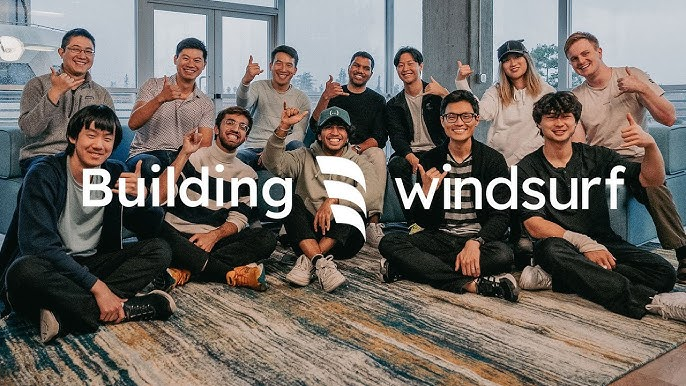
Developers have a new anxiety in 2026: token anxiety. You're in the middle of debugging a complex problem, the AI is helping you refactor three files simultaneously, and suddenly you wonder if this session is about to cost you $50. That mental tax slows you down and makes you second-guess using the tool you're paying for. Windsurf eliminated that anxiety with a simple decision: flat monthly pricing with no token limits. Fifteen dollars per month. Unlimited usage. No tracking credits or calculating costs per query. That pricing model sounds almost boring compared to the complex token systems other AI coding tools use, but boring is exactly what professional developers want when it comes to pricing. They want predictable costs and unlimited usage so they can focus on writing code instead of budgeting AI queries.
In a rare divergence from industry norms, TikTok has confirmed it will not adopt end-to-end encryption (E2EE) for direct messages, breaking with nearly every major social media platform and reigniting one of the tech industry's most contentious debates. The Chinese-owned video platform told the BBC exclusively that it believes the privacy technology championed by Meta, Apple, and others as essential for user protection actually makes users less safe by creating "dark spaces" where harmful content can flourish beyond the reach of safety teams and law enforcement. The decision puts TikTok in direct opposition to its competitors while potentially exposing the company to fresh criticism over data protection, particularly given ongoing concerns about its ties to Beijing.
As someone who works in open source software maintenance, I want to be genuinely excited about this and I mostly am. The donation to open source foundations is a real thing, not just a press release line. But the day-to-day reality of a small team trying to respond to AI-discovered vulnerabilities at scale is daunting.
The Anthropic news lands in the same week they are fighting the US government in court over something separate. That company is dealing with a lot of strategic fronts simultaneously. Can they really afford the attention bandwidth for a chip program on top of everything else?
My favorite part of the reaction to this feature online was the person who said not sure why it took 73 years but glad it happened. Perfectly sums up the collective mood.
Has anyone tried the FANA perfume? I'm curious about those floral notes they mentioned.