
The article ends before finishing its thought on talent and purpose, which feels accidentally appropriate for a story that resists easy conclusions. Some questions are better left open.
12
Sign up to see more
SignupAlready a member?
LoginBy continuing, you agree to Sociomix's Terms of Service, Privacy Policy

The article ends before finishing its thought on talent and purpose, which feels accidentally appropriate for a story that resists easy conclusions. Some questions are better left open.
The thing the article gets most right is that the educational content would reach broader audiences through animation. Seeing a building actually constructed in a montage hits differently than reading panels.
The web novel being available on multiple platforms is smart distribution. People who get hooked on the anime have multiple legal ways to continue the story immediately. That matters for retention.
What I want to know is whether any of these fifteen have the original creator directly involved in the anime production. Solo Leveling's faithfulness was apparently tied to strict rules from Redice Studio.
Omniscient Reader getting a confirmed anime adaptation handled by Aniplex is genuinely one of the most exciting manhwa news stories in years. The same team that made Solo Leveling look that good doing ORV is almost unfair.
That's a valid point but accessibility matters enormously. Something being done in a niche light novel versus reaching Webtoon's global audience are completely different conversations.
The competitive landscape is ferocious right now. Cursor at $500M ARR, Claude Code growing extremely fast, Windsurf getting acquired. Replit is in a serious race and being the most accessible option for non-technical users is a real strategic bet.
The article mentions teams use v0 output for dashboards and data tables. In my experience those are the hardest things to get right manually. If v0 can reliably produce a good data table with sorting and pagination I would use it for that alone.
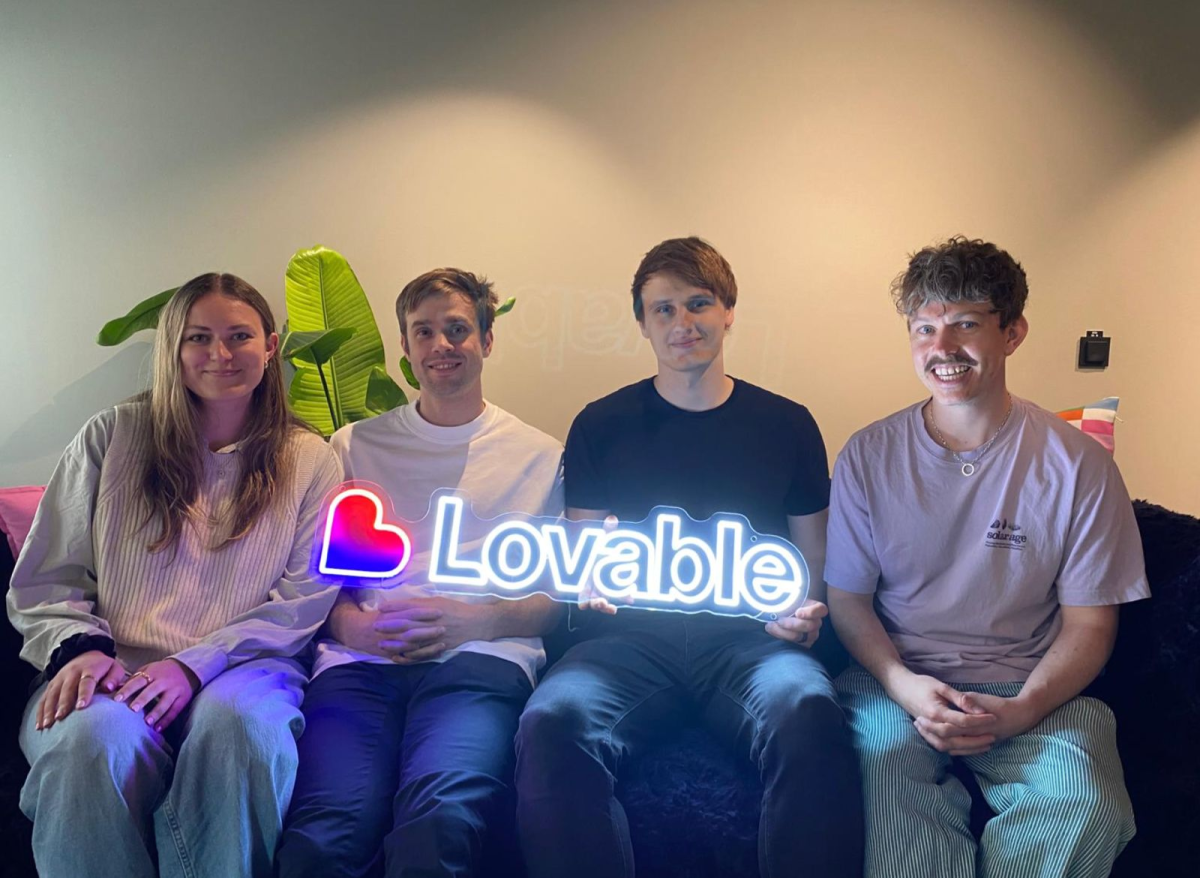
The software development world just witnessed something unprecedented. A European startup called Lovable reached $20 million in annual recurring revenue in just two months, making it potentially the fastest-growing startup in European history. But here's the twist that's making traditional software agencies nervous: they did it by giving non-technical founders the power to build full-stack applications without writing a single line of code. For years, the promise of no-code tools has been the same: anyone can build an app. But the reality has always been different. You'd create a beautiful frontend, get excited about your progress, and then hit the technical cliff. Suddenly you needed to configure databases, set up authentication, manage API keys, and deploy to servers. The "no-code" dream became a "hire-a-developer-anyway" nightmare.
The chess Elo comparison is a bit misleading though. Chess Elo measures performance against other players over time with consistent rules. AI video arena Elo is based on user preference which is inherently subjective and the voting pool can shift dramatically.
The competitive comparison with Microsoft Copilot is interesting. Copilot is baked into Teams natively, which is a distribution advantage. Otter is better on transcription accuracy but Copilot wins on not needing another tool.
It explicitly warns you to use Chromium-based browsers. Firefox support is limited. That is a real constraint for enterprise environments with locked-down browser policies.
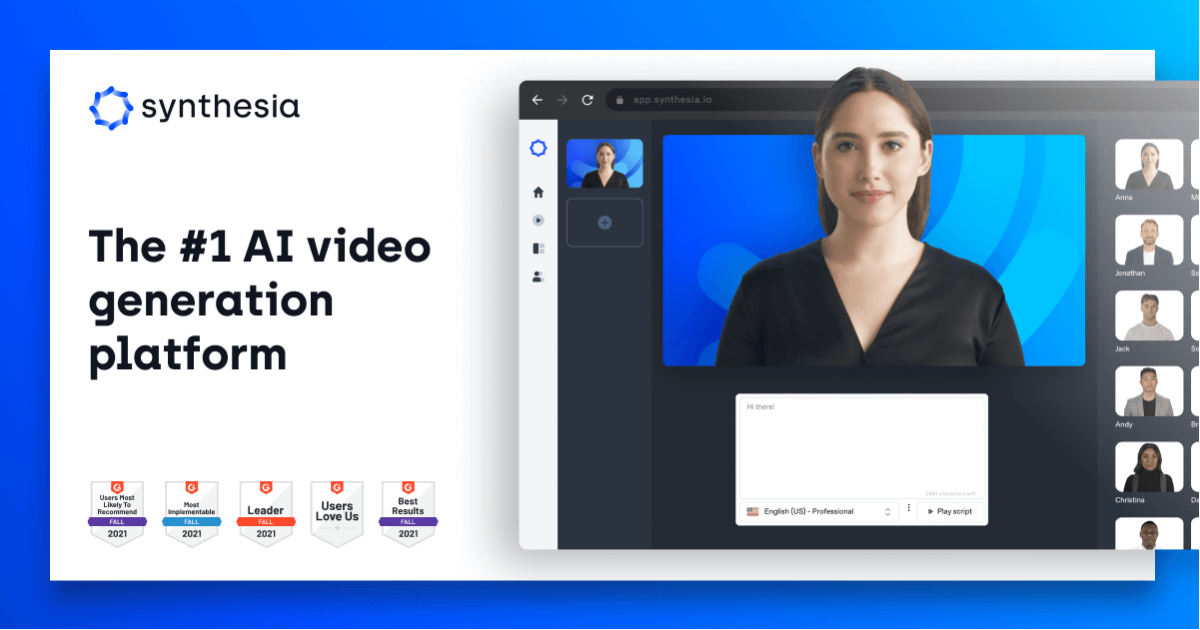
When a company raises $200 million in Series E funding during January 2026, investors are betting on more than potential. They're backing proven market demand and sustainable growth. Synthesia's funding round came alongside a 44% year-over-year increase in headcount to 706 employees, signaling aggressive expansion in a category the company essentially created: AI avatar-based video generation for enterprise training and communications. Corporate training videos have been expensive and slow to produce for decades. Recording a single 10-minute training module traditionally required booking a studio, hiring a presenter, scheduling a videographer, managing multiple takes, and editing everything together. If you needed to update information or translate content, you essentially started over. Synthesia eliminated this entire production workflow by replacing human presenters with AI avatars.
Genuinely, the Anthropic Cowork announcement was more significant than anything in this article. Expanding Claude Code beyond the 28 million professional developer addressable market into general computing is a completely different strategic move.
The global cryptocurrency market capitalization has climbed back above the $2.5 trillion threshold, fueled by a massive liquidation of short positions and renewed institutional interest. Geopolitical developments and shifting investor sentiment combined to create a powerful rally that caught bearish traders off guard, resulting in substantial losses for those betting against the market. According to data from CoinGecko, the total market capitalization of all cryptocurrencies combined increased 1.4% to reach $2.52 trillion on Friday, April 10. Bitcoin experienced a notable surge of over 3%, briefly touching the $73,000 mark before consolidating around $72,000 at the time of writing. Ethereum demonstrated equally impressive strength, pushing past the $2,200 level, while the majority of top 10 cryptocurrencies by market capitalization also posted significant gains.

The code provenance and open-source licensing concerns mentioned in the article are not hypothetical. There are active legal debates happening right now about whether AI tools trained on public repos can reproduce patterns from GPL-licensed code. This will land in court eventually.
Meta has just had one of its most important AI moments yet and the early signals are hard to ignore. Following the launch of its newest AI model Muse Spark, the company’s standalone Meta AI app surged dramatically in popularity, hinting at a much larger shift that is beginning to take shape. The release is particularly significant because it marks the first major AI model rollout under Alexandr Wang, who joined Meta to reboot its AI strategy. This is not just another incremental update. It represents a more aggressive and focused push into the AI race. According to data from Appfigures, Meta AI jumped from number 57 to number 5 on the U.S. App Store within a day of the launch. That kind of movement rarely happens without a strong underlying pull from users. It signals not curiosity but intent.
As someone who studies fashion history, Piccioli is one of the few designers working today with a genuine mastery of couture technique. His 25 years at Valentino were not just a career, they were a masterclass. Seeing him apply that to Balenciaga's very different DNA is genuinely exciting from a craft perspective.