This is the clearest possible example of why critic scores and audience satisfaction are measuring completely different things and why both metrics are legitimate depending on what you are looking for.
9
Sign up to see more
SignupAlready a member?
LoginBy continuing, you agree to Sociomix's Terms of Service, Privacy Policy

This is the clearest possible example of why critic scores and audience satisfaction are measuring completely different things and why both metrics are legitimate depending on what you are looking for.
As a long-time Bastard reader, I was slightly nervous about Copycat because sometimes creators peak and then coast. Ten chapters in I can confirm this is absolutely not coasting. Kim seems genuinely energized by this premise.
Sad but probably accurate. The formal properties of manhwa reading are so specific to the medium that something always gets lost in translation to screen. Sweet Home was good but the webtoon is still superior.
Okay but can we talk about how Bigang being unable to use inner power is actually the key to everything? The thing that made him worthless is the exact reason he survived the demons' experiments. That kind of narrative symmetry is rare in manhwa.
What I want to know is whether any of these fifteen have the original creator directly involved in the anime production. Solo Leveling's faithfulness was apparently tied to strict rules from Redice Studio.
If you told me two years ago that I'd be more emotionally invested in a sequel protagonist than in Jinwoo himself at certain points, I would not have believed you. Suho gets there.
The year 2026 marks a pivotal moment in the evolution of manhwa as a medium. What started as a trickle of Korean comics receiving anime adaptations has become a flood, with at least fifteen confirmed projects bringing beloved manhwa to animated life. This explosive growth wasn't accidental but the inevitable result of Solo Leveling's massive success proving that manhwa adaptations can compete with traditional manga anime in quality, popularity, and profitability. Studios across Japan and Korea are investing heavily in manhwa properties, recognizing that Korean storytelling brings fresh perspectives, innovative premises, and built-in fanbases eager to see their favorite series animated. The diversity of genres receiving adaptations demonstrates that manhwa appeal extends far beyond action and fantasy into romance, psychological thriller, sports, and slice-of-life territories.

Can someone explain the magic system a bit more? The article says it's separate from qi cultivation and demon tech but I'm still fuzzy on how it actually works in practice.
When Tomb Raider King first exploded onto the manhwa scene, it brought a fresh take on dungeon crawling stories by combining archaeological adventure with ruthless protagonist energy and a treasure-hunting premise that felt genuinely different from typical gate and dungeon narratives. The series built a dedicated fanbase through its satisfying blend of historical artifact powers, strategic relic acquisition, and a protagonist who wasn't afraid to be morally gray in pursuit of his goals. Now, with the anime adaptation confirmed for 2026 as one of the most anticipated manhwa-to-anime projects, Tomb Raider King is experiencing a resurgence. New readers are discovering the series while longtime fans eagerly await seeing Jooheon Suh's relic-hunting adventures brought to life with animation. The timing couldn't be better, as the series has built enough content to support a substantial adaptation while maintaining momentum in its ongoing storyline.

The comparison to having a 1-person team ship what a 4-person team did two years ago is starting to feel conservative honestly.
The democratization framing is real but it also means we are about to see an enormous wave of mediocre software entering the world. Not all ideas deserve to be built just because building them became cheap.
The regression subgenre has exploded in popularity over the past few years, becoming one of the most beloved narrative frameworks in Korean manhwa. The core premise is deceptively simple: a protagonist dies or fails catastrophically, then returns to an earlier point in time with their memories intact. Armed with future knowledge, they get a second chance to change their fate, save loved ones, gain power, or pursue revenge against those who wronged them. What makes regression stories so compelling is the combination of dramatic irony, strategic satisfaction, and emotional depth they provide. Readers know what the protagonist knows, creating tension when other characters make mistakes we can see coming. We feel smart alongside protagonists who use foreknowledge to outmaneuver enemies. And we experience the emotional weight of carrying memories of futures that haven't happened yet, of people who died who are currently alive, of betrayals that haven't occurred.

Forty million dollars in annual recurring revenue. Six months. One browser-based platform. Those numbers would be impressive for any software company, but for Bolt.new, they represent something more significant: the moment when development environments moved permanently into the cloud and never looked back. Traditional software development has always required setup. Install Node.js, configure your environment, manage dependencies, set up local servers, troubleshoot version conflicts. Before writing a single line of code, developers spend hours or even days preparing their machines. Junior developers often spend their first week just getting their environment working. Bolt.new eliminated all of that with WebContainers technology.
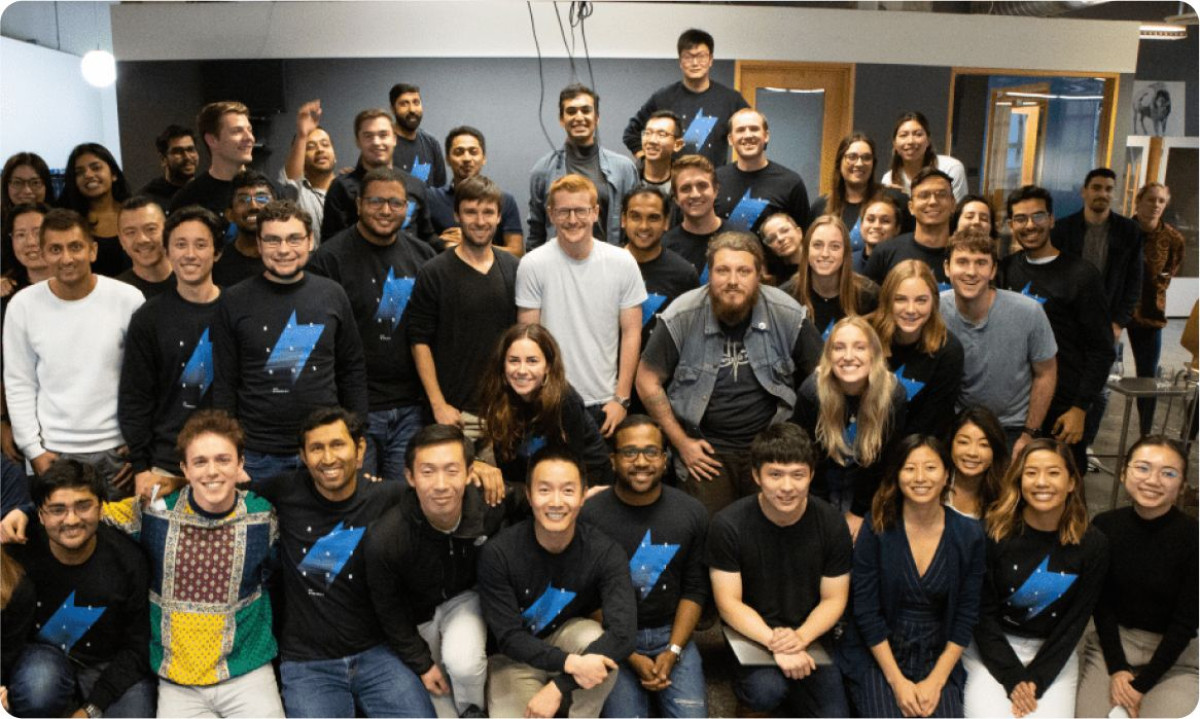
When a company's revenue jumps from $10 million to $100 million in nine months, you pay attention. When that growth comes from an AI agent that builds entire applications autonomously, you realize something fundamental just changed in software development. Replit Agent represents that change, and the numbers prove developers are ready for it. Replit started as a browser-based coding environment for education. Students could write Python or JavaScript without installing anything locally. Teachers loved it because setup time vanished. But the company saw something bigger. If you could run code in the browser, why not let AI write that code? That question led to Agent 3, an AI that doesn't just suggest code completions. It builds entire applications from scratch.
While Synthesia leads in revenue, HeyGen leads in customer acquisition momentum with 152% year-over-year growth in mid-market adoption. That explosive growth rate allowed HeyGen to close much of the customer count gap by late 2025. The company is winning by making avatar video accessible to smaller teams and individual creators who cannot afford enterprise contracts but need professional video capabilities. HeyGen positioned itself for small and medium businesses, marketing teams, content creators, and solo entrepreneurs rather than enterprise learning and development departments. This market segment values affordability, ease of use, and creative flexibility over governance features and advanced integrations. Average contract values are roughly one-third of Synthesia's, reflecting this different customer profile.

The enterprise team collaboration angle is undersold in creator marketing but that is actually where Descript may have its biggest growth. Marketing teams producing regular video content have the same needs as podcasters but with bigger budgets.
Genuinely curious, does restricting Mythos to a vetted partner list actually hold up once competing models reach similar capability? Seems like a finite window of control at best.
That is the part that keeps me up at night. Thousands of high severity zero-days sitting in every major OS and browser, and the clock is ticking before someone else independently finds them.
every major AI lab is going to end up doing this. Meta is doing it, OpenAI is doing it, and now Anthropic is exploring it. The era of everyone just buying Nvidia GPUs and calling it a day is clearly ending.
Nvidia's CUDA ecosystem has literally millions of developers and thousands of optimized applications built up over nearly two decades. That is not something any custom chip program displaces in the near term no matter how good the hardware is.